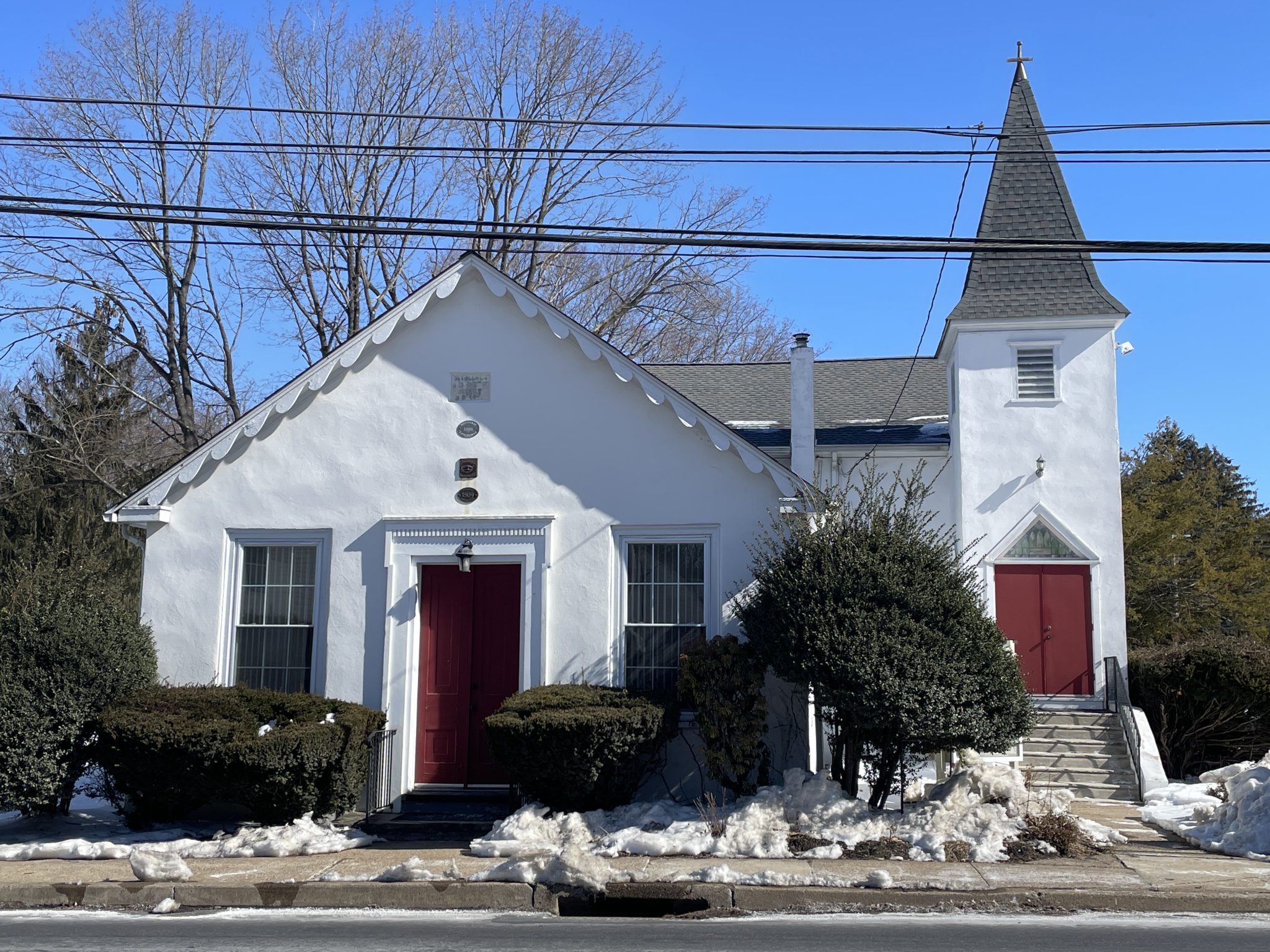
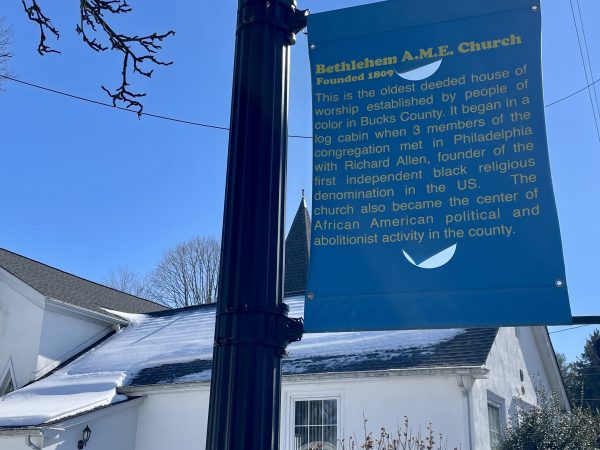
Founded in 1809, Bethlehem AME Church in Langhorne is proud to be “the oldest house of worship established by People of Color in Bucks County” and the third oldest Black church in the country.
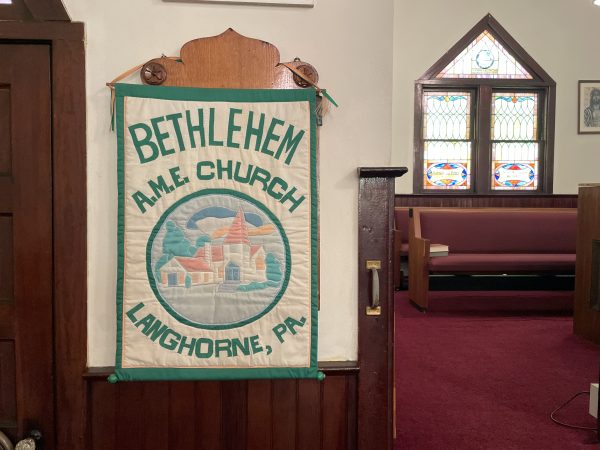
Bethlehem A.M.E. joined Heritage Conservancy’s Register of Historic Places in 1979. The church’s current Pastor, Rev. Jacqueline Pinkney, is proud of its storied history and its active role in both its community and in the larger story of Black faith in the US. “We’re still here,” she says proudly.
The Growth of a Spiritual Community
The Attleborough Methodist Society initially gathered in members’ homes, served by circuit preachers traveling from Bristol who performed marriages and baptisms for the small congregation.
Social and political prejudice had created deep racial divisions, even within churches, so this small group of African-American Christians chose to establish their own church within the Methodist Society. The Society of Colored Methodists was formally founded on December 9, 1809, before affiliating with Bishop Richard Allen’s Bethel African Methodist Church in Philadelphia.
In 1816, Richard Allen, the founder of African Methodism, convened a gathering of Black societies in Philadelphia to create a union that would become the first independent Black denomination in the United States. The historic meeting of delegates representing five Black congregations included three men from Attleborough. As the A.M.E. Church is part of the Methodist tradition, these leaders believed no other religious denomination could better uphold their commitment to a straightforward and simple Gospel.
A History of the Church
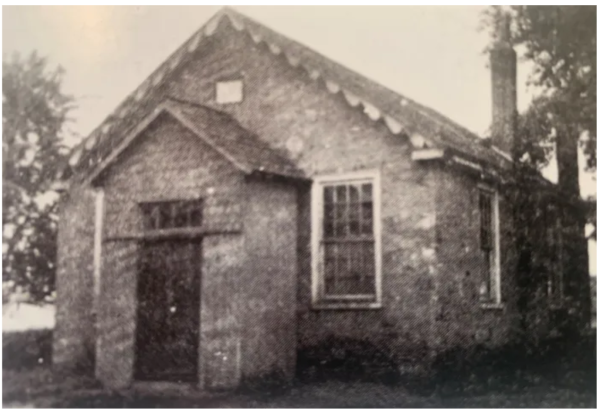
In 1817, the church was established in a modest log cabin on this plot of land at the corner of Cheeseman and McPherson Streets in the community of Attleborough (now Langhorne)he plot of land where the church sits today. The property was part of “Washington Village” — a 91-lot development planned by William Goforth in 1784 on 47 acres confiscated from loyalist Gilbert Hicks following the Revolutionary War.
From 1809 to 1834, Bethlehem A.M.E. held the distinction of being the only officially deeded Black religious society in Bucks County.
Historical records document visits from prominent preachers of the era, including Bishop Richard Allen, Reverend William Paul Quinn, Edward Jackson, and John Mefser, all of whom delivered sermons here church.
As the congregation grew in both faith and membership, the original structure became inadequate. In 1851, a small sanctuary was constructed from local stone, embodying the classic architectural style of traditional country churches, features that remain visible today.
By 1918, the expanding congregation necessitated further growth, leading to plans for a larger church that was completed in 1922 and integrated with the earlier building.
Living History, Generations Later
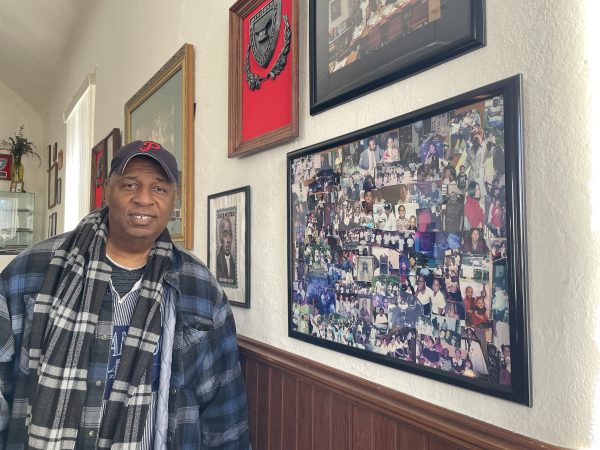
Today the congregation is small but active, estimated to be about 25 members strong. Church elder Brother Thomas Ross is the Steward Pro Tem, and has been attending service here for over 60 years, since he was a child. He estimates he is the 4th generation of his family to be involved in the church, and members of the next four generations after him are part of the community. “We are all related in this congregation,” he jokes.
“We welcome everyone,” says Rev. Pinkney. “We are unapologetically Black and love the history of our people,” she says, but she strives to be inclusive.
“We clap our hands and sing, and do what a black church does,” says Thomas with a smile. “The people here are really kind.”
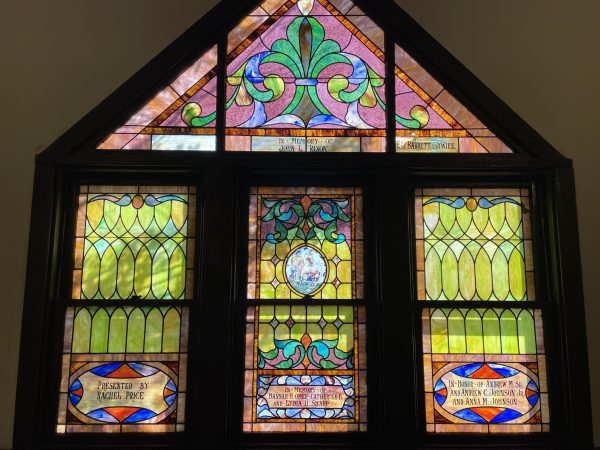
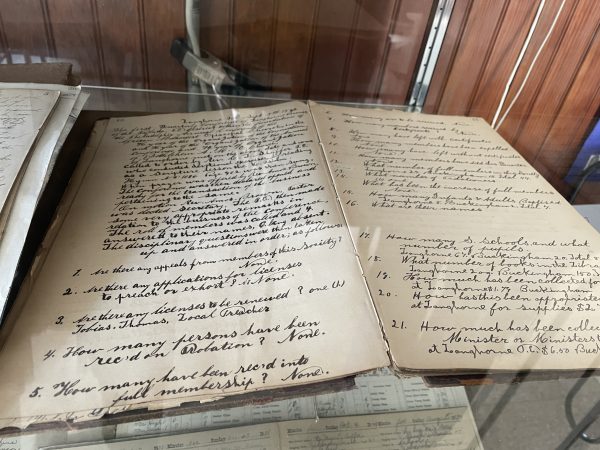
The oldest part of the church sits in the footprint of the original log cabin that housed the delegation. Here you will find glass cases holding centuries of church records and historic sermons, plus part of the pulpit from which Richard Allen preached. Records, awards, plaques, and documents are preserved with care and shared proudly, alongside more recent photos.
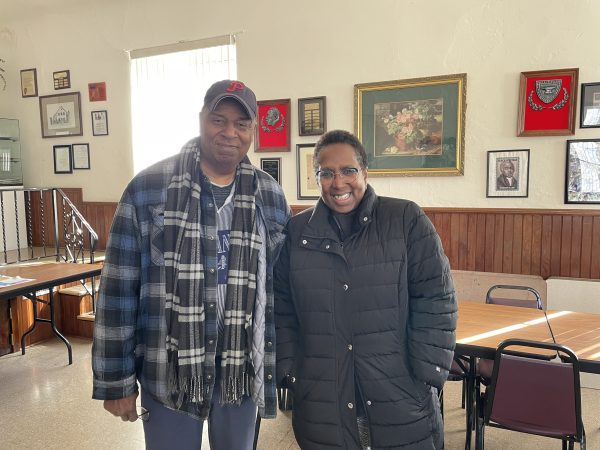
Rev. Pinkney is has led the congregation for about 3 years. Having moved up to the area from a long tenure in Atlanta, she reflects on the differences between north and the south, and the loss of local populations in Pennsylvania in the 80s, as younger members of the congregation moved to the south for school and jobs.
“The Black community is getting smaller here,” she says, “but people gather around faith.” She points out efforts like the African-American Museum of Bucks County that are bringing people in together.
As 93-year-old church elder Mamie Price likes to say, “We are Bethlehem – a city that cannot be hidden.” And that pride in community and history shines through as the church navigates its third century.
Part of a Network and Movement
Bethel A.M.E. served as the religious and political heart of African-American life throughout Bucks County. Beyond baptisms, weddings, and religious services, they functioned as a center for unity, development, and spiritual guidance for People of Color, while actively participating in community and county affairs.
Throughout the years, Bethlehem has served as the foundation for other congregations across the region to establish their own churches: Mt. Gilead in Buckingham, Mt. Moriah, New Hope, and Bethel in Yardley – forming a circuit as each community developed.
Before the Civil War, the church joined the Black wings of the Anti-Slavery League and the Middletown Temperance League. During the perilous years of the 1840s-1860s, Bethlehem courageously participated in the New Jersey Branch of the Underground Railroad, working in concert with the Black Underground network.
That community involvement continues today, with an eye for inclusion and a commitment to the needs of the greater community. Whether marching in the Memorial Day Parade or sharing its sermons on Zoom and YouTube, the church has evolved. They join with other Methodist churches for Thanksgiving services and other Christian communities for a Good Friday “Cross Walk” event, and through other touchpoints with their networks.
“As challenges emerge, we check in with each other,” says Rev. Pinkney. In crisis, church leaders share information and resources. “And we just want to be sure everyone is okay.”
Today, the congregation has an active presence on social media, including Instagram and Facebook, and they welcome newcomers. “We are open to all and welcome all,” says Rev. Pinkney.
Heritage Conservancy’s Register of Historic Places
Heritage Conservancy was operating at the Bucks County Conservancy when it added Bethlehen A.M.E. Church to its historic register 47 years ago. We maintain the Register of Historic Places to honor the deep history in our community and to recognize and help protect the places that make Bucks County and the surrounding area so special.
Bethlehem A.M.E. Church is a perfect example of the places we want to highlight with this recognition and the way local history shapes our neighborhoods and sense of place centuries later.
Learn more about the history of Bethlehem A.M.E. Church on their website.