
From Lawn to Life: Benjamin Franklin Middle School Students Create a Native Pollinator Garden
This past spring, a group of 6th and 7th grade students at Benjamin Franklin Middle School in Levittown transformed a section of an interior courtyard, once all lawn, into a native pollinator garden.
The project was made possible through a DEP Environmental Education grant, which allowed Heritage Conservancy to provide MWEE (Meaningful Watershed Educational Experience) and Environmental Literacy workshops to Bucks County teachers, including Bristol Township School District Teachers. This grant also gave Heritage Conservancy funds to order and send the teachers supplies for their classrooms that would reinforce and support the environmental curriculum in their classrooms.
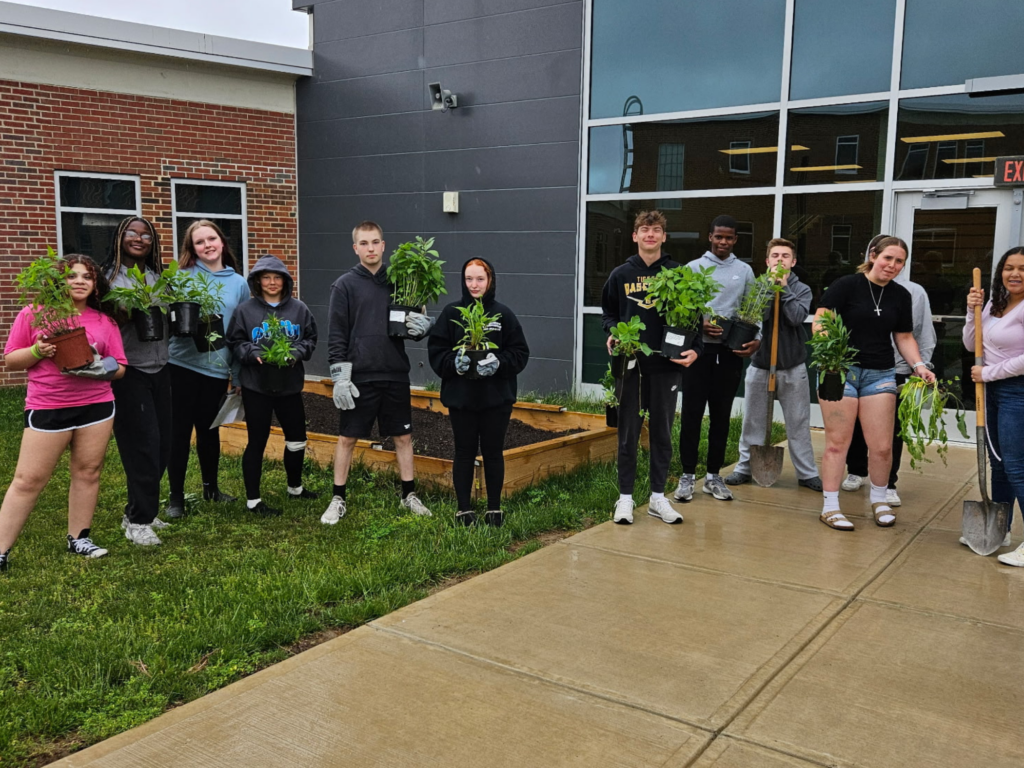
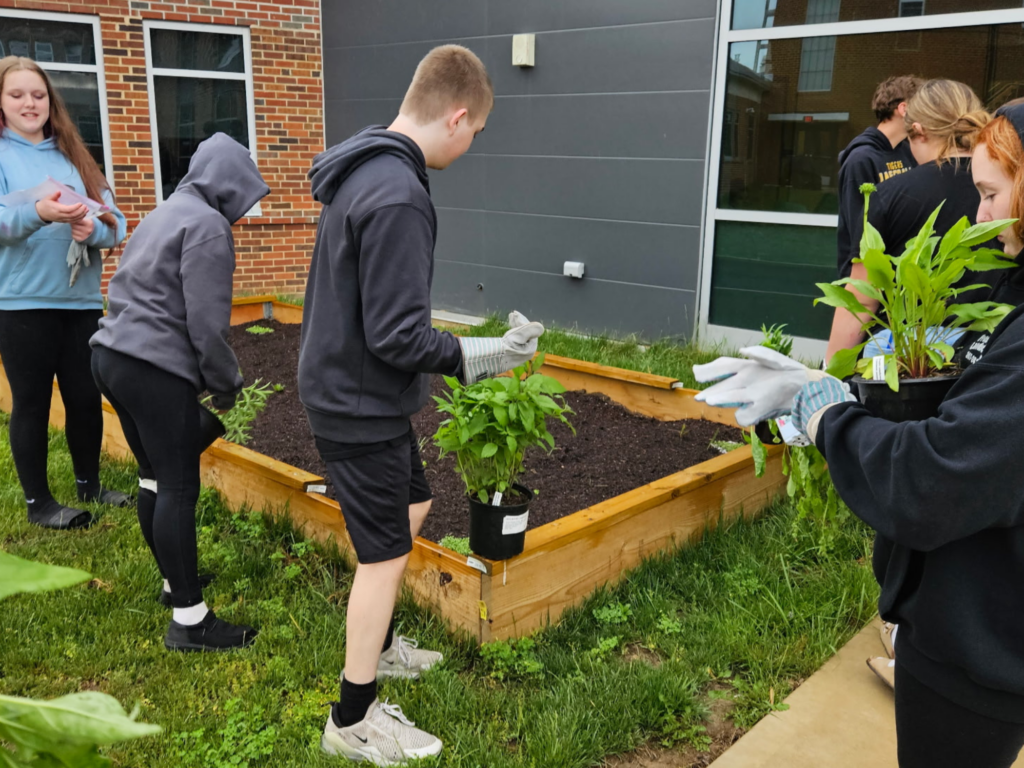 After researching native plants, 6th and 7th grade students start the planting process.
Designing with Purpose
With the guidance of their teachers, Lauren Stevens (6th grade science & STAR team advisor) and Meredith Mueller (7th grade science & STAR team advisor), students researched native plants, measured the soon-to-be garden space in the courtyard, and created a blueprint that considered plant height, spacing requirements, and growing conditions. The teachers shared the design with Heritage Conservancy’s Director of Education and Community Programs, Shannon Fredebaugh-Siller, who has assisted other schools with similar projects. “The design and plan looked great. I proposed a minor tweak here or there, but the students and teachers did an excellent job on their research,” said Fredebaugh-Siller. The layout they designed met all the criteria for a successful pollinator garden.
In this planning stage, students learned about native plants and how they are uniquely suited to support local wildlife. A garden like this one, even a small planting in a courtyard, can serve as a critical habitat and food source.
“The students used real-world problem solving and collaboration through the entire design and implementation process,” said Mueller. “They learned about native plants and the importance of pollinators in our local ecosystems.”
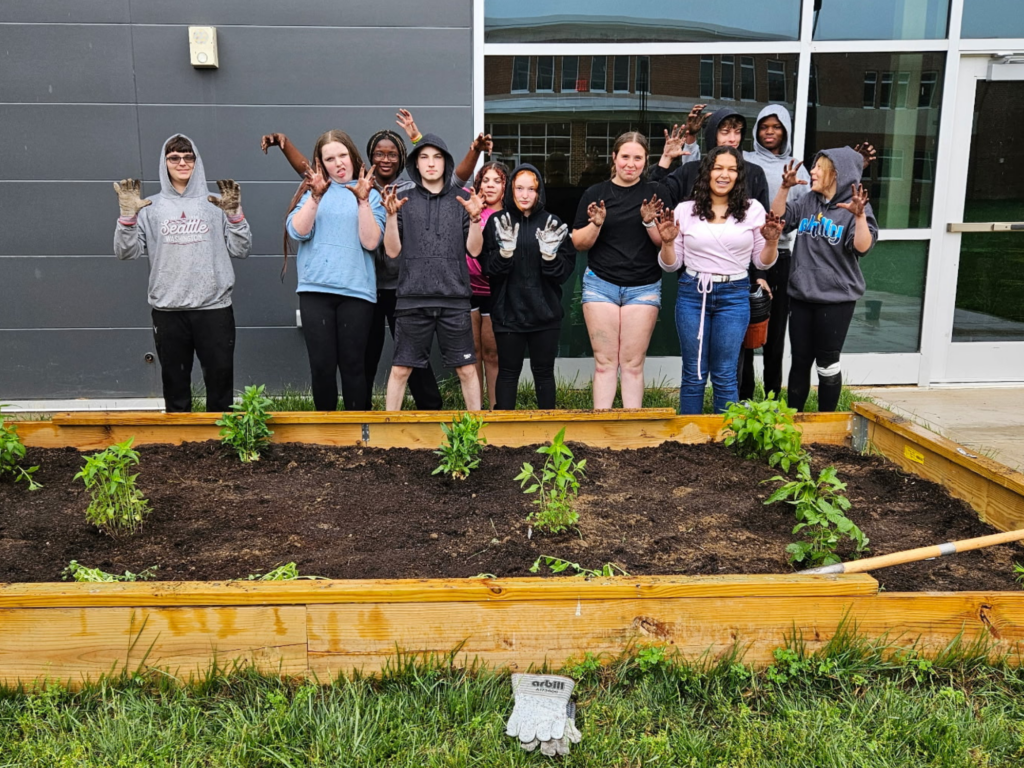 The garden is taking shape and students are getting their hands dirty!
Building It Together
On installation day in May of 2025, Bristol Township’s maintenance crew mentored the students on basic building techniques, guiding them in the use of tools to build the garden frame. Students added topsoil, planted according to their blueprint, and created handmade stakes with educational information about each plant. With guidance from their teachers, the 6th and 7th graders brought their design to life.
Research consistently shows that outdoor, experiential learning improves attention, retention, and students’ sense of connection to the natural world. For many students, a project like this could be their first encounter with living ecosystems.
“When students take an active role in their own learning and can see its application in real life, they are so much more engaged and they retain the information better,” says Fredebaugh-Siller. “That is exactly the type of learning opportunity that Lauren and Meredith provided for their students, through this project and many others they have helped students complete through the years.”
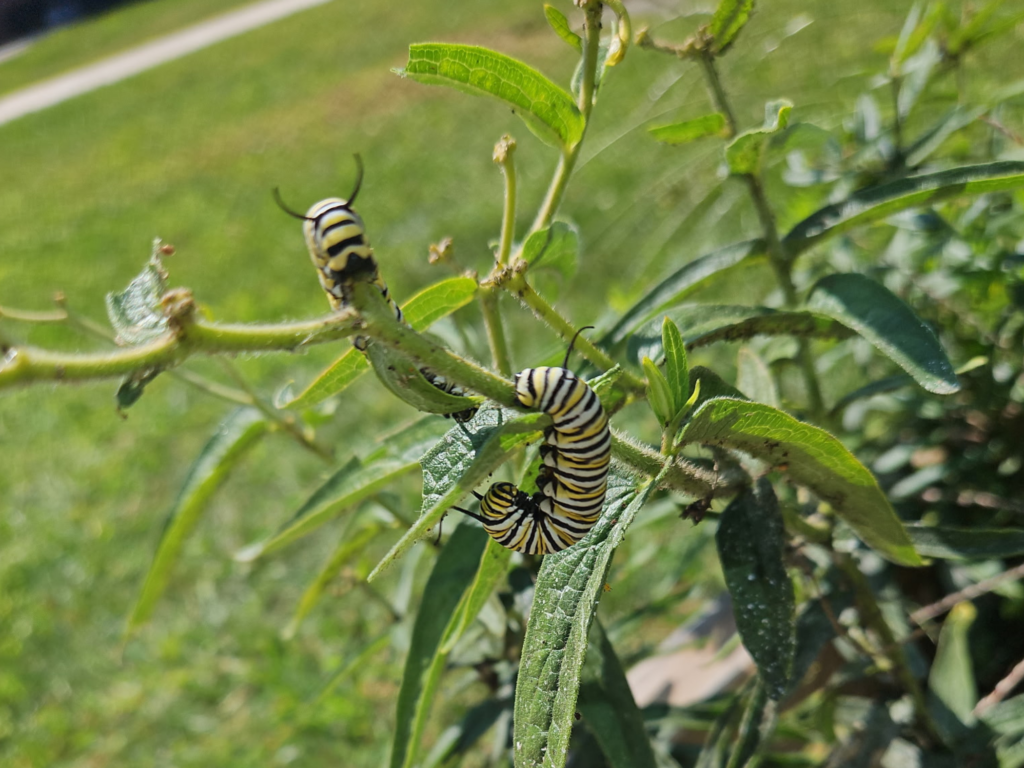 Monarch caterpillars spotted on the milkweed.
Signs of Life
Just a few months after installation, the garden was already making an impact. Students spotted three monarch caterpillars on the milkweed they had planted, a moment that brought the whole project full circle.
“The students were so excited to encounter the monarch caterpillars,” Mueller recalled. “They felt empowered that their personal efforts were rewarded, and they realized they have the power to make a real difference and create change in our community.”
Milkweed is the only plant monarch caterpillars can eat, making it essential for the survival of these butterflies. Monarch populations have declined sharply in recent decades, and planting milkweed in schoolyards, backyards, and community spaces is one of the most direct ways people can help reverse that trend.
Ongoing Care and Learning
The students continue to maintain and observe the garden. This spring, they’ll reassess which plants survived the winter, weed, and tend to the space as it comes back to life.
“The students become agents of change in the community,” said Mueller. “Helping them find their voices and showing them that they have the power to speak up among peers and adults is very rewarding. Providing students hands-on environmental experiences enriches their growth and awareness as young adults.”
Bringing Environmental Education to Your School
This project was part of Heritage Conservancy’s ongoing efforts to support environmental education and action through their Learning Beyond the Classroom student programming, professional development workshops, and schoolyard greening projects, in alignment with PA’s Environmental Literacy & Sustainability standards.
Interested in bringing nature-focused educational programming to your school? Contact Shannon Fredebaugh-Siller at sfredebaugh@heritageconservancy.org or click here to learn more: https://heritageconservancy.org/environmental-education-resources/