

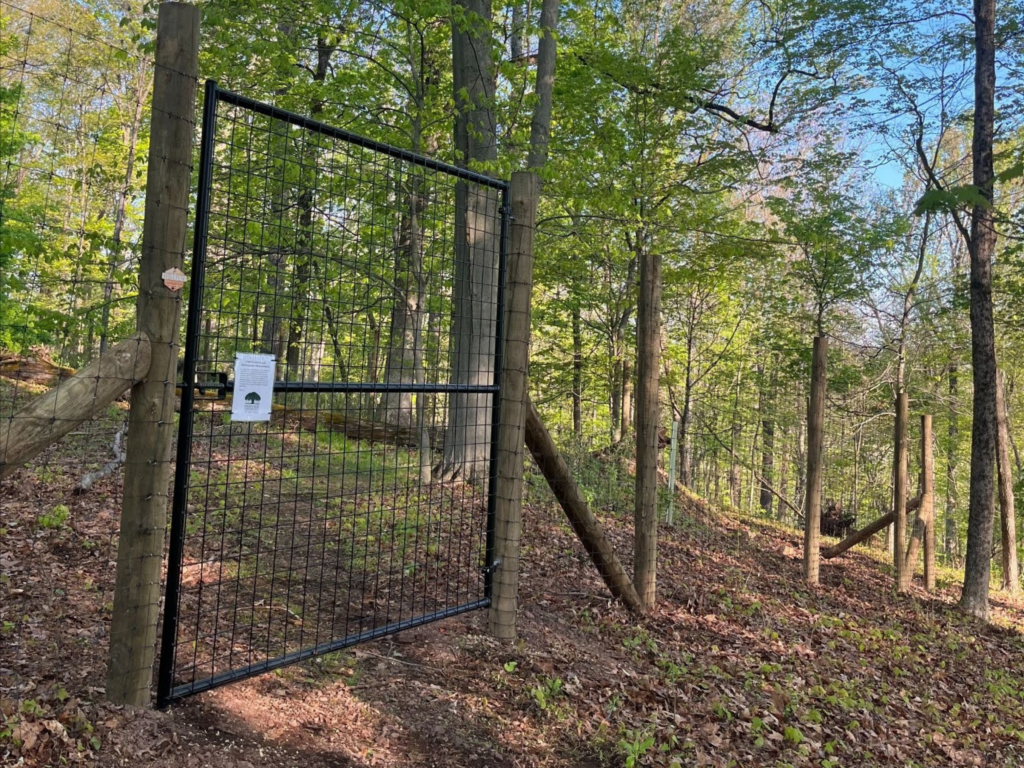
New Deer Exclosure at Fuller-Pursell Nature Preserve
We are excited to announce the completion of a new deer exclosure at our Fuller-Pursell Preserve! This one-acre deer fence will serve as an educational tool in the coming years, as the forest will rebound quickly from the lack of deer. The native plants, especially the oaks and other understory shrubs, will finally have a chance to grow without the pressure of overbrowsing.
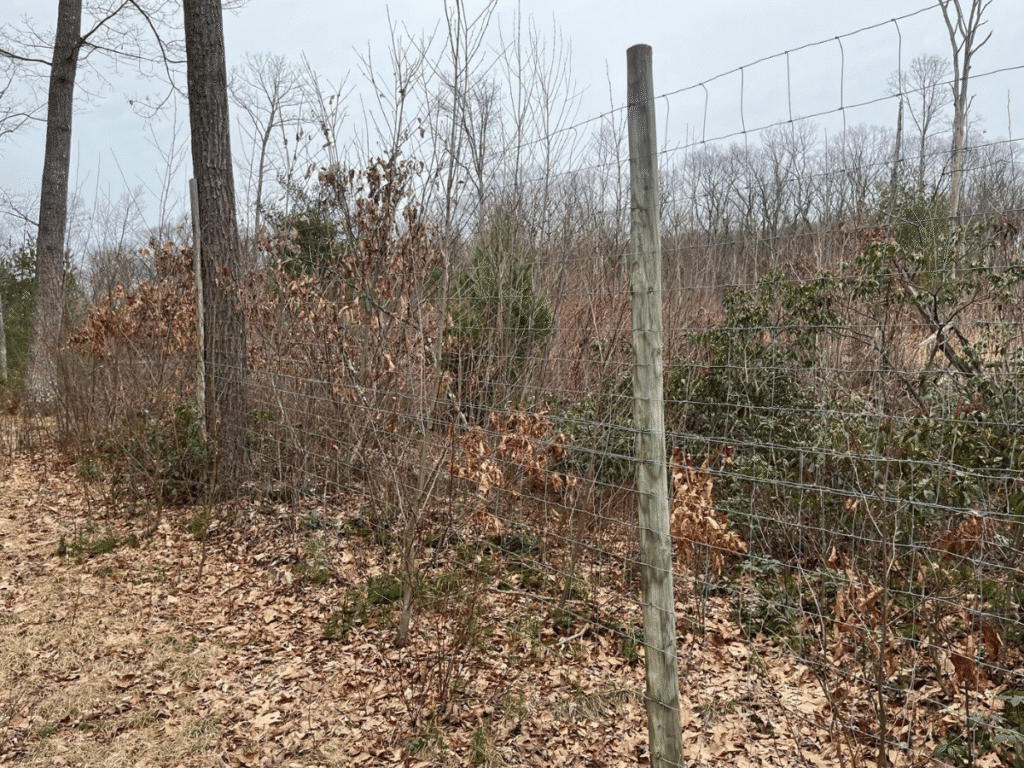
Overabundant deer populations in much of the United States, especially the mid-Atlantic, are having a serious negative impact on our forests and ecosystems. When the population gets too large, deer overbrowse the young vegetation, which prevents most of it from reaching maturity. The forest loses its ability to regenerate, and the composition is reduced to deer-resistant species, many of which are invasive. This reduces the available habitat and resources for birds, insects, and all other wildlife. Lower biodiversity among plants and animals creates a less resilient ecosystem and reduces forest health.
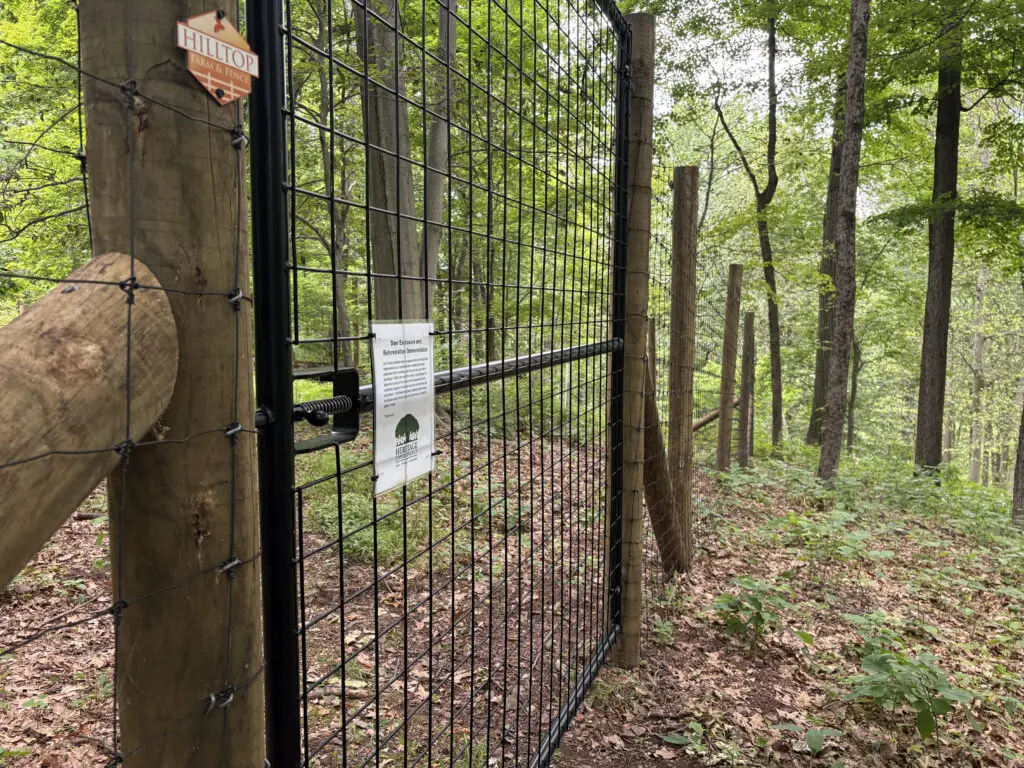
Beyond deer population management strategies, deer exclosures are used as another tool to help protect forests from being degraded. Deer exclosures are designated areas that deer are excluded from, usually by a physical barrier like a fence. They are used in many capacities, from protecting sensitive habitats to promoting regeneration of commercial timber stands on state forest lands.
Reasons for a Deer Exclosure
Forest regeneration — tree and shrub seedlings will be able to survive to maturity and produce seeds of their own, keeping the forest healthy and productive.
Understory habitat restoration — understory vegetation will recolonize and create habitat for the species of animals and plants that rely on it.
Scientific study — the exclosure provides an opportunity to study the negative impacts of overabundant deer and what species are most affected.
Public education — with the help of educational signage, the public will notice a stark difference in the habitat within the fenced area as they walk through it.
Visiting the deer exclosure at Fuller-Pursell Nature Preserve
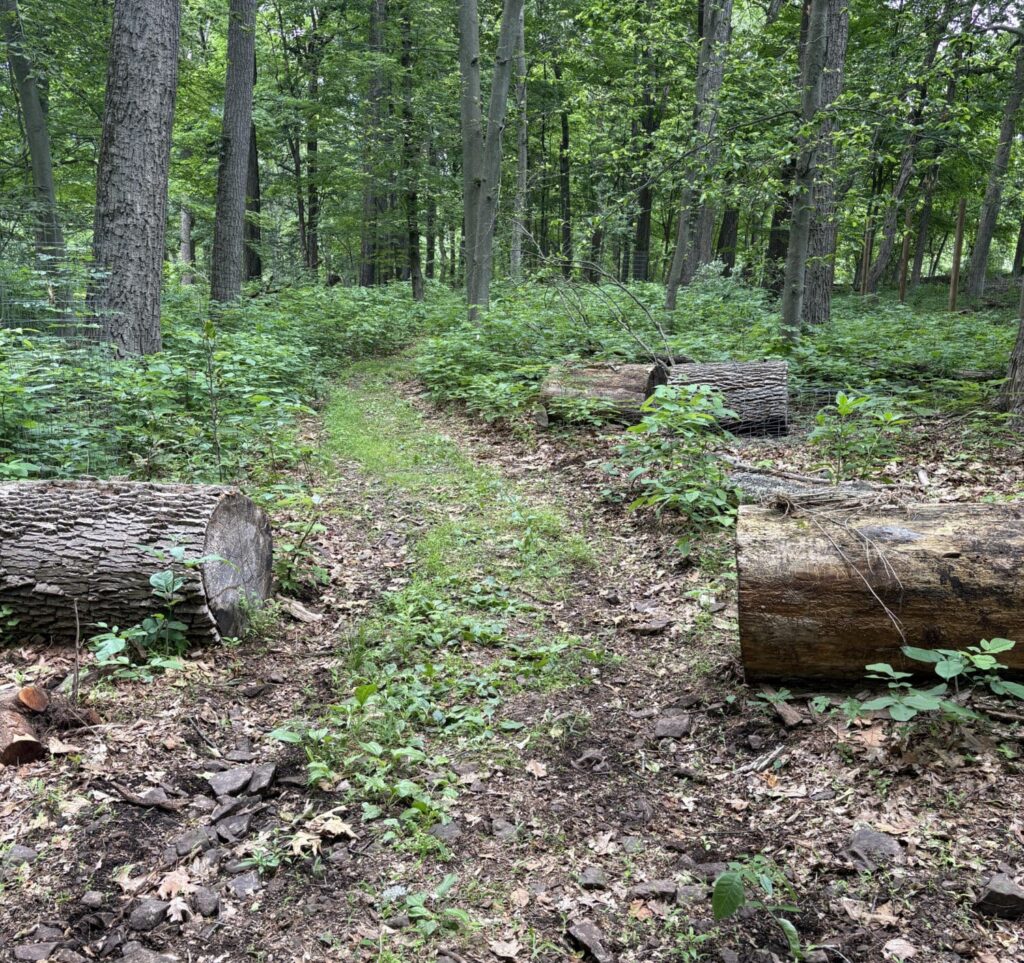
Please come visit Fuller-Pursell Nature Preserve to check out the new exclosure. The lower creek trail runs through the exclosure, with gates allowing you to access the inside of the fenced area. Please keep the gates closed at all times. It does not look very different today, but in a few years, the difference in vegetation will be apparent. The acorns will finally be able to grow into oak trees, the shrubs and wildflowers will finally be able to flower, and there will finally be resources for the specialist pollinators and other wildlife that rely on this habitat. The forest will start to recover within this one-acre plot. It’s not a lot, but it’s a start.
This project was funded in part by the McLean Contributionship, Upper Bucks Community Fund of the Lehigh Valley Community Foundation, and a grant from the Community Conservation Partnerships Program, under the administration of the Pennsylvania Department of Conservation and Natural Resources, Bureau of Recreation and Conservation, in support of the Schuylkill Highlands Mini-Grant Program administered by Natural Lands.
Article by Tyler Kovacs, Senior Conservation Biologist