
Reforestation Work in Bucks County
Trees are vital to humans and animals, producing oxygen and removing carbon dioxide to improve air quality.
Native trees and shrubs planted each year

Every year, Heritage Conservancy plants at least 300 native trees and shrubs in Bucks County. Some years, we plant many more!
While sequestering carbon to help slow climate change, trees support wildlife in countless ways, offering animals food and shelter for hiding, moving, hunting, and feeding. Our reforestation efforts are essential to maintaining local forest health now and in the future. Efforts include planting new trees, protecting seedlings from deer, and managing riparian buffers.
Planting Trees
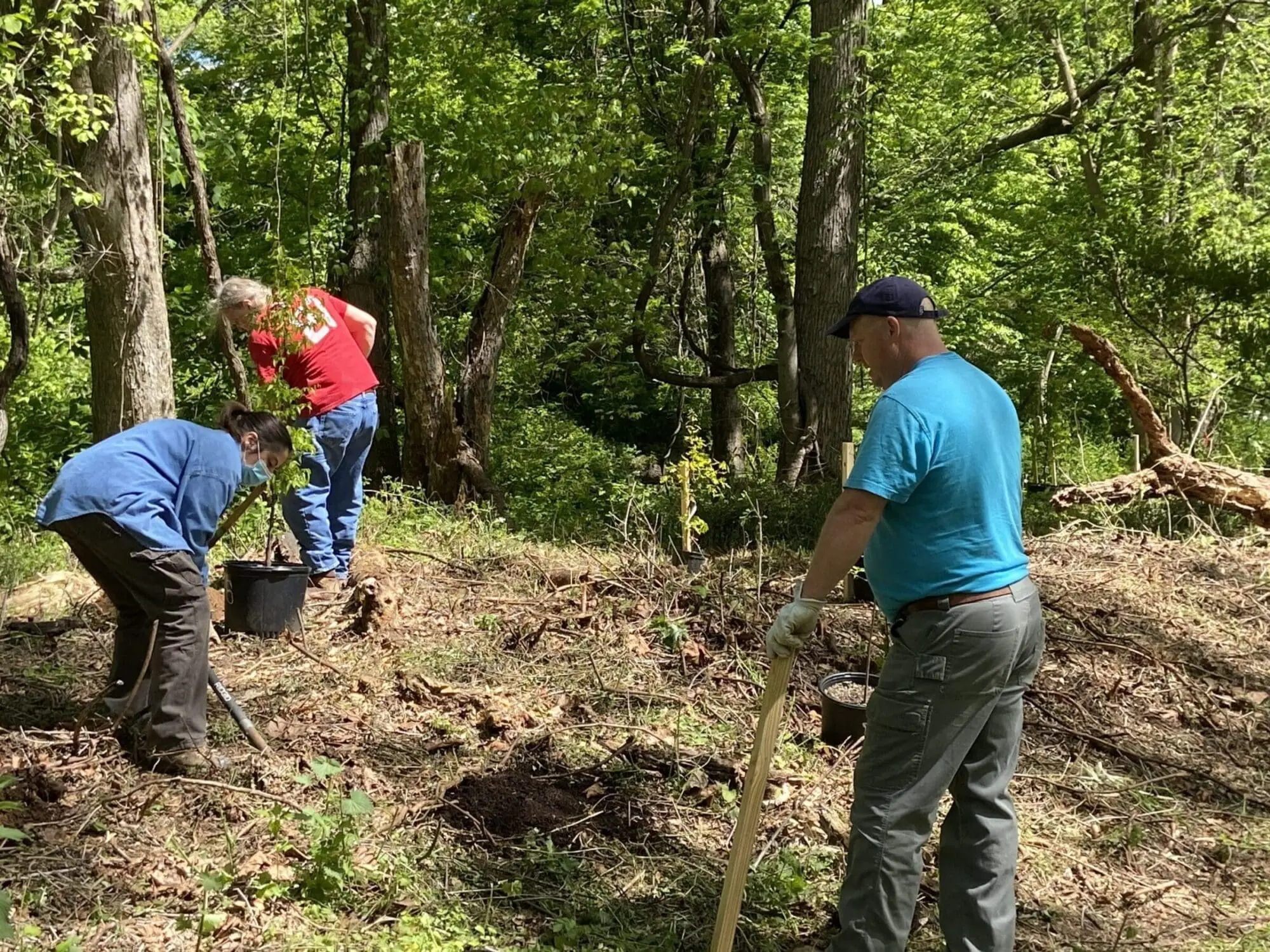
We plant native trees on properties we own – on public nature preserves, private land, and fragile habitats – throughout Bucks County. This may include replacing diseased and dying trees, adding new trees to compensate for the loss of habitat from deer browse, and reforesting former agricultural fields.
Supporting Pollinators
We plant flowering tree and shrub buffers around the periphery of our pollinator meadows, focusing on species that are particularly important for early season pollinators when the meadow is not yet in bloom. This extends the life of the feeding cycle before the meadow wakes up.
Riparian Buffers
A riparian or forest buffer is an area adjacent to a stream, lake, or wetland that contains a combination of trees, shrubs, and other perennial plants that offer shade and protection for the waterway.
We plant along creek banks to protect water quality and help prevent erosion. Native trees and shrubs help with runoff, absorb pollutants from the water through their root systems, and shade waterways. In the shadows, water stays cooler and holds more oxygen, allowing it to sustain a healthier ecosystem full of biodiversity.
Protecting Trees
For newly planted trees and shrubs, we use tubing and caging to protect them from deer browse and damage.
Additionally, we protect seedlings that come up naturally, improving their chances of surviving and thriving without deer damage. Our biologists identify native “volunteers” in spots with the best chance of survival and protect them. Often these naturally regenerating seedlings do better than newly planted trees because of their established deep roots – but only with our intervention and caging.

Volunteer Groups
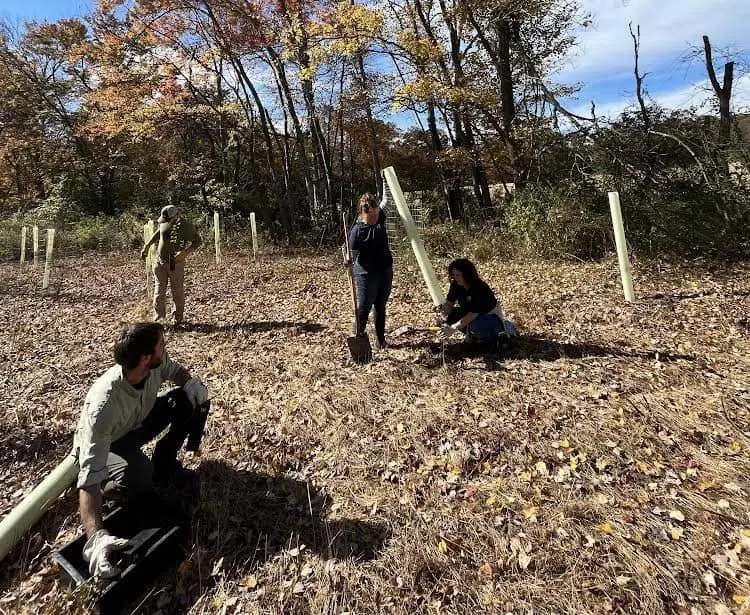
Volunteers play a critical role in our reforestation efforts. From local scout groups to our conservation interns, to corporate groups and our Fridays in the Forest volunteers, we rely on our community to help us get roots in the ground. It is a community effort to grow and protect the forest for future generations.