

Visit our Preserves
Fuller-Pursell Nature Preserve
Heritage Conservancy’s 64-acre Fuller property and the 40-acre Pursell property adjoin to create a 104-acre publicly accessible outdoor space in the heart of Springfield Township, Bucks County.
About Fuller-Pursell Nature Preserve
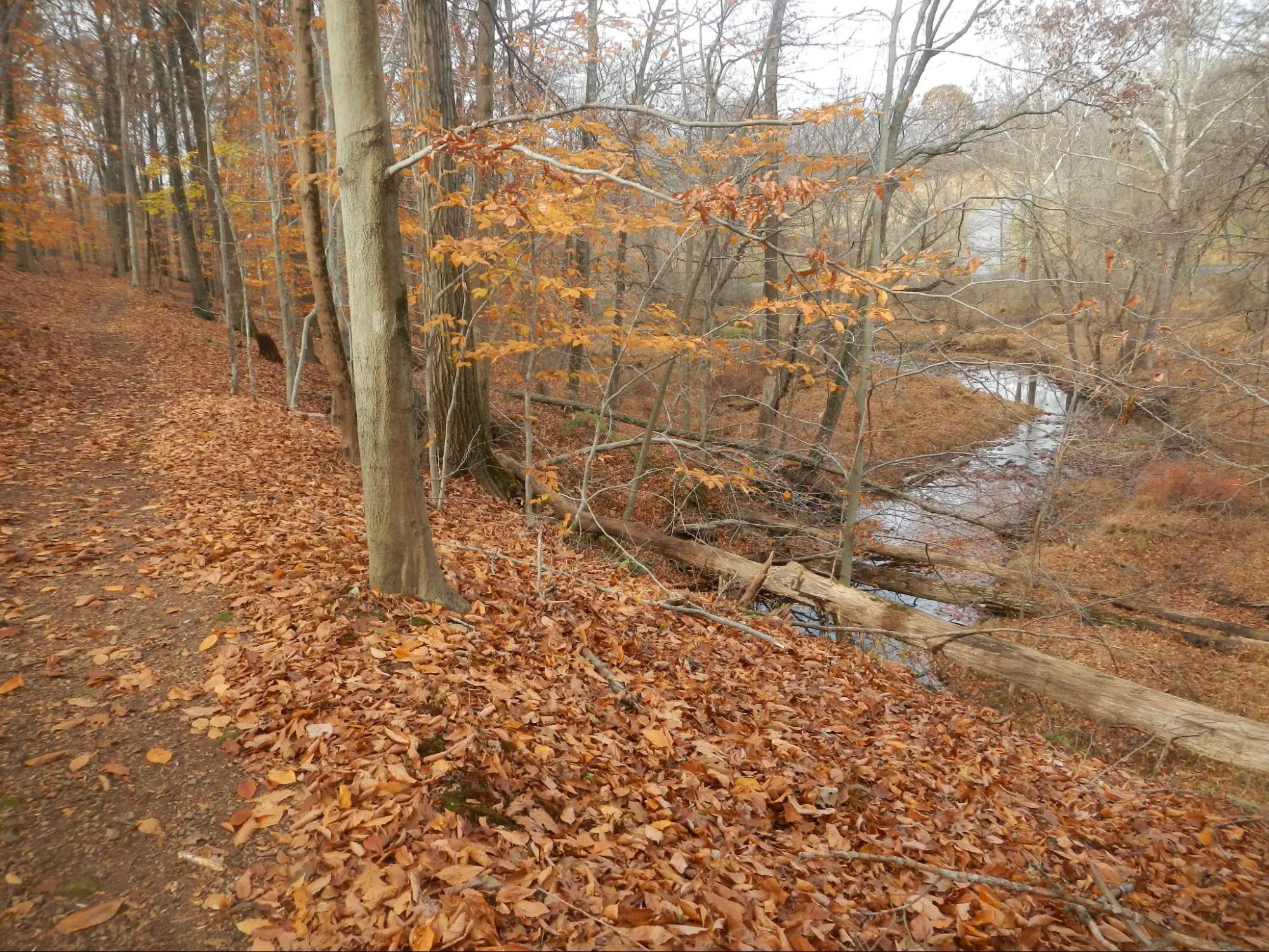
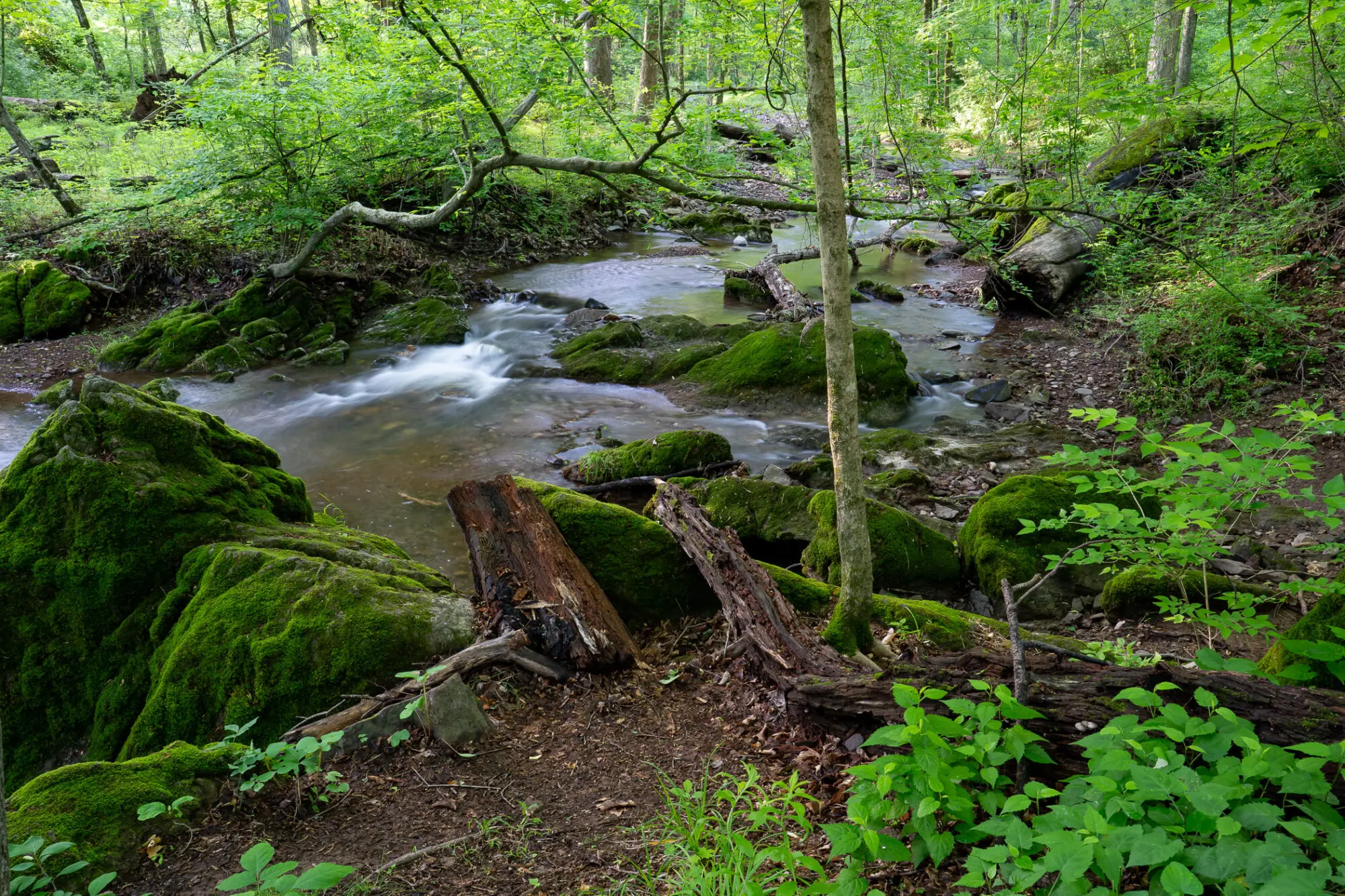
These two properties are located in the scenic Cooks Creek Watershed, part of 1,500 acres of contiguous, preserved land. Preserve trails take visitors through forested hillsides, rolling meadows, and alongside tributaries of Cooks Creek.
Visitor Info
Approximate Address: 2858 Slifer Valley Rd, Riegelsville, PA
Parking: There is a small gravel parking lot along Slifer Valley Road at the trailhead. The township does not allow public parking on Walnut Lane (except by permit for special events). Please DO NOT park on Walnut Lane.
The park is open from sunrise to sunset.
Important to Know
- Fuller-Pursell Nature Preserve is closed to all motorized vehicles.
- ATV use is strictly prohibited. (They are a safety hazard for people, animals, and plants.)
- Pets are welcome but must remain on leash at all times.
- There are no public bathrooms at the preserve. There are no water fountains. Be sure to pack a water bottle!
- Please take all trash out with you as there are no trash cans.
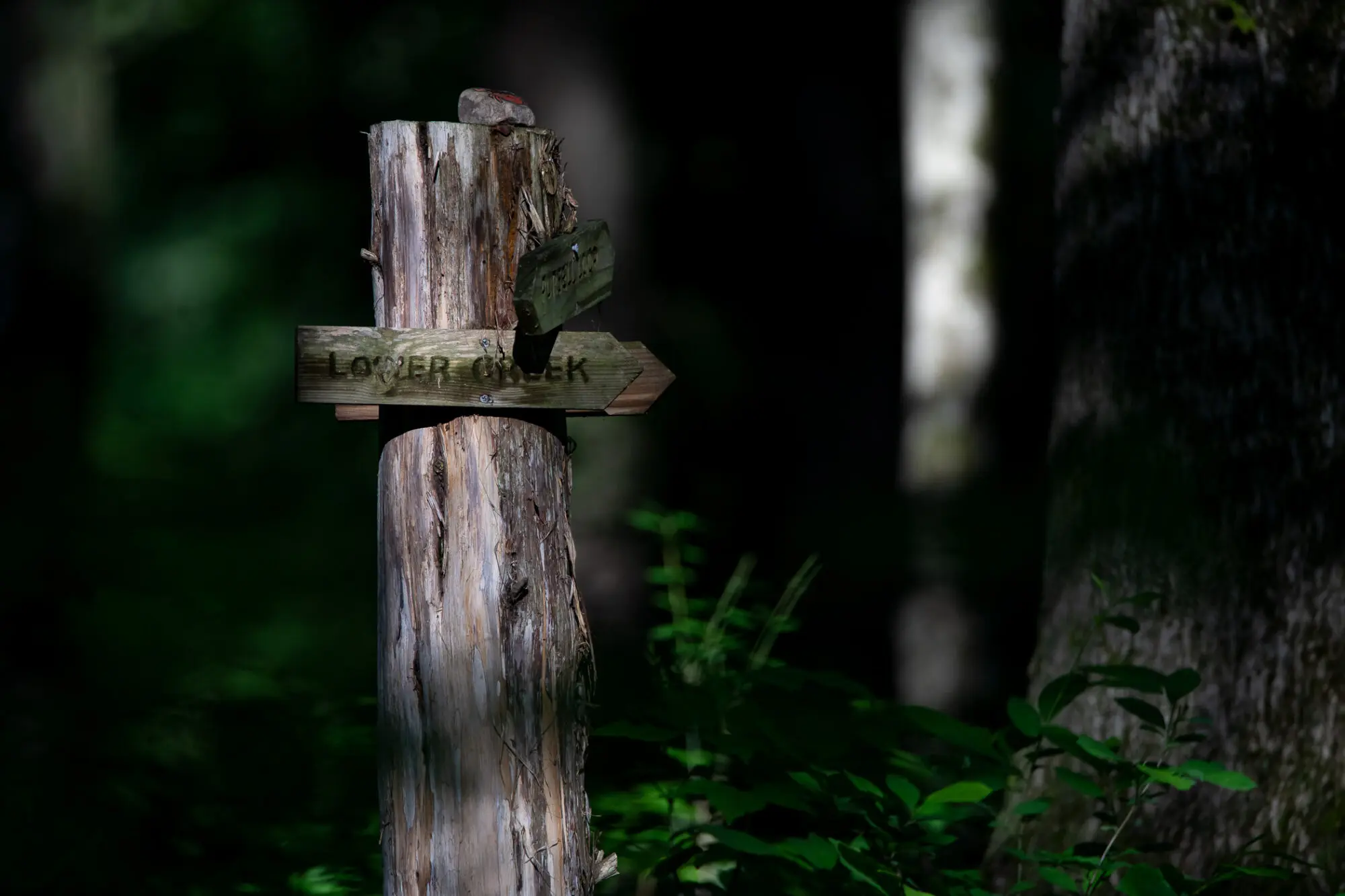
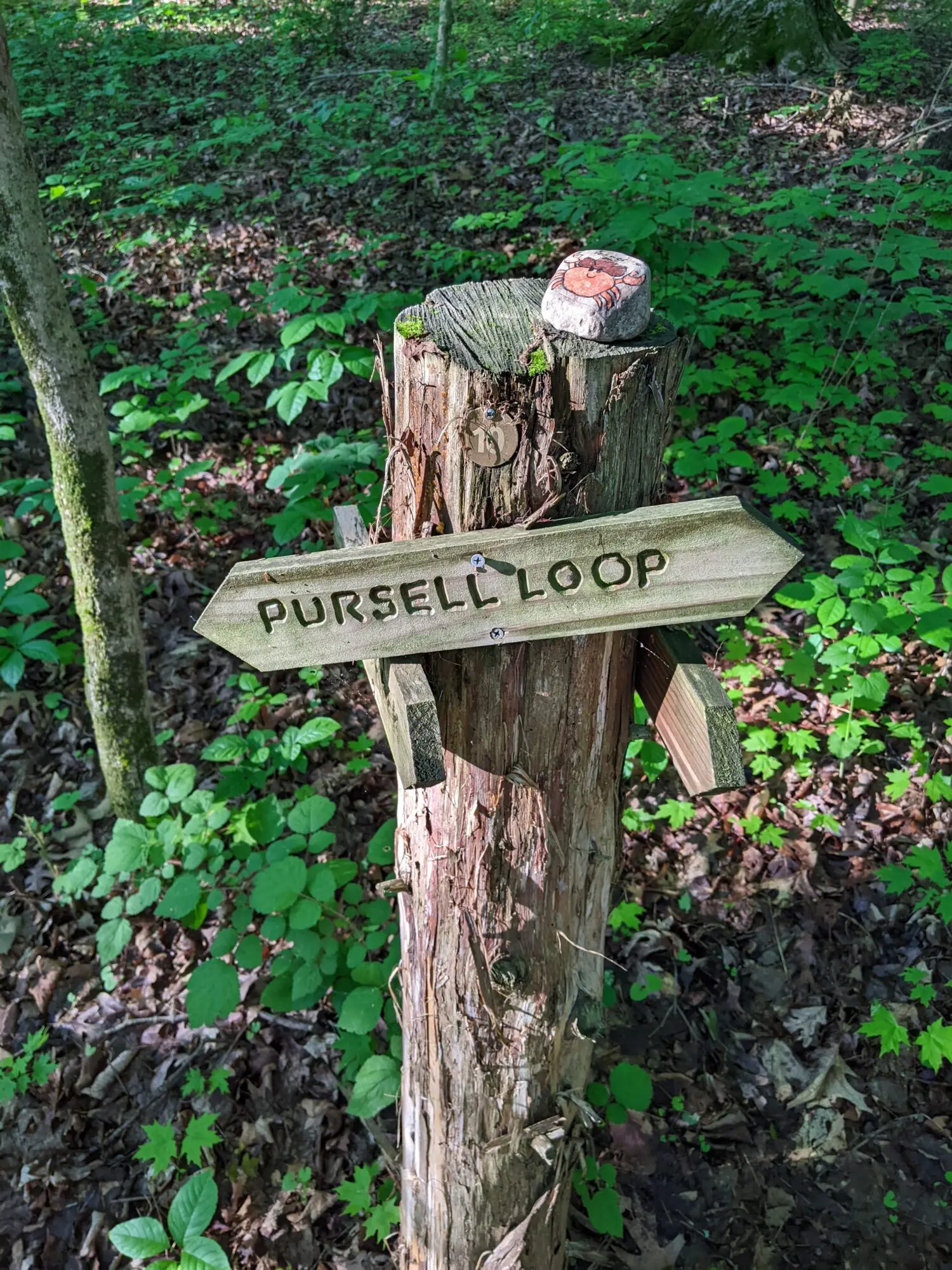
- The trails are not marked, but there are signs at all intersections to guide your hike.
- This property is enrolled in a deer management program, and certain trails may be closed periodically during deer hunting season. During firearm season, the entire preserve is closed for 10 days. We will make updates on this page when that happens.
Amenities and Special Features
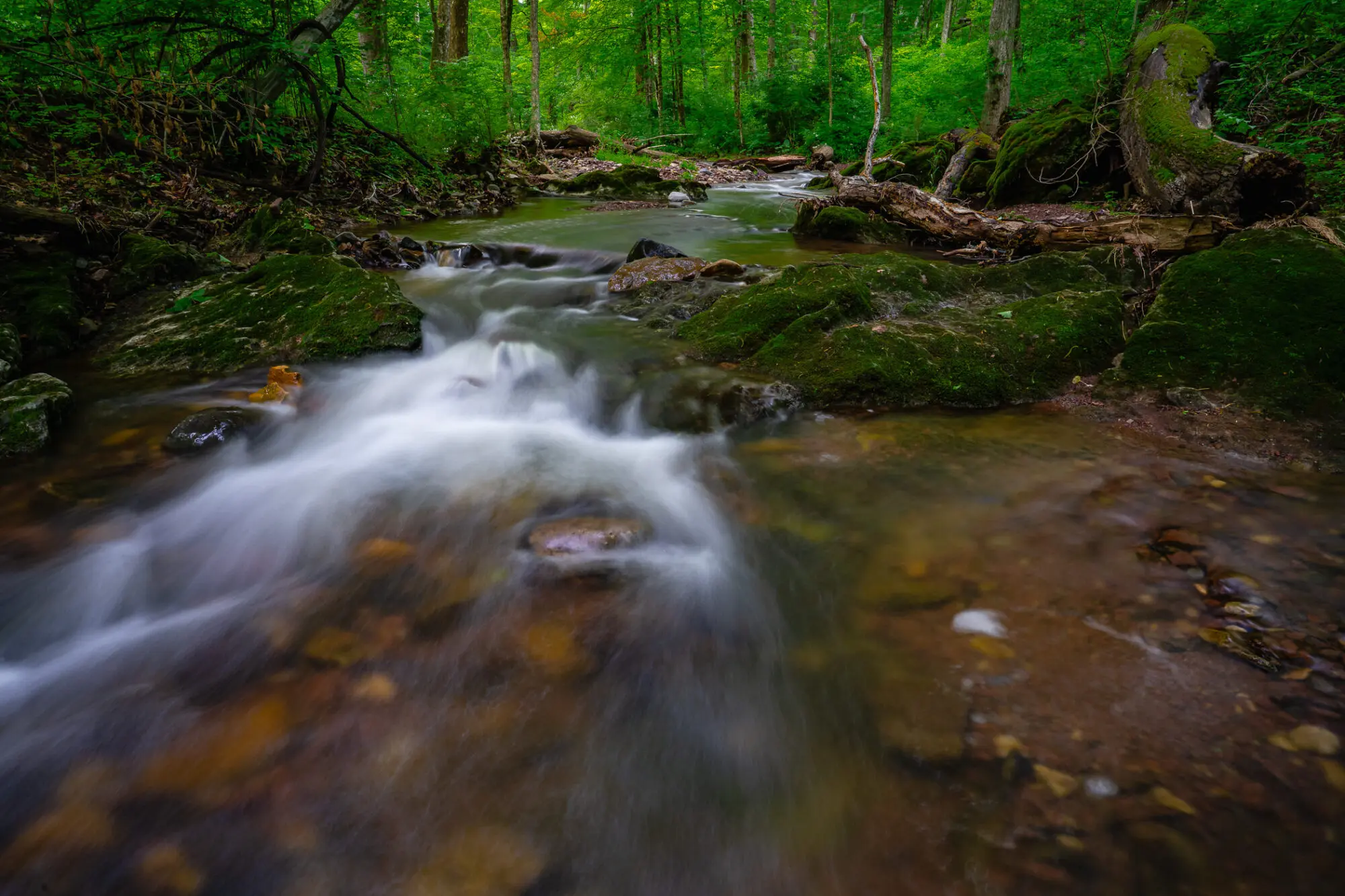
As part of Cooks Creek Watershed, the preserve includes tributaries that run to Cook’s Creek. There are a few creek access points along the trail.
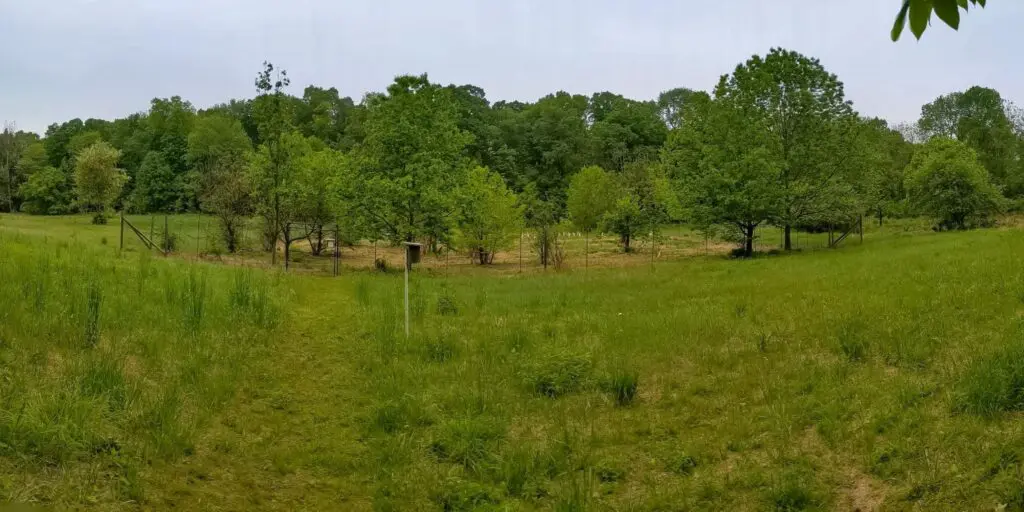
Heritage Conservancy hosts a chestnut nursery managed by the American Chestnut foundation on this preserve. Due to an introduced blight, the American chestnut tree has been functionally extirpated from its native range for many decades. One experiment to help bring back this ecologically and economically beneficial tree is to back cross it with blight resistant trees of another species. These hybrid trees are located in a deer fenced orchard along the bluebird trail.
Accessibility
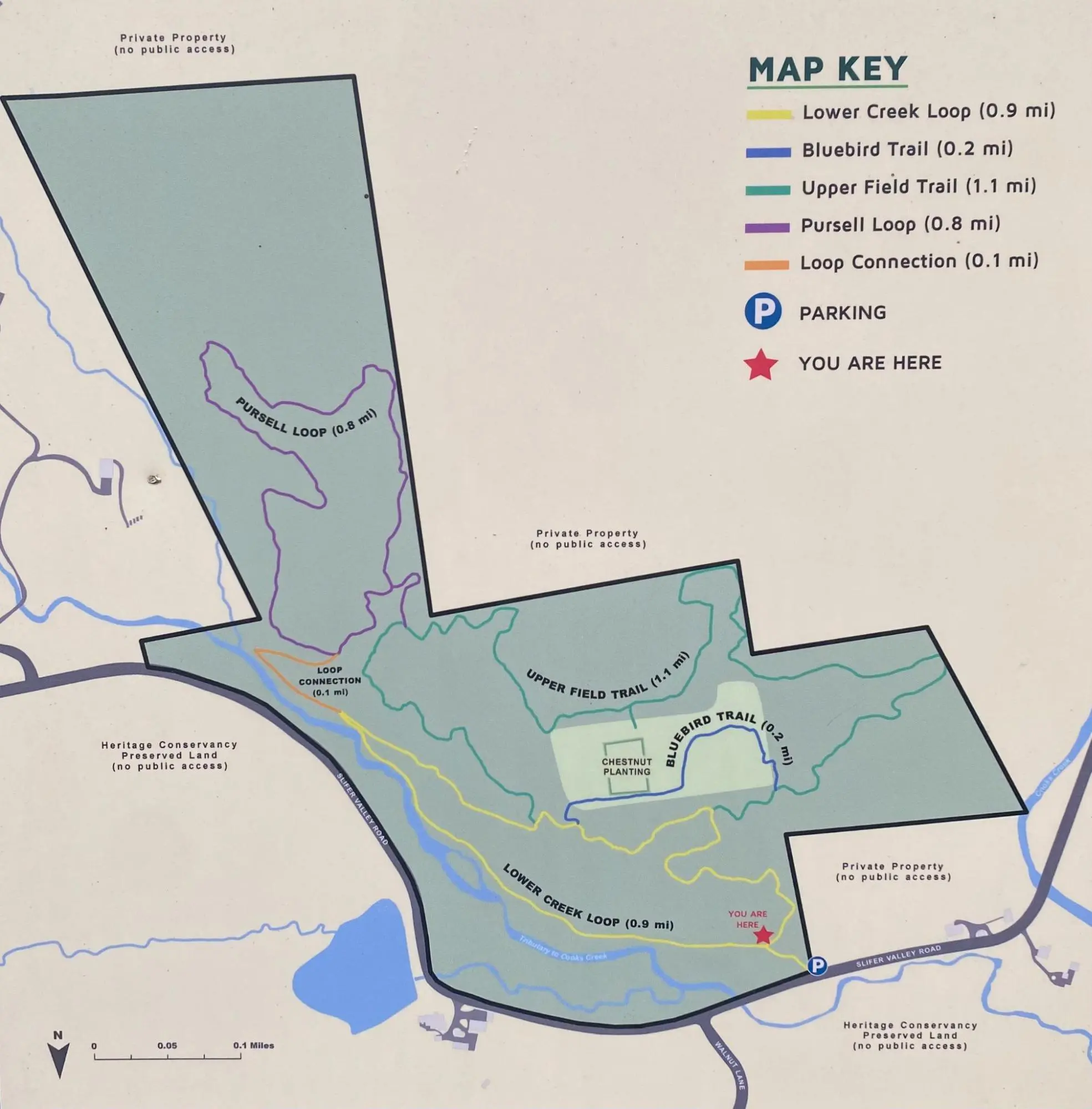
The entrance to the preserve begins with a 14° gravel slope with stairs leading up to the main trail head. There is a trail map located next to the kiosk. The preserve is situated on a hillside so trails have up to 15° of inclines or declines.
Exploring Fuller-Pursell Nature Preserve
Lower Creek Loop (0.9 miles)

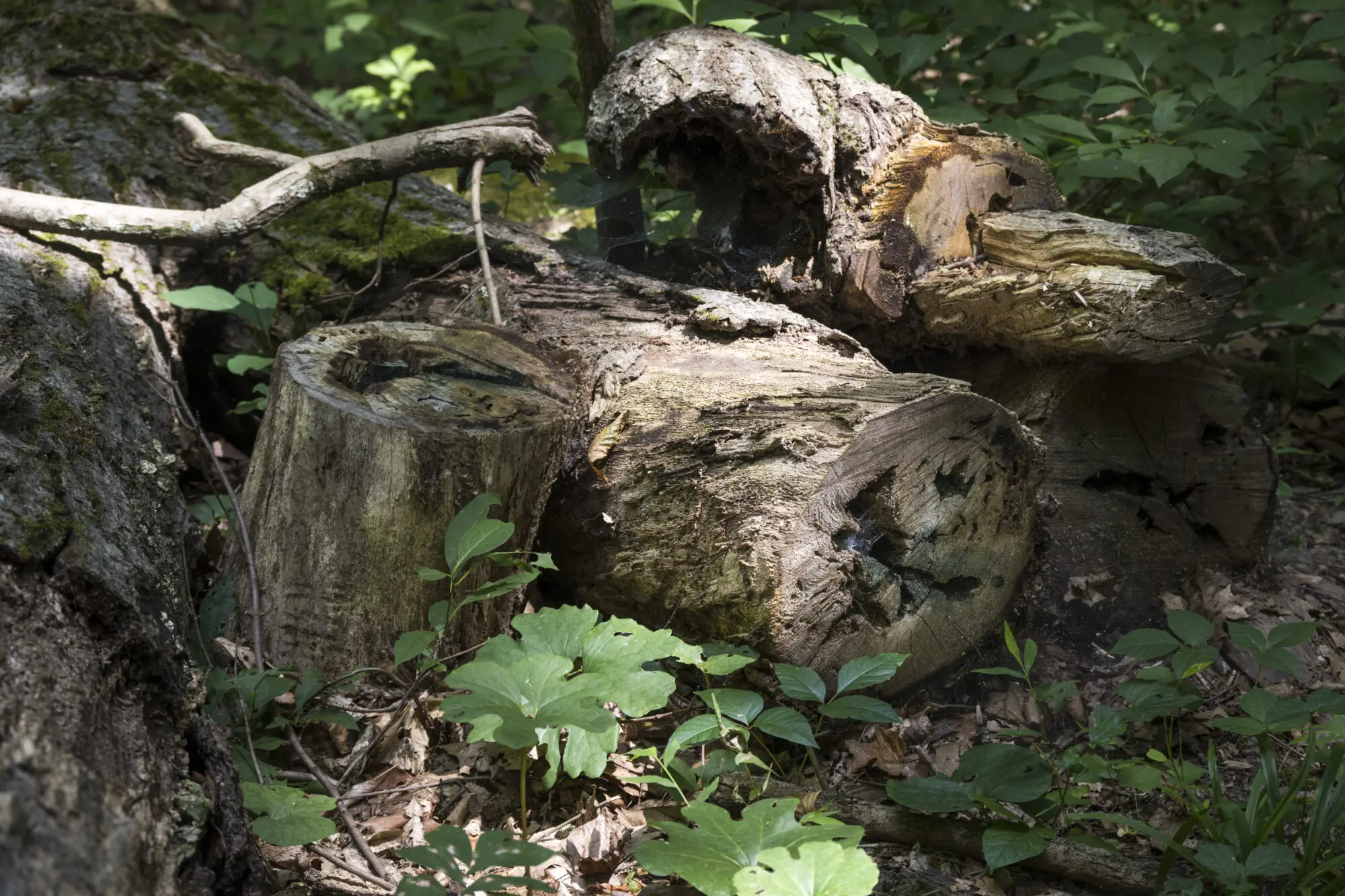
The Lower Creek Loop trail takes you along the Cook’s Creek tributary and through the forested hillside. This is a dirt path with large rocks and roots. This is a mature section of forest that has many spring ephemerals, ferns, and other wildflowers. There are multiple spots to access the stream along the trail. There is a bench along the creek side of the trail at about 0.3 miles.
Upper Field Trail (1.1 miles)
The Upper Field Trail alternates between grass and dirt paving. Watch out for roots and rocks as this trail navigates some mature and mid successional forests
Bluebird Trail (0.2 miles)
The Bluebird Trail connects upper and lower field trails. It navigates through a meadow past the chestnut orchard This trail is grassy and flat.
Pursell Loop (0.8 miles)
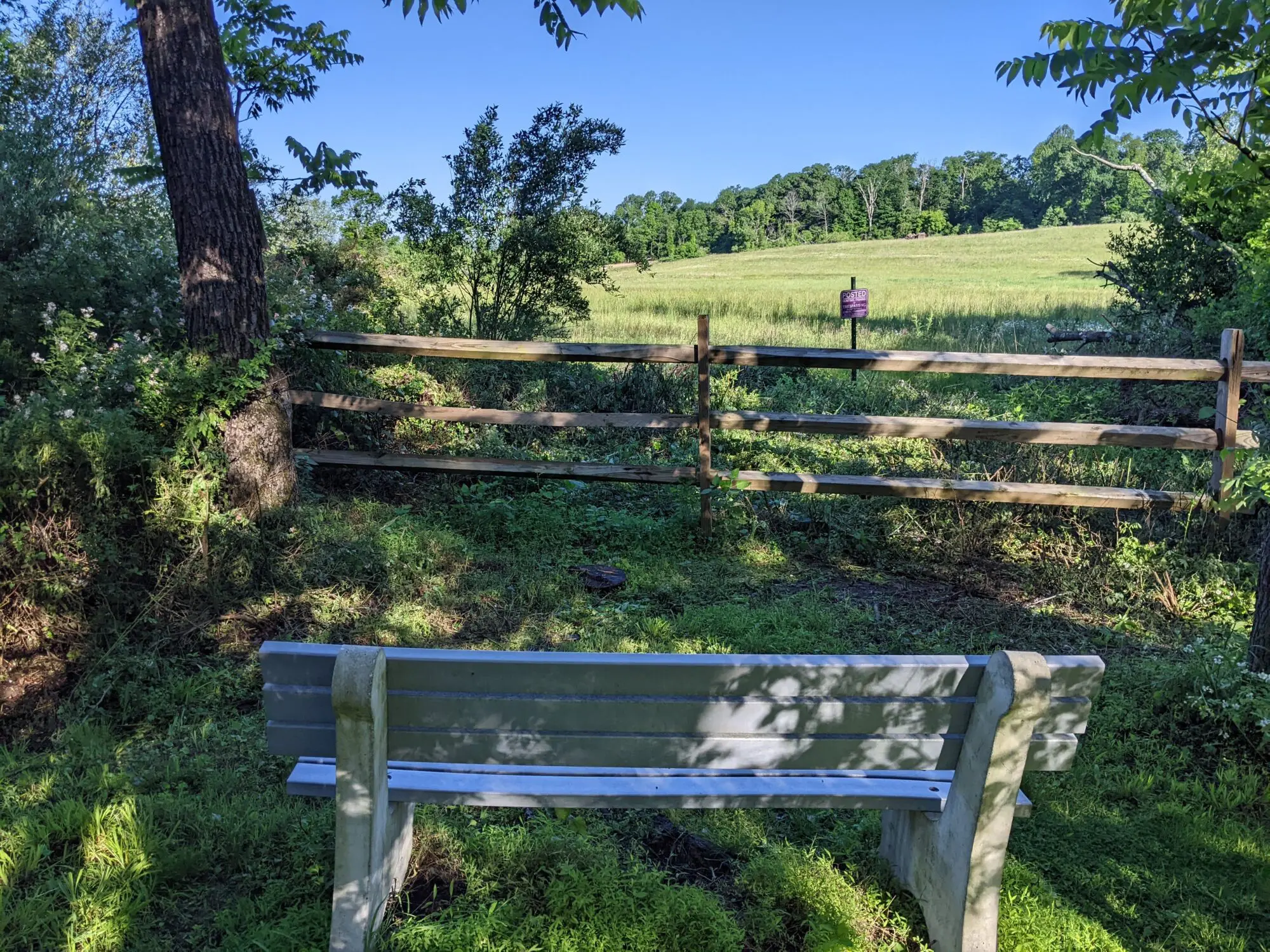
The Pursell Loop loops out into a mature forest from the Loop connection and Upper Field Trail. Some sections of forest are younger, consisting of junipers and other pioneer species. There is a bench overlooking a privately owned meadow.
Loop Connection (0.1 miles)
The Loop Connection connects the lower Creek trail to the Pursell Loop. It has an incline up the side of a slope.
The History of the Fuller-Pursell Nature Preserve
Peter and Joan Fuller owned their 135 acre property beginning in 1964, and in 1993 they gifted the 64-acre Fuller property to Heritage Conservancy. In 2017, Doris Pursell sold the 40-acre Pursell property to Heritage Conservancy at a bargain sale price in honor of her late husband, Jerry.
In 1981, the trail system was named the Jere Knight Trail in honor of longtime Cooks Creek advocate and environmentalist, Jere Knight. She was the widow of Eric Knight, author of Lassie Come Home, which she also edited. During her lifetime, she collected information and wrote reports that helped make Cooks Creek a state-protected conservation area. She was also a member of the 1930 Olympic fencing team, a Major in the Army’s first all-female brigade, a poet, and a teacher.

Wildlife at Fuller-Pursell
Plant Life
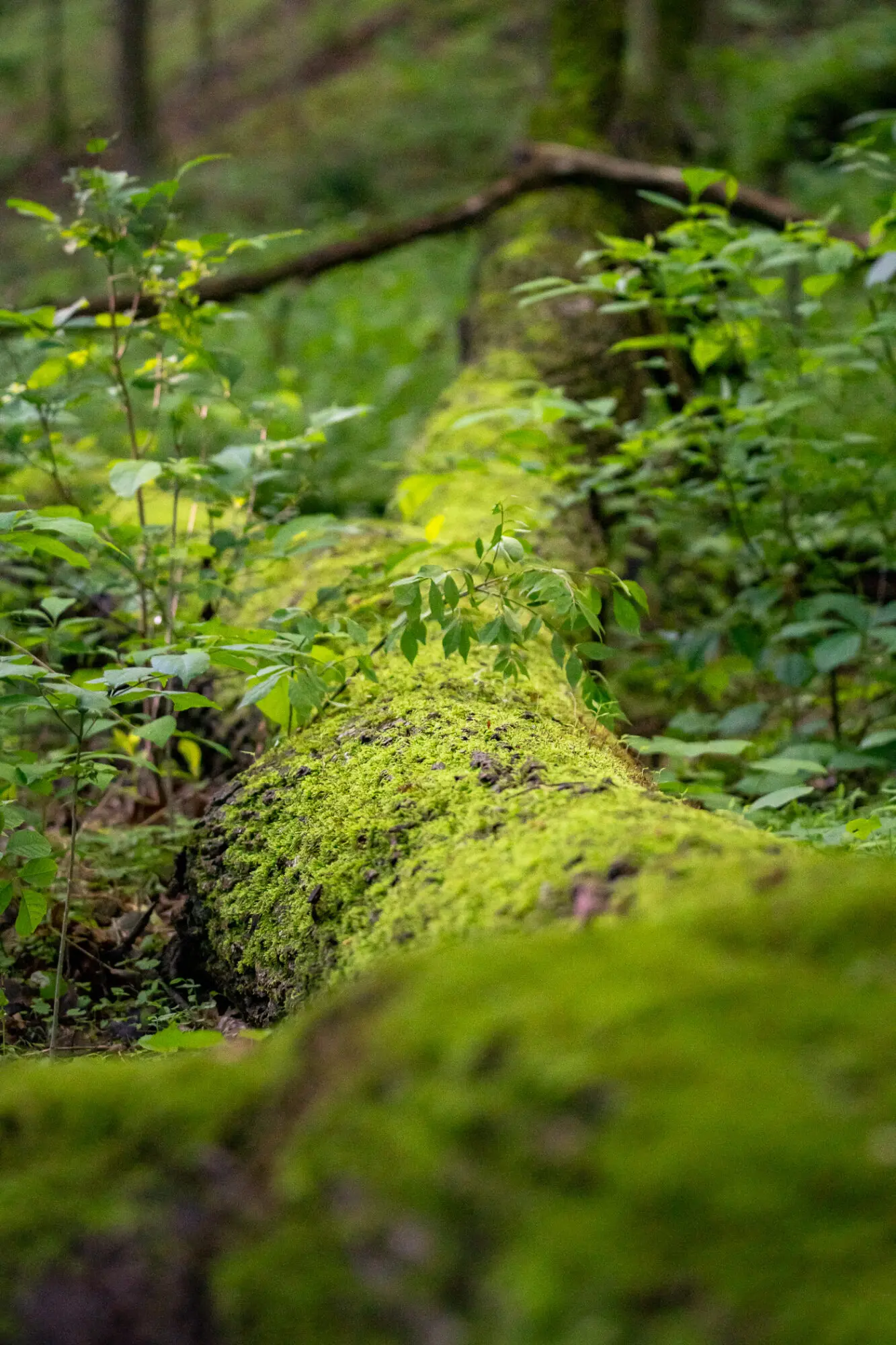
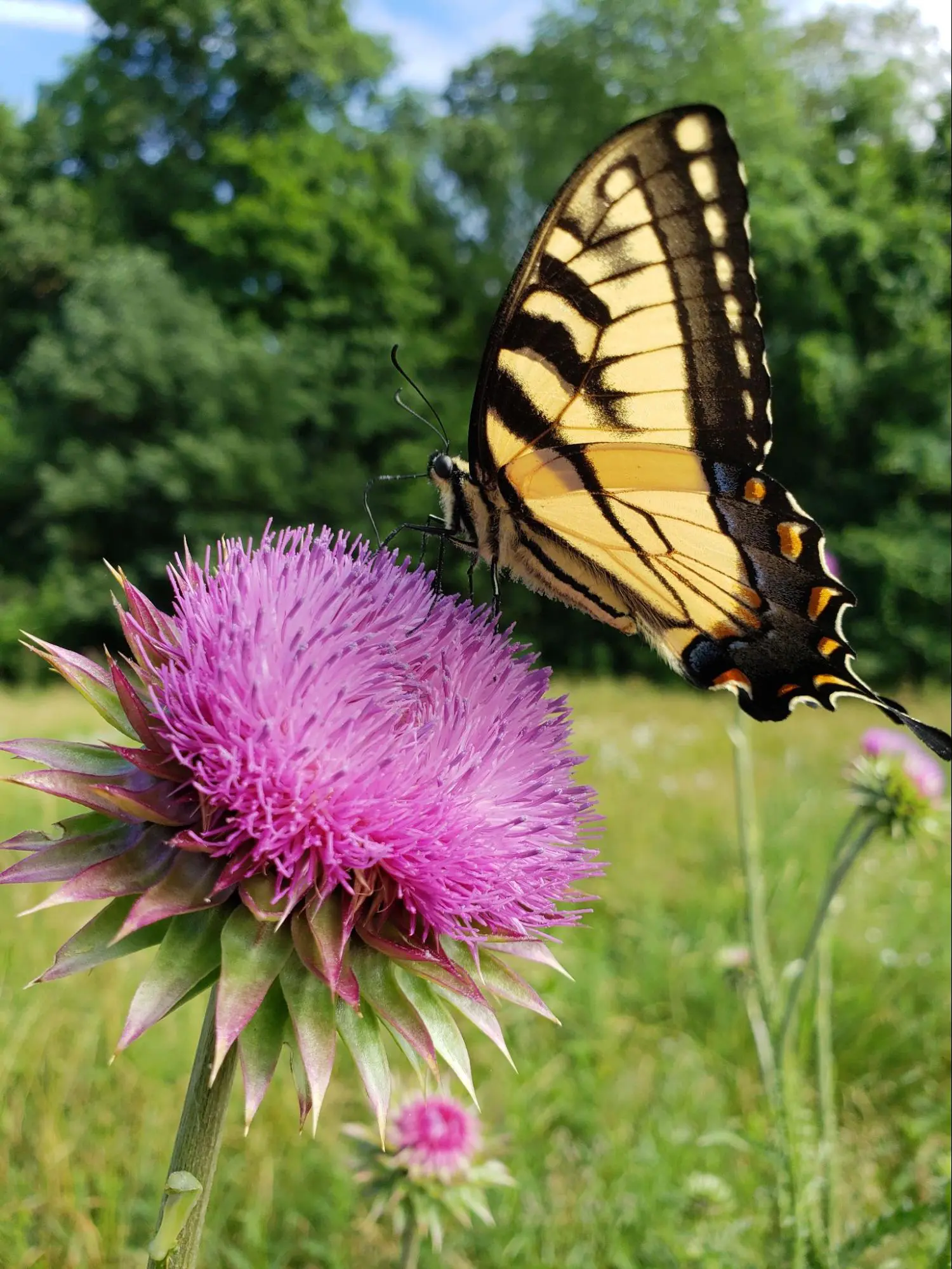
In the meadow, you can find milkweed, goldenrod, asters, and more. Along the riparian buffer of the Cooks Creek tributary, there is also spicebush, blackhaw viburnum, elderberry, chokeberry, and more. There are continued efforts to control invasive species like barberry, burning bush, autumn olive, garlic mustard, multifloral rose, and honeysuckle.
You can find a variety of trees on the preserve, including century-old white oak, American beech, red maple, sycamore, black walnut, and tulip poplar.
The preserve is also the site of conservation work. Before the 20th century, the eastern United States was dominated by the American chestnut. In the early 1900s, widespread blight reduced the American chestnut to near extinction. Heritage Conservancy partners with The American Chestnut Foundation on this preserve in an effort to introduce a disease-resistant hybrid, which has been growing in the nursery atop Fuller-Pursell Nature Preserve since 2003.
Animals
Cook’s Creek is recognized as a significant cold water breeding area for native trout and is one of only two streams in Bucks County designated as Exceptional Value for its water quality and biodiversity. It is also a designated and protected Cold Water Fishery, affording a home or migratory corridor for cold- water fish, and numerous types of insects and invertebrates. In a 2025 mini-BioBlitz, an American eel was found in the stream.
Common animals you can find at this preserve are deer, raccoon, opossum, skunk, rabbit, fox, and various rodents, including mice, chipmunks, red and gray squirrels, and groundhogs. Many songbirds and predatory birds may be found both in the forested areas and open field, including downy and hairy woodpeckers, blue jays, chipping sparrows, eastern wood peewees, common yellow throats, tufted titmice, oven-birds, and red-eyed vireos. In the 2025 BioBlitz, three charismatic bird species were seen: the rose-breasted grosbeak, scarlet tanager, and blue winged warbler.
Community Engagement at Fuller-Pursell
In May 2002, Heritage Conservancy, the American Chestnut Foundation, Boy Scout Troop 52, Cooks Creek Watershed Association, and the Pennsylvania Bureau of Forestry partnered to establish the Chestnut Nursery. Together, we are working towards the breeding of a blight-resistant hybrid tree of the American and Chinese chestnuts that can be reintroduced into the chestnut’s natural range.
Video: Watch Heritage Conservancy’s virtual tour of the Fuller-Pursell Nature Preserve.
Our stewardship team works with many volunteers to maintain the preserve and keep the forest healthy. With the loss of ash trees on the preserve, hundreds of new trees were planted and protected on the preserve with the help of volunteers.
The Friends of Fuller neighborhood group helped create the trails and plays an important ongoing role in their maintenance.
Occasional events take place on the preserve, including a mini bioblitz that was conducted by a group of biologists and community science volunteers in 2025. The goal was to document the species diversity on the preserve, which would guide stewardship decisions in the future. Partner organizations included Cooks Creek Watershed Association, Bucks County Birders, Delaware Valley University, and Trout Unlimited.