
Visit our Preserves
Russell-Mandel Preserve
Heritage Conservancy’s Russell-Mandel Preserve is a shining example of land conservation and historic preservation.
About Russell-Mandel Preserve
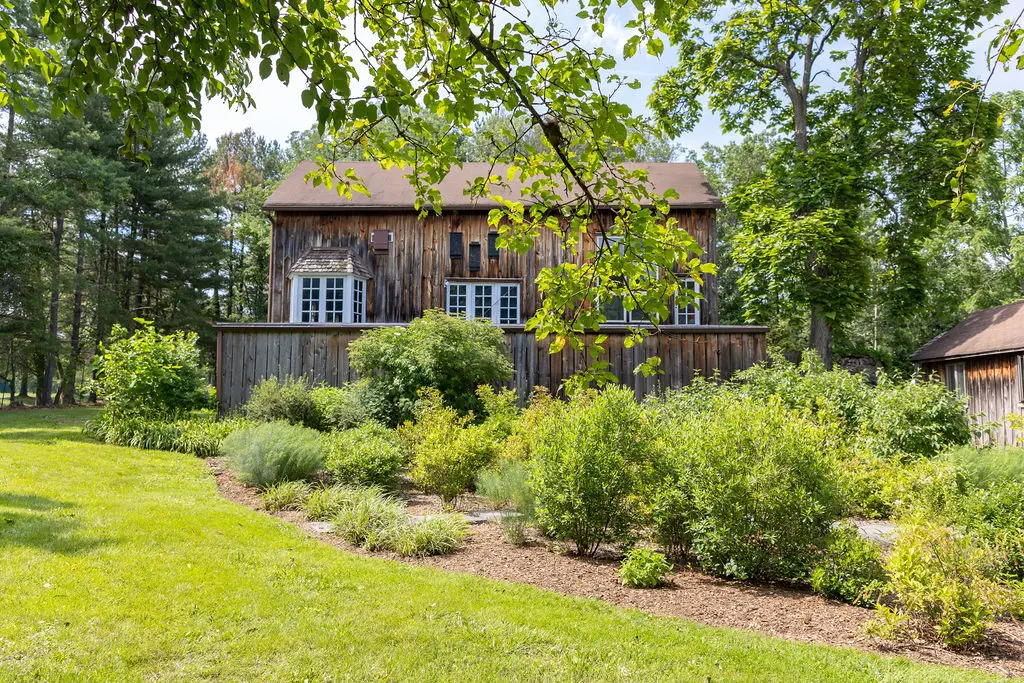
Donated to Heritage Conservancy in 1990, the Russell-Mandel property holds a historic farmhouse, cottage, barn, and is home to our growing native plant nursery (not open to the public).
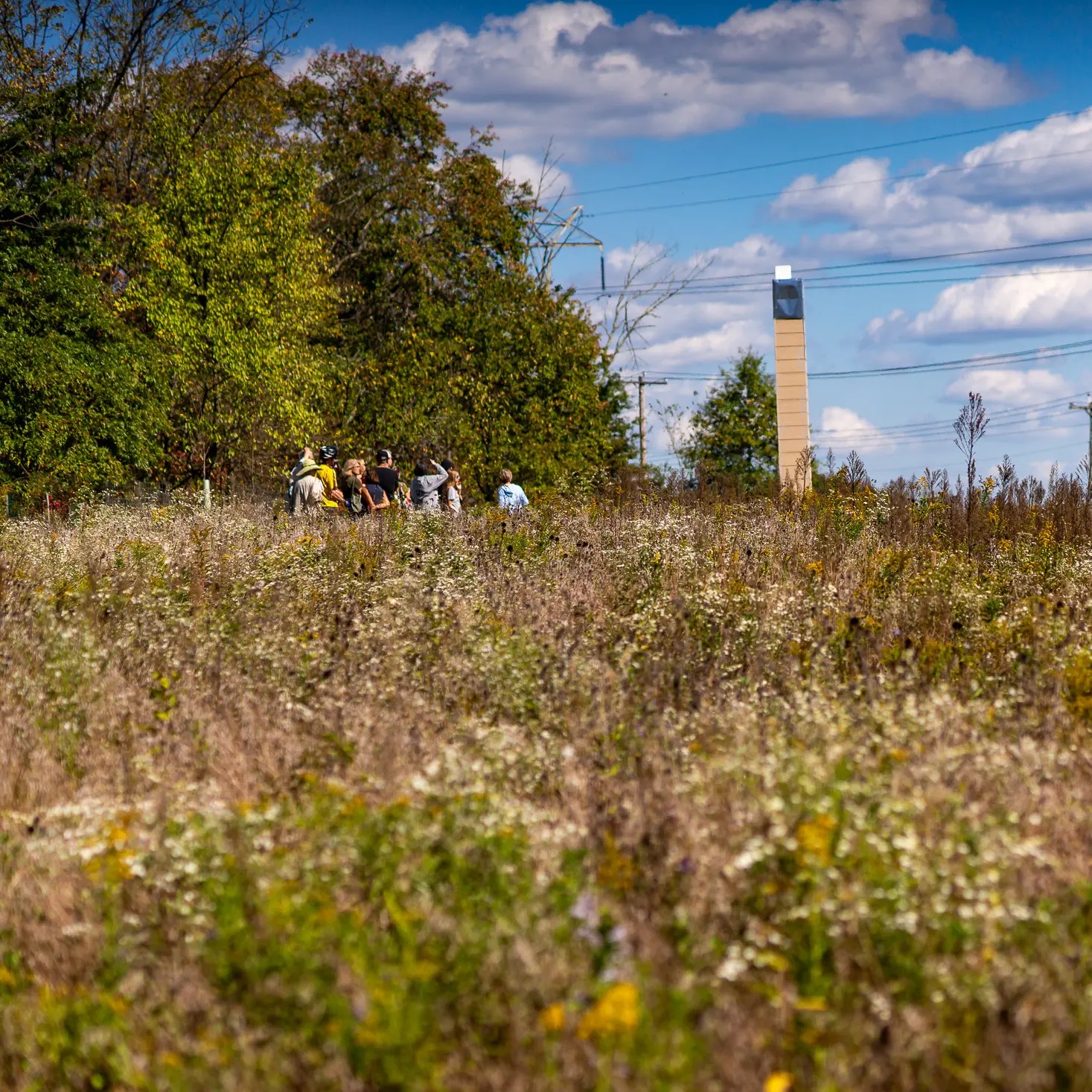
A five-acre native pollinator meadow with a loop trail is open to the public for exploration. The property is actively farmed and includes a small tributary leading to Pidcock Creek. This is all part of the philanthropic vision and generosity of late Heritage Conservancy supporters Robert L. Russell and William Mandel.
Visitor Info
Address: 1515 Holicong Rd., New Hope
Parking: A grassy field located to the right of the main building, outside of the deer fence, is used for parking. Signs lead from the parking area to the meadow trailhead. There are no specified handicap parking spots, but there is ample space for parking.
The public trail is open from dawn to dusk. Please do not enter the deer fence areas or buildings.
Important to Know
- The area inside the deer fence is closed to the public. Please do not try to enter the private property area without a Heritage Conservancy staff member.
- Pets are welcome but must remain on leash at all times.
- There are no public bathrooms at the preserve.
- Please bring a water bottle as there are no water fountains.
- Please do not litter. There are no trashcans.
- Along one section of the trail there is a large dirt pile. This is habitat for native ground nesting bees. Please do not climb on or disturb the dirt pile.
- This property is enrolled in a deer management program, and certain trails may be closed periodically during deer hunting season
Amenities and Special Features
The trail at Russell-Mandel Preserve loops around a 5-acre pollinator meadow planted to attract and support bees, butterflies, and other pollinators. The property supports other wildlife like vulnerable chimney swifts, bats, and American kestrels. Other nesting boxes, built by local Eagle Scouts, can be found on the meadow trail for bluebirds, tree swallows, and house wrens.
Accessibility
The well-maintained trail goes around the pollinator meadow and is primarily grassy with some mulch areas. There is little shade. One bench can be found on the trail about halfway around the loop.
Preserve Trails

Pollinator Meadow Trail – 0.4 miles. Begin the trail from the parking area and head down a 12° gentle slope to the grassy meadow trail. Follow the loop around the meadow back to the parking area.
The Story of the Russell-Mandel Property
Bob Mandel and Bill Russell first discovered the circa-1775 farmhouse on 5 acres in the 1970s. They purchased the land immediately and over the years acquired six adjoining parcels, which together make up the 55-acre property.
In December of 1990, the couple donated the property to Heritage Conservancy while reserving life rights, meaning they could continue living there for the rest of their lives. Bob Russell was a member of the Board of Heritage Conservancy for over 18 years.
When the property was donated, it included the main house, a carriage house, barn, agricultural fields, and woodland. The main house on the property is listed on the Bucks County Register of Historic Places. Today, the property is still actively farmed.
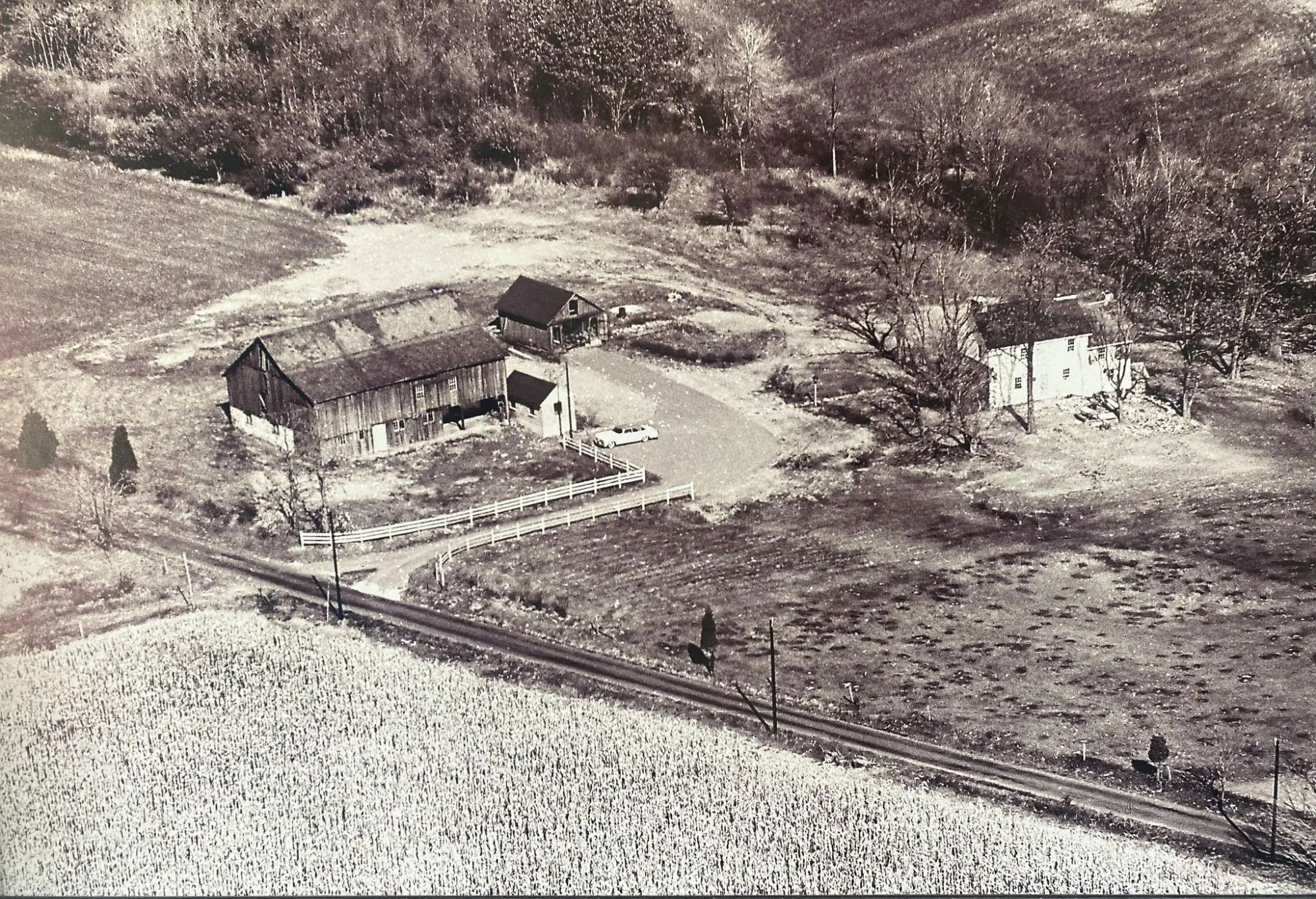
Bob and Bill were avid gardeners and collected many exotic plants, some of which remain on the property today. Our conservation team has worked to replace many of the invasive species with native plants in the gardens.
In 2022, Heritage Conservancy began the process of converting an agricultural field on the property to a 5-acre native pollinator meadow. Pollinators, like bees and butterflies, are becoming increasingly vulnerable due to many factors. Thirty plant species were seeded into the meadow, and more species were added from our on-site plant nursery to increase the diversity to about 50 species.
The meadow was hand seeded by our stewardship team and volunteers. After its third year, the meadow is completely established, and it now provides ideal habitat for pollinators while giving the community an opportunity to learn about and connect with nature.
Wildlife at Russell-Mandel Preserve
Plant Life
In the pollinator meadow you can find partridge pea, mountain mint, goldenrod, purple coneflower, bergamot, multiple species of aster, and more. There are many species of native grasses in the meadow.
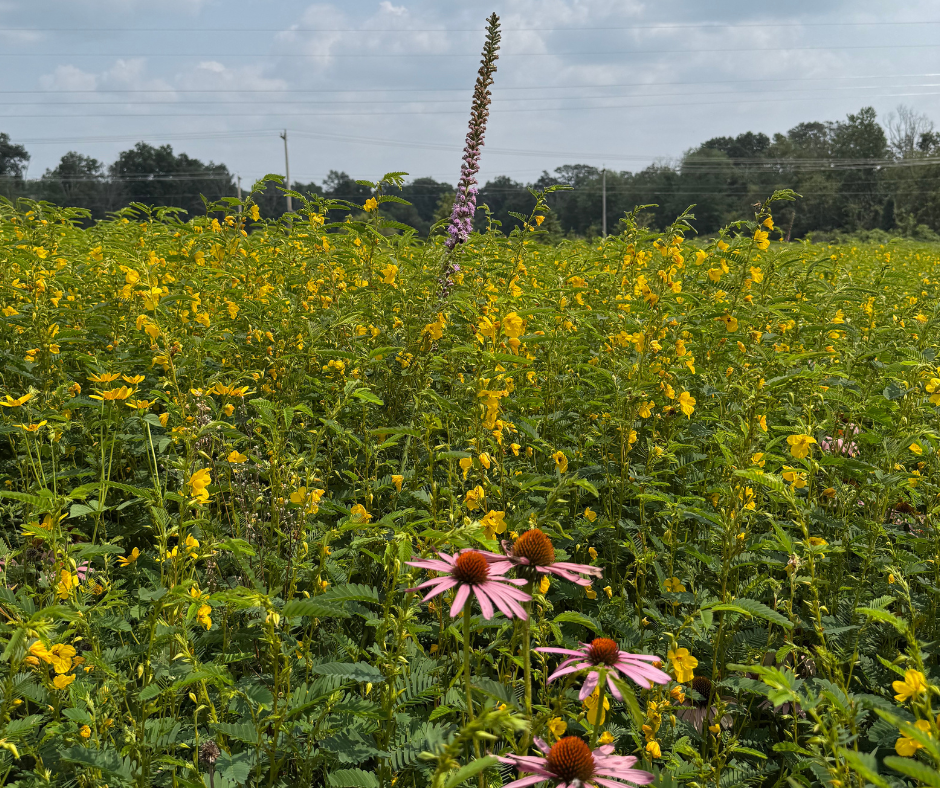
Along the edges of the meadow there are flowering trees and shrubs that were planted to increase the pollen and nectar resources early in the spring. These include: American plum, hazelnut, serviceberry, red bud, persimmon, sumac, and oak. In other places on the property (unfortunately not open to the public), there are native and ornamental specimen trees like magnolia, oak, buckeye, and pawpaw, to name a few.
Animals
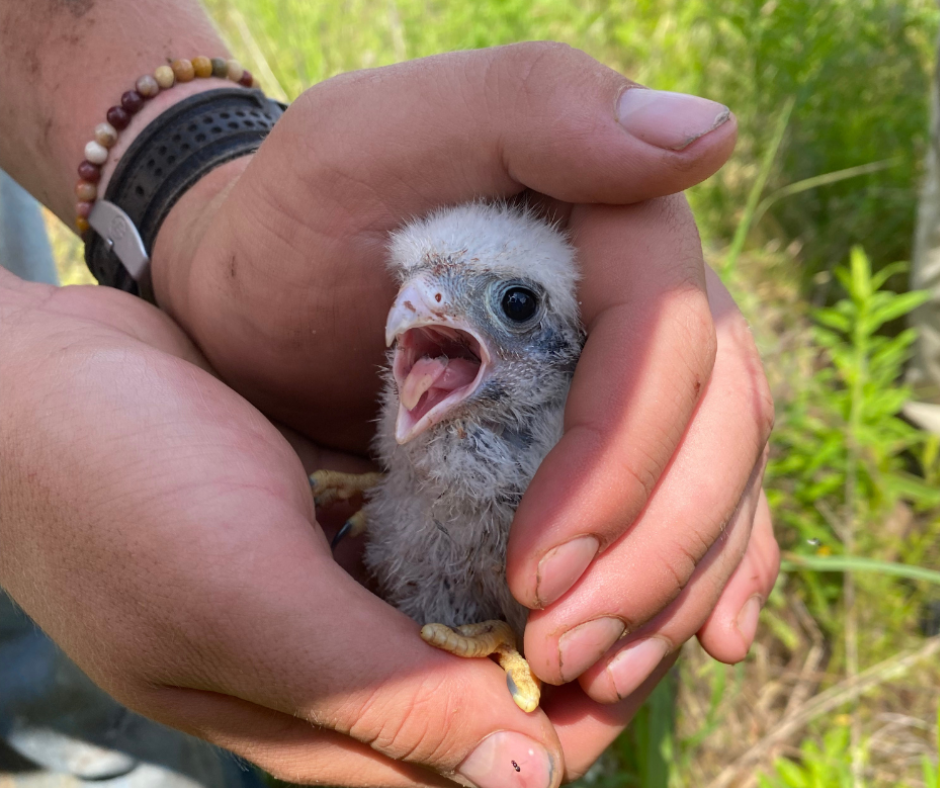
Russell-Mandel is home to at least two vulnerable bird species: the chimney swift and American kestrel. We have added nesting boxes for both species on the property to support the local population. Each year the kestrels that are raised on the preserve get a small metal band around their leg. These bands have identification numbers that allow researchers to learn more about North America’s smallest falcon as they find out where they travel, how long they live, and more. All banding is conducted under a federally authorized bird banding permit. There are other birdhouses around the meadow to attract bluebirds and tree swallows. The two tall towers located in the interior are for chimney swifts, and were built as Eagle Scout projects.
Other animals you may encounter on the preserve include small rodents such as mice and voles, turkeys, eagles, foxes, and many insects like butterflies, bees, moths, and caterpillars. There is a population of big brown bats that live on the property that the community science team counts annually.
Community Engagement at Russell-Mandel
In 2024, Jim Drennan, Heritage Conservancy’s Director of Science and Stewardship, worked with Eagle Scouts to install chimney swift nesting boxes on the property. Chimney swifts are considered a vulnerable species due to their dependence on manmade structures — specifically chimneys. Because of the movement to seal or line chimneys, these birds are unable to nest, leading to a decline in population. Building the boxes on the property will help increase their numbers in our area.
A community of Heritage Conservancy volunteers tend to native plant gardens located by the main house (inside the deer fence). The gardens began several years ago with a Bowman’s Hill Wildflower Preserve Plant Grant, which supported the planting of 50 native plants at Russell-Mandel.
Today, these gardens are full of many native wildflowers, shrubs and trees that are used as demonstration gardens for public programs run by the Conservancy.