

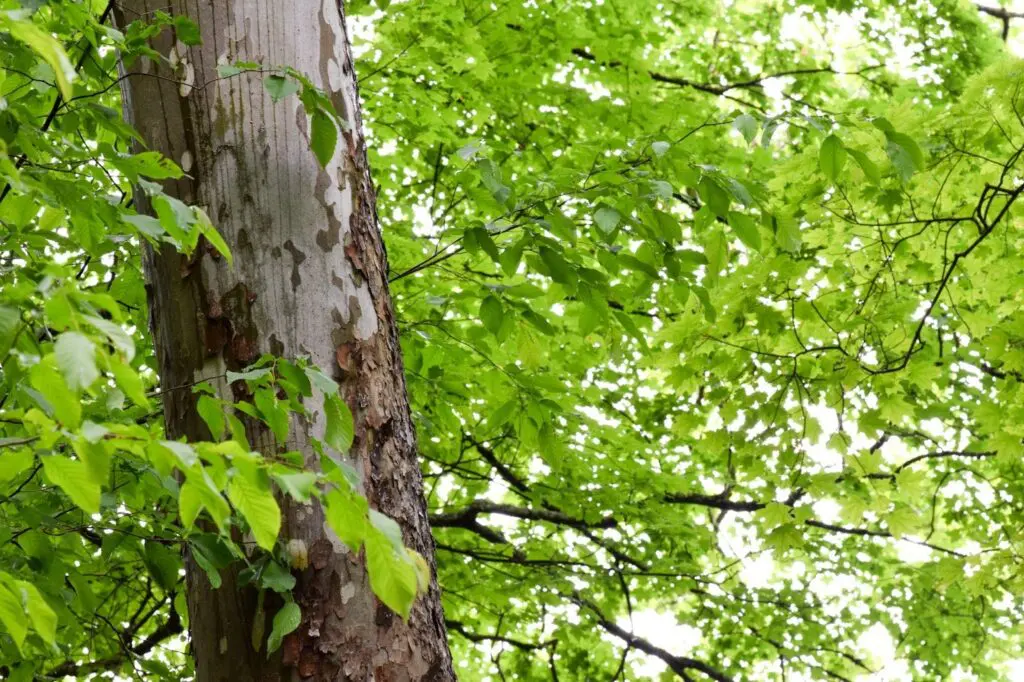
The Mighty American Sycamore
The American Sycamore (Platanus occidentalis) is among the most recognizable tree species found in the eastern U.S. Even so, their importance to wildlife and people alike is often overlooked. In this article, I’d like to shine a spotlight on one of the true titans of the tree world.
Growing well over 100 ft tall, and having trunks up to 10 ft in width, the American Sycamore is one of the largest tree species found in the eastern U.S. Arguably as impressive is how far their canopies stretch, which can match their heights when they’re grown out in open space.
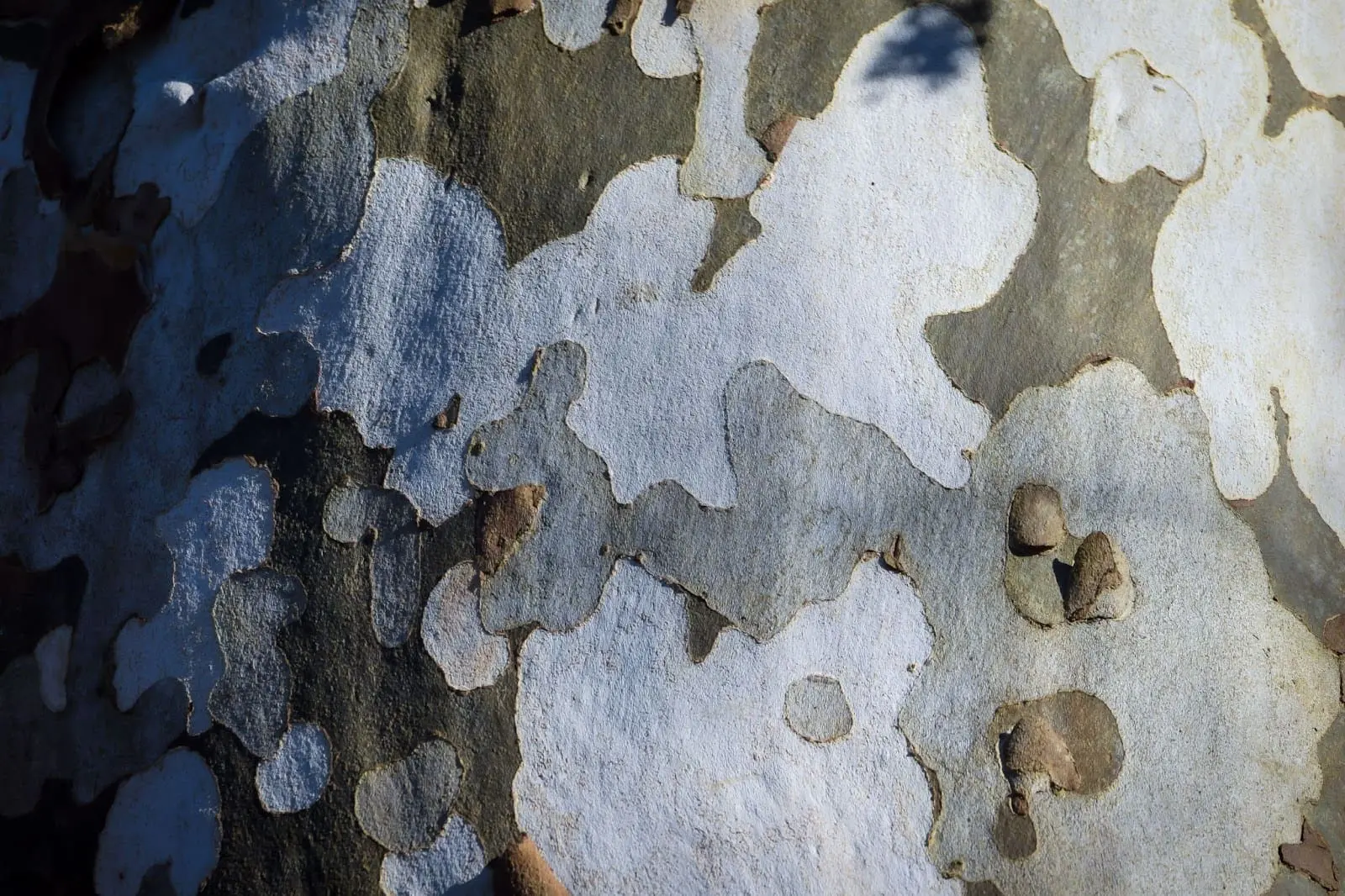
Size aside, the most distinguishing feature of American Sycamores is their bark. They possess an exfoliating outer bark, which can be different shades of green and brown, and a white to light-gray inner bark. From afar, American Sycamores appear white on the top and brown on the bottom, not dissimilar to an iconic bird that often nests atop their branches. More on that in a bit.
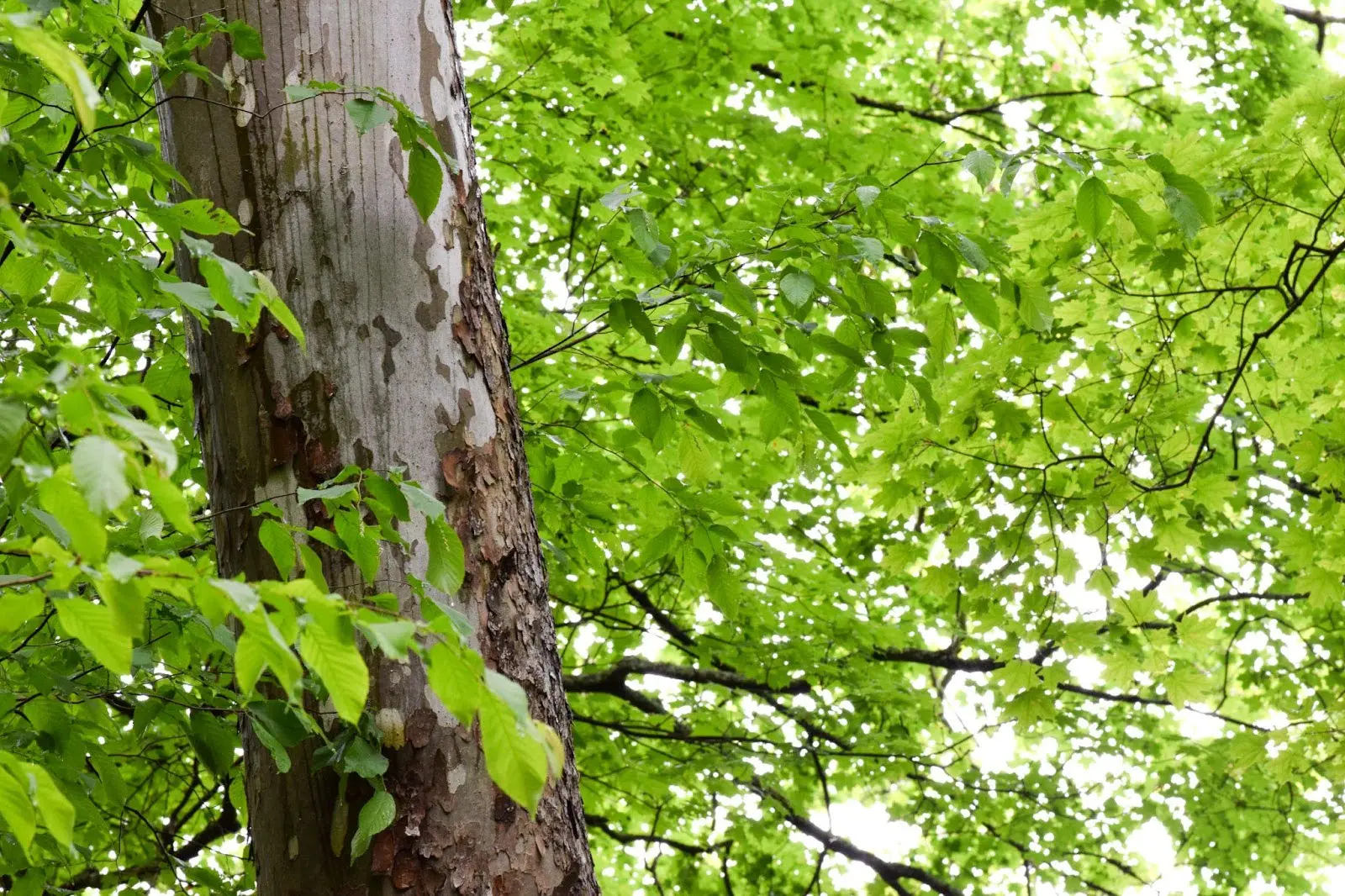
Even amongst the dense summer foliage, American Sycamore and its iconic bark readily stand out.
The leaves of American Sycamore slightly resemble a maple leaf, in that they’re both simple and palmate. An easy way to tell apart a Sycamore from a maple (assuming it’s a small individual or the bark isn’t visible) is to look at how the leaves are arranged on a branch. Sycamore leaves grow alternately (basically zigzagging along the branch), whereas maple leaves grow opposite one another (two leaves sprouting from the same point along a branch).
American Sycamore fruit is distinct as well. Dozens upon dozens of seeds pack into dry spheres, which tend to hang singly from the tree from early fall through the winter. The similar-looking (but non-native hybrid) London Plane Tree has seed spheres that usually hang in pairs as opposed to singly, which is a good distinguishing feature if you’re ever trying to tell them apart.
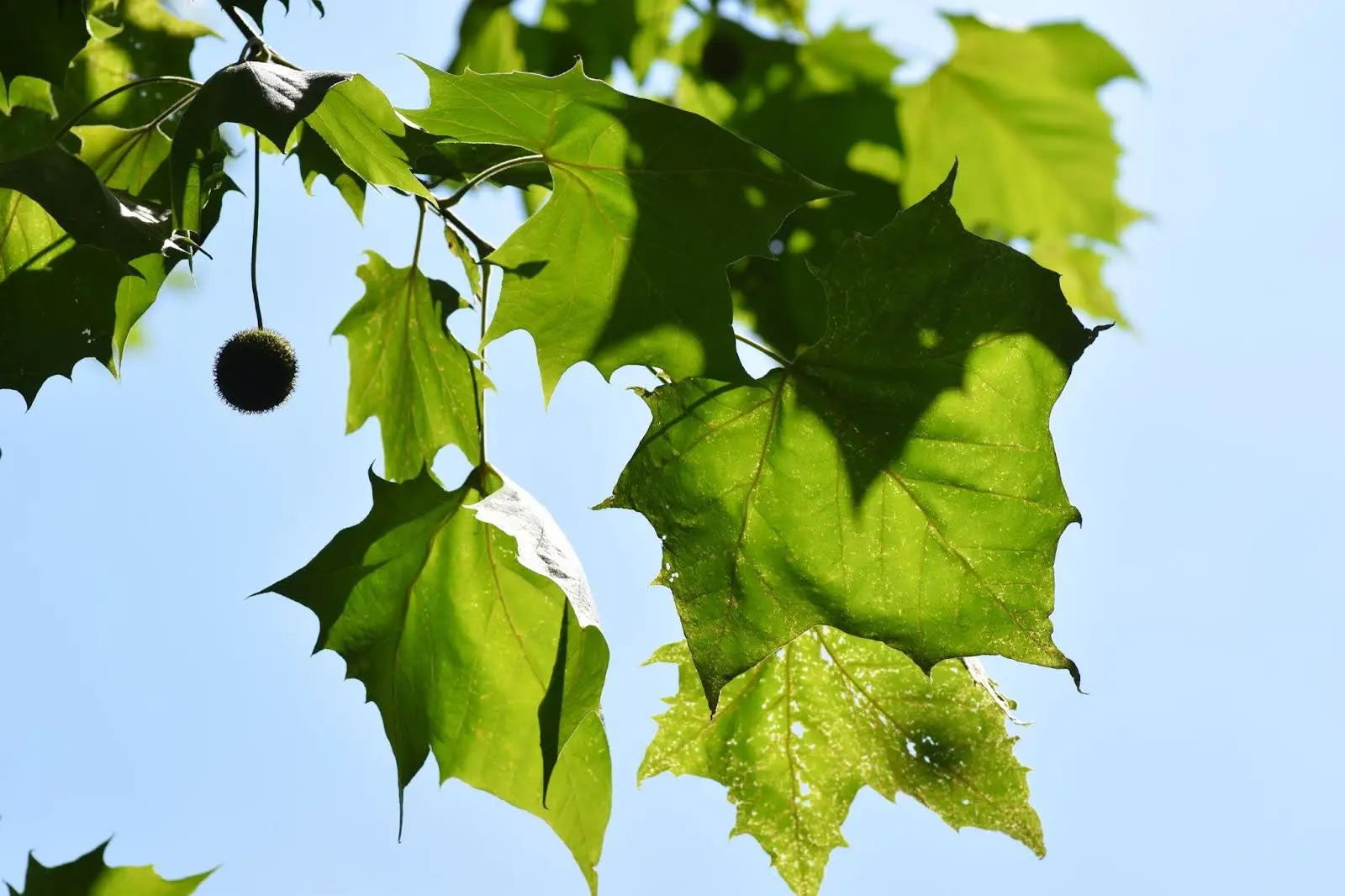
Note the alternating leaves as well as the fruit cluster borne singly on the branch.
In its most natural setting, you will find American Sycamore growing along the boundaries of creeks, rivers, and wetlands. They’re a water-loving species, and you can even find them growing out in the middle of sandy islands within waterways too. They often grow alongside species like Silver Maple, River Birch, Boxelder, Basswood, and all kinds of Willows. Sycamores are also a common pioneer species, i.e., they quickly colonize recently disturbed sites. Hence, it isn’t uncommon to find them growing out in the middle of fields, meadows, or recently cut areas. Despite their affinity for water, they’re considered to be moderately drought-tolerant and are often planted ornamentally in urban and suburban settings.
ECOLOGICAL VALUE
Given their propensity to thrive in and around aquatic environments, they support a suite of different water-loving critters. Cavity nesting waterfowl like Wood Ducks, Hooded Mergansers, and Common Mergansers will nest within their trunks, which often form hollows. Other cavity nesting birds and mammals find refuge within their hollows, including things like Barred Owls, Flying Squirrels, Raccoons, and even bears! Their sprawling canopies, which stretch out over fish-filled rivers, make American Sycamores a popular tree amongst nesting Bald Eagles.
On the subject of fish, the shade that Sycamores cast over waterways creates stable-temperature microhabitats for ectothermic (cold-blooded) fish to hide and hunt. Their root systems, which often jut out over the water, offer basking habitat to aquatic reptiles and amphibians. Beneath their roots, turtles can seek refuge to wait out the winter months.
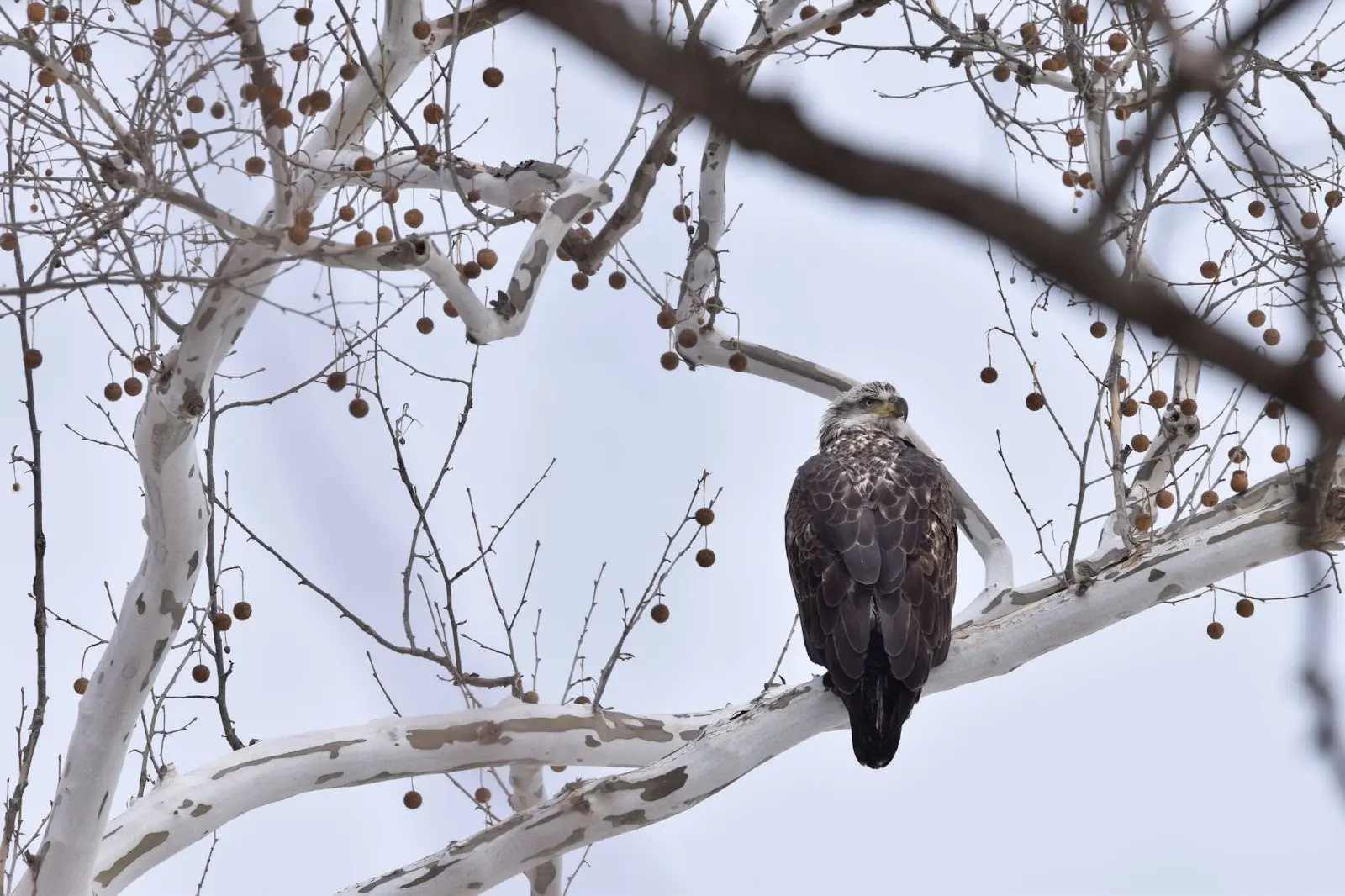
Juvenile Bald Eagle, perched in an American Sycamore along the Delaware River.
BENEFITS TO PEOPLE
As for how Sycamores benefit people, the list is by no means brief. Nevertheless, here’s a shortlist of some of the major ways we benefit from having these in our landscape:
- Because they tend to grow along waterways, their roots help 1) stabilize the soil (reducing erosion) and 2) aid in absorbing stormwater, which helps mitigate the risk of floods
- As is the case for most trees, they provide shade and refuge from the relentless summer heat. But because these trees are often gigantic and sprawling, they tend to have more shade to offer than your average deciduous tree.
- Their large leaves and canopies aid in purifying the air, as well as sequestering carbon, which is particularly useful in urban and suburban settings where pollution is abundant and the effects of climate change are most amplified.
- Aesthetically, this is one of the most beautiful trees found in the East. I’d argue that’s objective, but I understand my taste may not match the masses. In winter, they’re particularly stunning, as they decorate our parks and natural areas with their contrasting bark.
- Because they support such a diversity of wildlife, they aid in spreading inspiring wildlife encounters with people across our landscape. The next time you see a Bald Eagle, keep in mind that it may have been raised in the canopy of an American Sycamore!
I hope this article has provided an additional reason or two to appreciate American Sycamores. They’re truly one of our more spectacular native trees, and despite their gargantuan size and bold bark, they still seem to get overlooked. If you happen to take a walk along a canal, river, creek, or wetland, keep an eye out for the mighty American Sycamore and all of the wildlife they support.
As always, thanks for reading!
Sebastian Harris, Conservation Biologist