
2026 AWE Fellow Gathers Community Data Near Croydon Woods
This summer, Heritage Conservancy worked with Zachary Miller, our 2026 Alliance for Watershed Education Fellow. According to the Alliance for Watershed Education (AWE), the 12 week program “aims to increase engagement and action toward protecting and restoring the Delaware River Watershed. Fellowships culminate in a Capstone Summit where each Fellow presents his or her research, findings, and experiences.” As a current student at Bucks County Community College studying Environmental Science, Zac set about collecting surveys at our community events to better understand how people living near our Croydon Woods Nature Preserve experience the outdoors and what would make it easier for them to spend more time there. In addition to his capstone project, Zac helped our Education team daily with community and educational events and we are very grateful for his support.
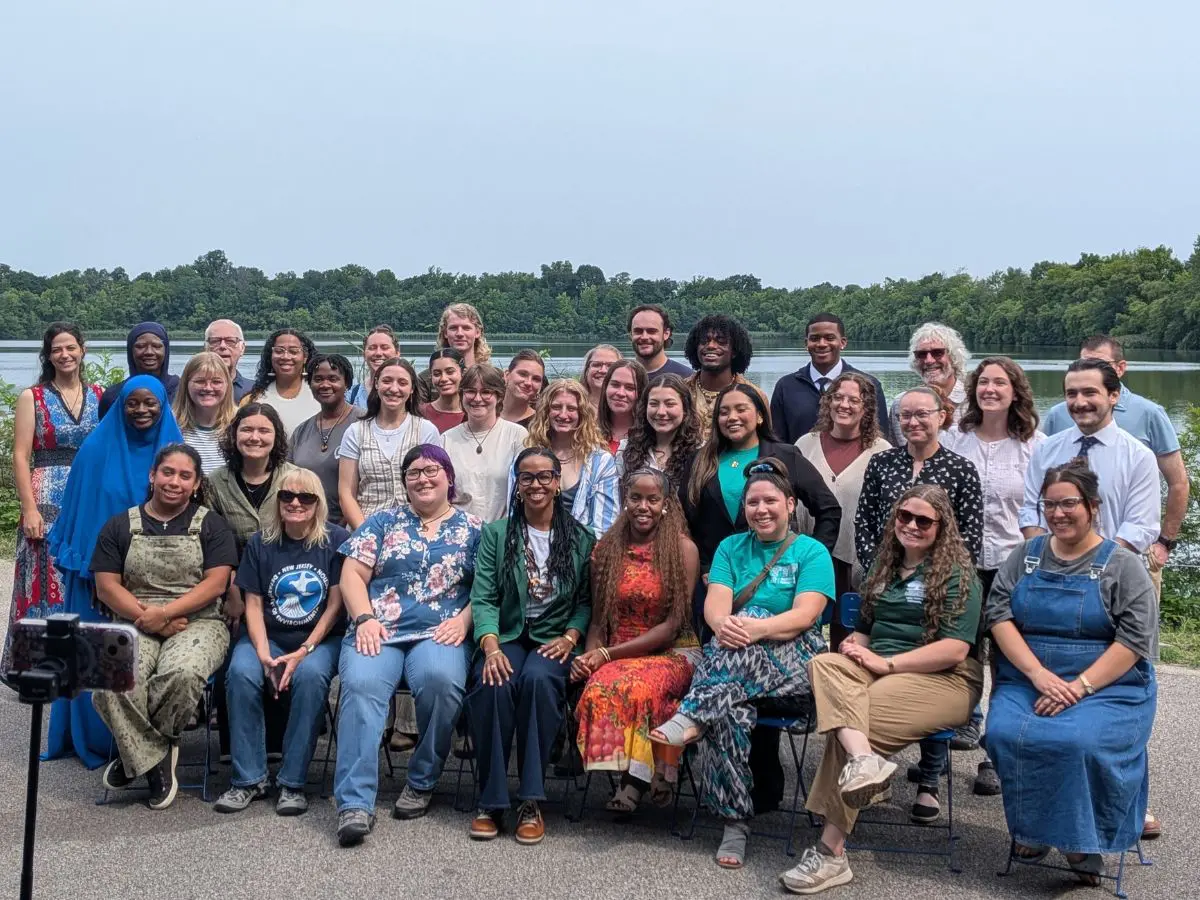 The 2026 AWE fellows and their organizations
From July 13 to August 14, Zac gathered responses from both adults and children at Lower Bucks County community events. He gathered 73 responses from adults and 59 responses from children. Most adult respondents came from Bensalem, Bristol Township, Bristol Borough, Croydon, and Levittown, which are the towns closest to our Croydon Woods Nature Preserve. The largest age groups were 18 to 24 and 35 to 44. Less than half of respondents said they had heard of Heritage Conservancy or attended one of our events, and only about four in ten had heard of or visited Croydon Woods itself. A lot of people nearby simply didn’t even know it was there.
When asked how they like to spend time outside, hiking and walking topped the list, followed by activities with pets and photography. Activities with pets ranked second among adults and first among kids, which was something Zac pointed out in his write-up. For a lot of families, walking the dog might be the main reason they end up outside at all.
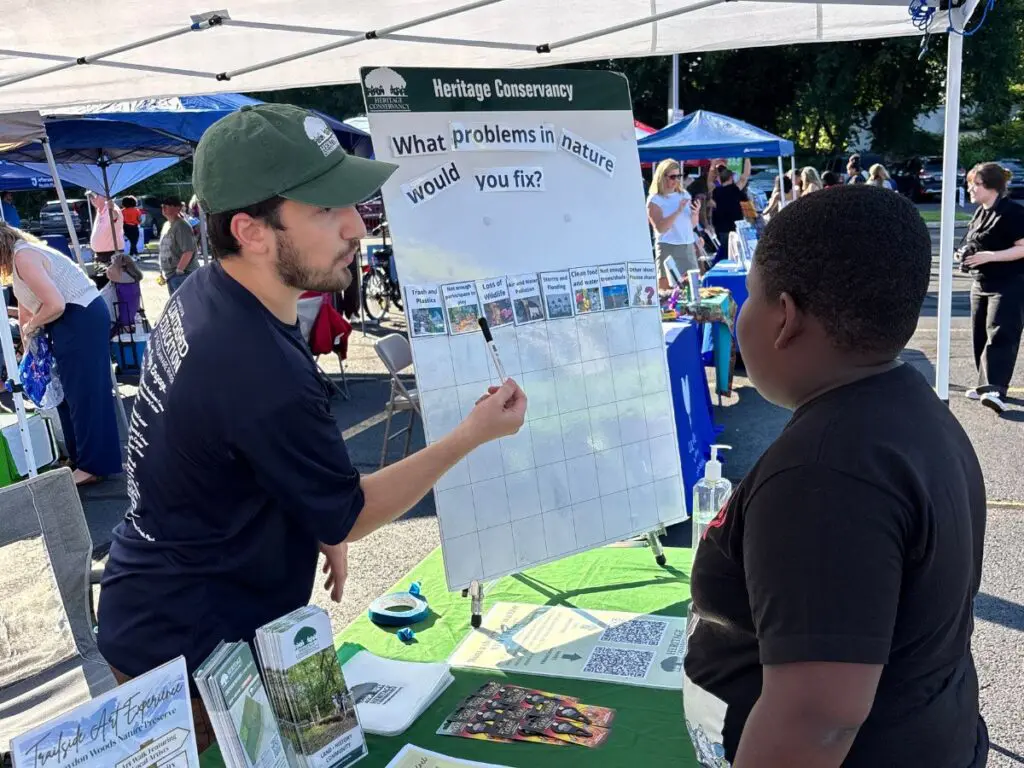
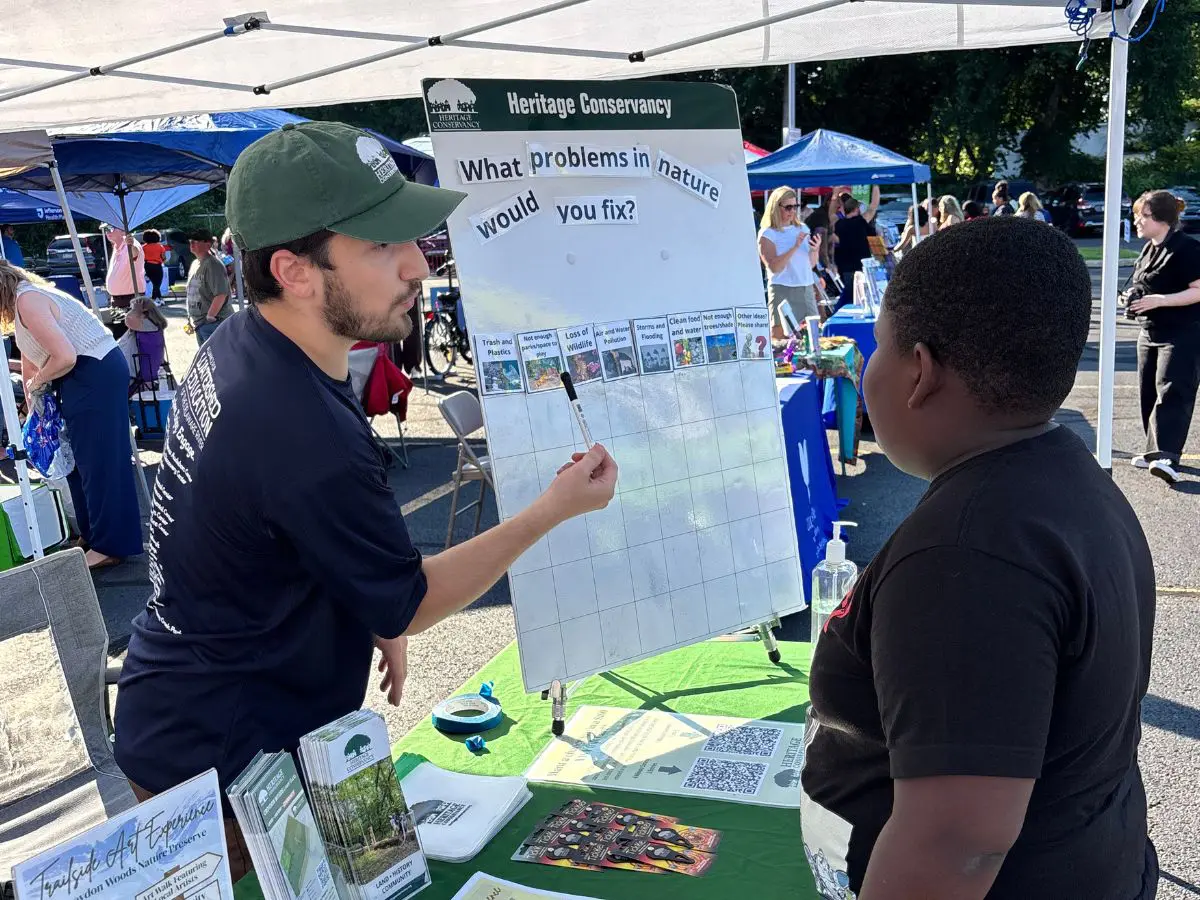 Zac’s survey chart at a National Night Out event
When asked why they would avoid outdoor activities, ticks, bugs, and poison ivy were the most common replies, along with weather and work schedules. Events that would get them outside included arts and crafts festivals, guided hikes and tours, and birdwatching or nature observation events. When it came to amenities, benches, shade, and picnic tables were things that people valued at outdoor spaces, followed by more trash cans, bathrooms, and gathering spaces or pavilions.
Trash and cleanliness ranked as the top community concern overall, followed closely by air pollution and some other public safety concerns. Zac found that the type of pollution that people worried about often depended on where they lived. Residents near a local casino were more likely to point to light pollution, while others close to nearby data center construction cited water or noise pollution. Cleanliness, though, came up everywhere. Litter, trash, and graffiti can make a green space feel less inviting, no matter what else is going on nearby.
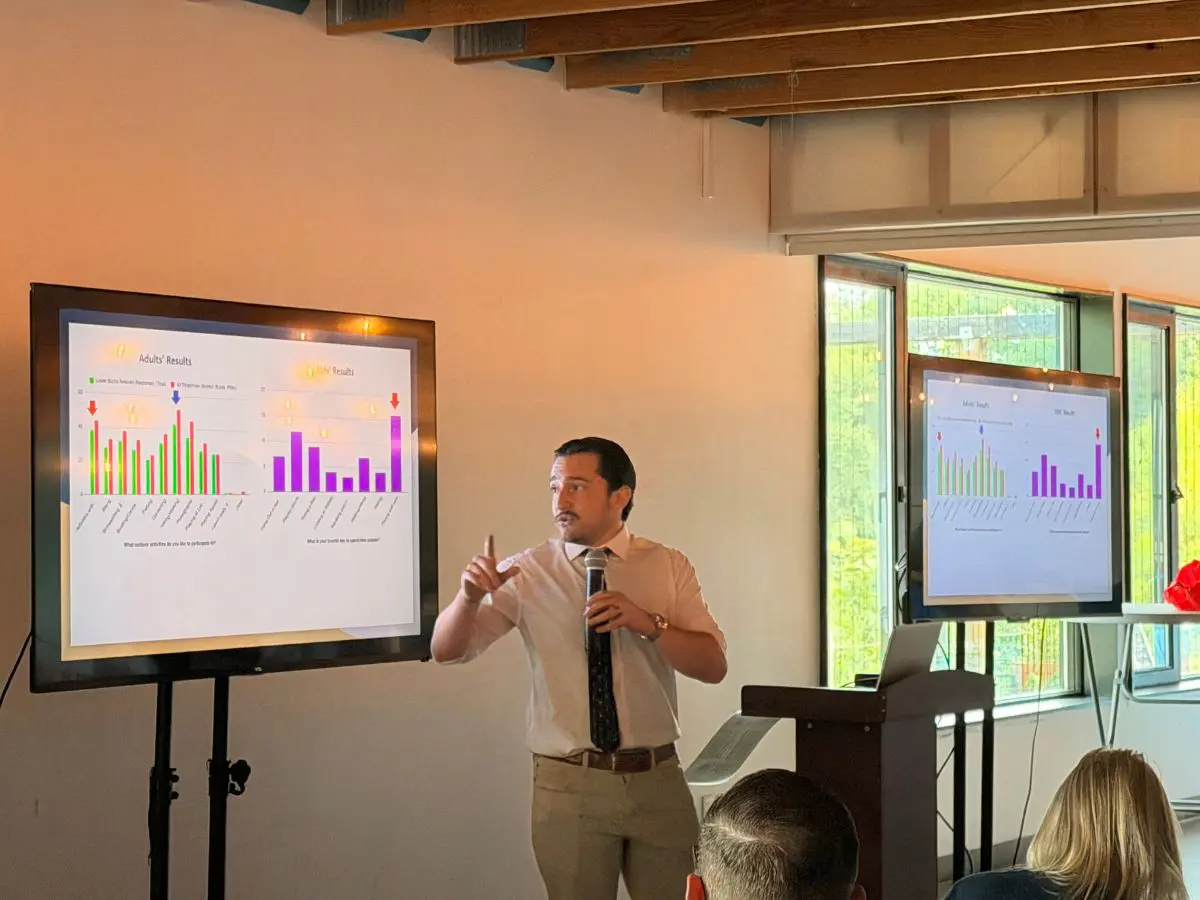 Zac presenting his findings at the AWE capstone event
59 children also participated in the survey. 30 of the responses were during our summer program with No Longer Bound, and the rest were during National Night Out events in August. Playing with pets was their favorite way to spend time outdoors, followed by playing sports and riding bikes. When Zac asked them what problems in nature they would fix if they could, trash, litter, and plastic were the main concerns among the children. Water and air pollution were a close second for this age group. They were also concerned about the loss of wildlife populations.
A survey like this one helps Heritage Conservancy understand who lives around Croydon Woods and what would make it easier for them to visit and experience nature. This info will also help shape programming and improvements at the preserve in the years ahead. Zac worked under the guidance of Heritage Conservancy’s education team this summer as part of the Alliance for Watershed Education partnership, and we’re grateful for the work he put in to gather this data.