

Less Lawn Gives a Second Chance for Endangered “Meadow Beauties”
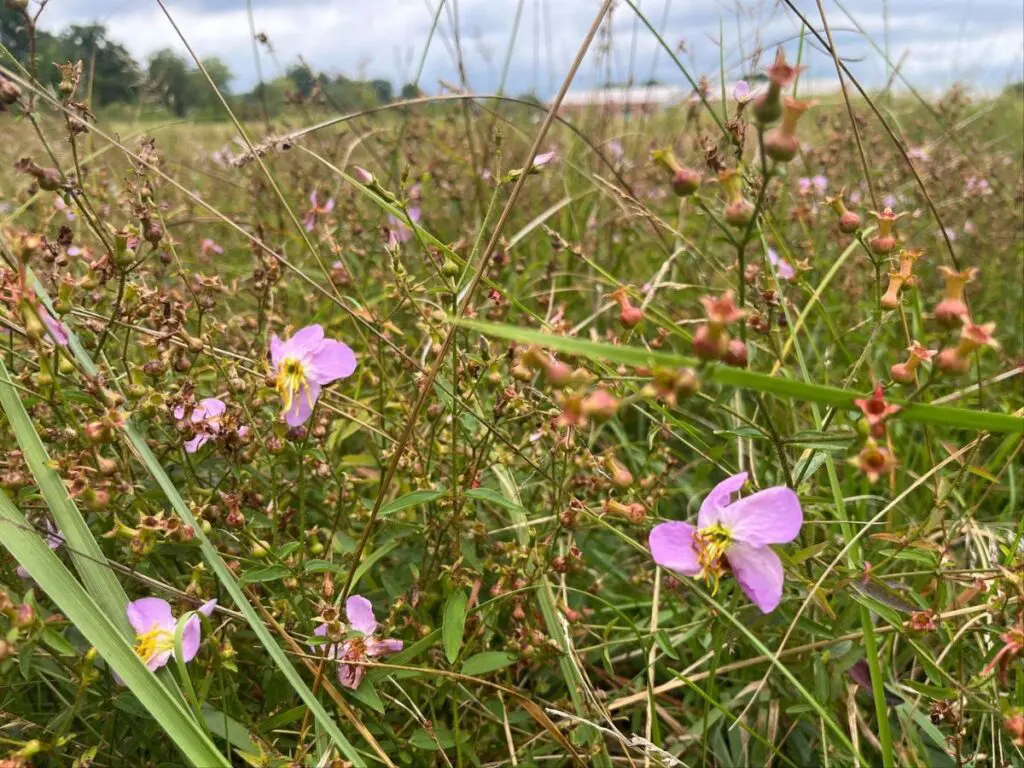
A state endangered plant species returns to a meadow that was previously an unused lawn in Bristol Township.
There are over 40 million acres of lawns in the United States, mostly made up of a monoculture of exotic turf grasses. These areas are excessively mowed and often sprayed with fertilizers and pesticides to kill the species that once called them home. What if we stopped spraying and mowing, and let nature return? Our partners at Bristol Township School District (BTSD) found out.
Heritage Conservancy has a great partnership with BTSD that started with one interested teacher back in 2015 and has evolved into district-level work to support the students, the school district community, and the local environment. Beyond programs with students in the classroom and at Croydon Woods Nature Preserve, Heritage Conservancy works with district teachers and administrators on an Environmental Literacy Committee and works to support nature experiences that tie into classroom science lessons, including through one of our Motus wildlife tracking stations located on one of their school buildings.
Heritage Conservancy staff also helped to advise the management of a school property lawn that was not being utilized, but was mowed weekly. Instead, a mowed path was maintained, and some bluebird boxes were installed along it. The meadow quickly grew in with a diversity of plant species, creating habitat for wildlife, including the birds that nested in the boxes.
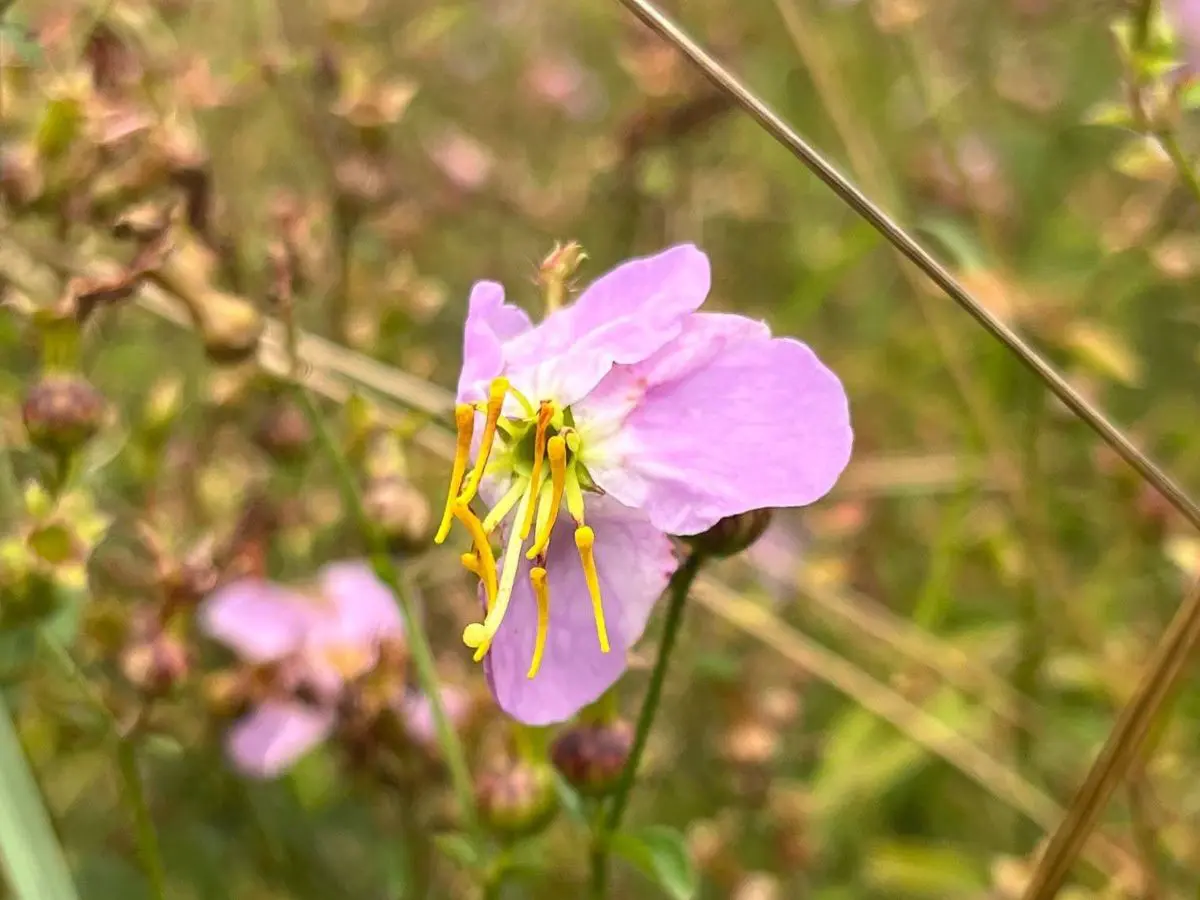
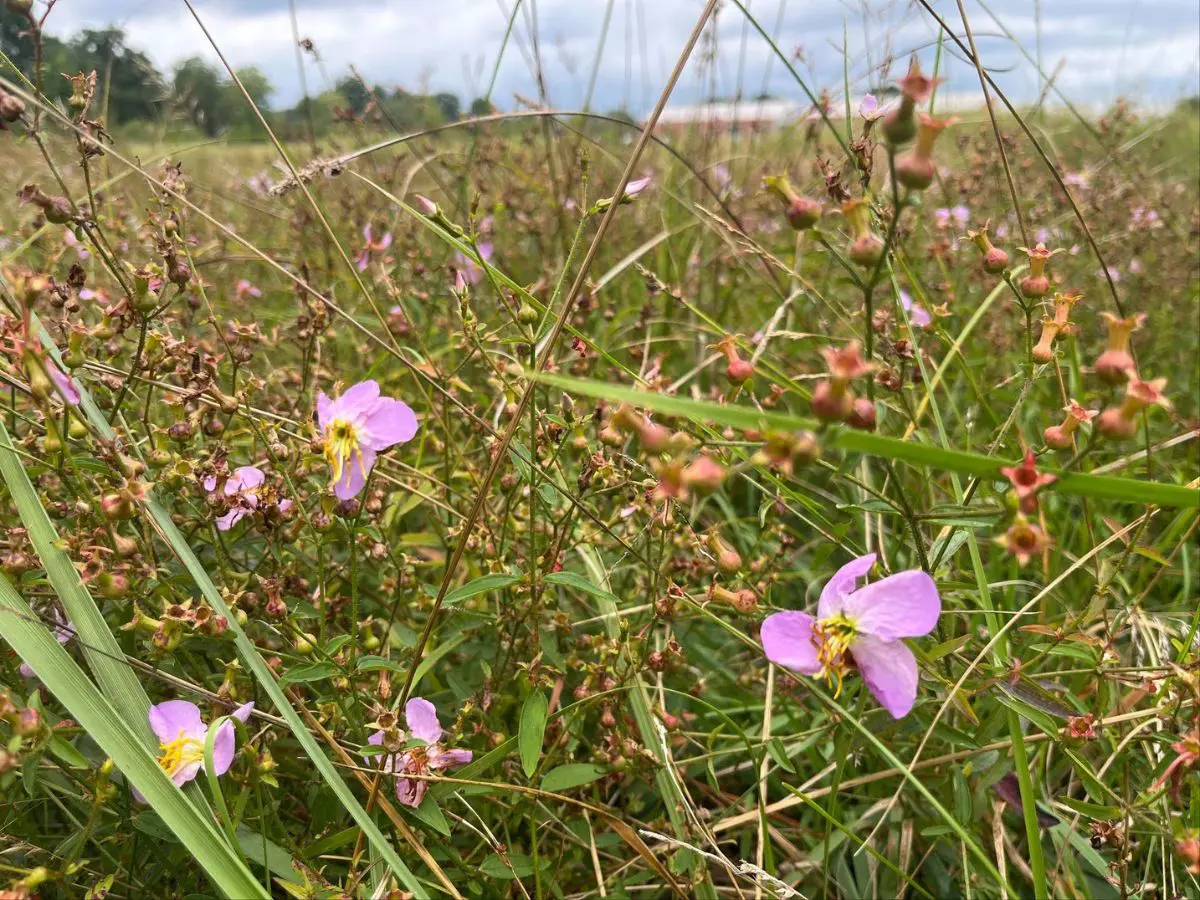
Later that summer, the meadow turned pink, and the buzz of bumblebees could be heard as you approached it. What appeared in the meadow was something new, something not seen by Heritage Conservancy staff in Pennsylvania before: Rhexia mariana. The flowers are called “meadow beauties,” and it is easy to see where they got that name.
There were no signs of this species back when it was a lawn, as it was mowed to the ground and never left to show off its beautiful flowers. But now large patches of the meadow are in bloom with this state endangered plant species. This species relies on our native bumblebees to “buzz pollinate” the flowers to reproduce. Buzz pollination is when certain bee species are able to vibrate their flight muscles so quickly that it knocks the pollen out of the specialized anthers of the flower, giving the bee access to it. This pollination process can be loud, as many bees are buzz pollinating in a field of meadow beauties.
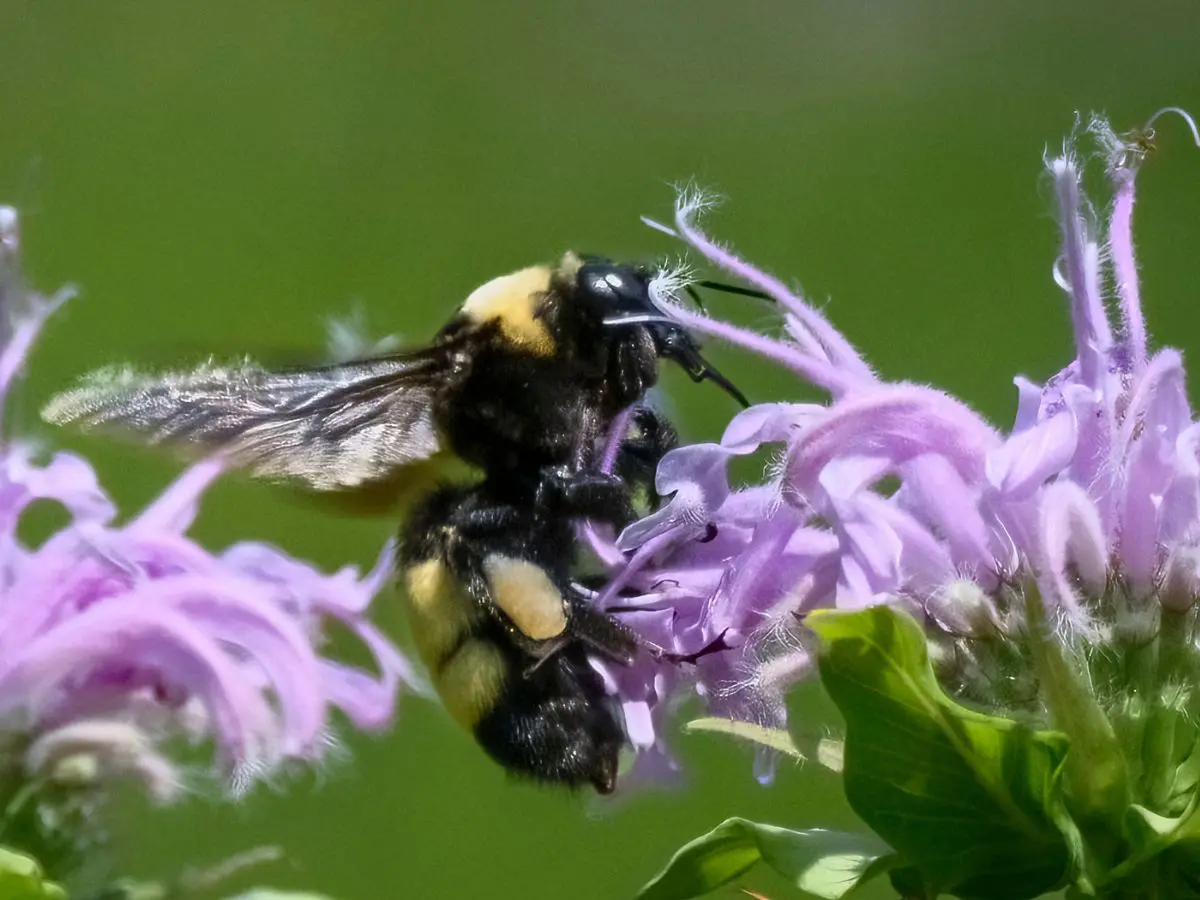 Photo by volunteer Barbara Bell-Hawkey
A lawn that was once a green desert for wildlife is now a beautiful meadow, full of rare species of plants and bustling with pollinators and birds. Along with all the ecological benefits, the municipality only has to maintain a trail through the meadow instead of mowing the whole property. This trail also gives a great educational opportunity for the teachers and students of the school to observe and enjoy the wildlife that has returned to the once barren lawn.
Maybe you have some rare and interesting plants in your lawn that are hiding from the mower. So instead of mowing, consider letting the grass grow, the flowers bloom, and the wildlife return. You never know if your property could be the future home of rare plants and animals.
And if you’re a teacher or administrator interested in bringing hands-on learning to your class, like the students at BTSD, our education team can help build that partnership too. Contact our education team for more information on nature-based programming: education@heritageconservancy.org.
Written by Tyler Kovacs, Senior Conservation Biologist