


Motus Tower Update: Where Have the Birds Gone?
Science has come a long way since we discovered wildlife migration and debunked the myth that birds hibernate under the ground like their cold-blooded relatives.
However, wildlife migration ecology is still a field with many unanswered questions. Technology has been helping scientists answer those questions with the help of Heritage Conservancy.
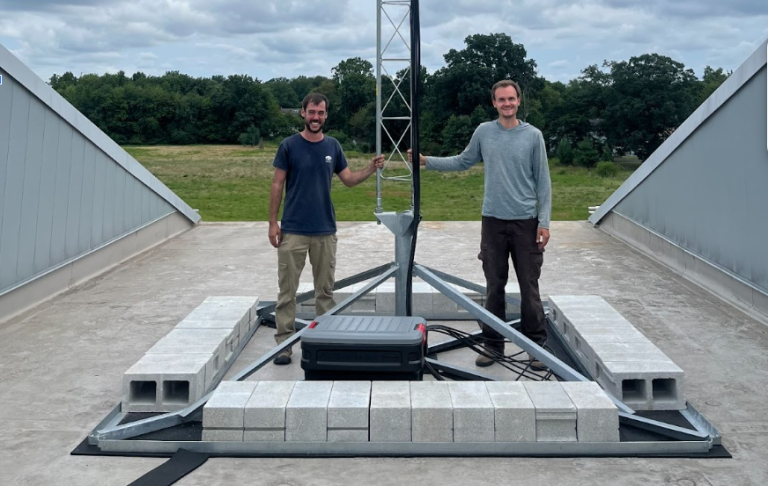
In 2023, Heritage Conservancy installed its first Motus wildlife tracking station on top of Keystone Elementary School in Croydon, PA. In 2024, a second station was installed on top of the science building at Buck County Community College (BCCC) in Newtown, PA. Since then, the stations have been detecting tagged wildlife that are migrating past the stations.
Motus (Latin for “movement”) wildlife tracking system is an international collaboration of scientists to understand more about the movement ecology of wildlife. This automated radio telemetry network detects tagged wildlife as they move past stations that are deployed around the world. The dots are connected to understand the spatial and temporal patterns of each species studied.
For instance, understanding the threats each species faces on its migratory journey can help conservationists make informed management decisions to alleviate those threats. Are birds preferring or avoiding certain routes to their wintering grounds? When are they arriving, and is that shifting as the landscape and climate change? These and many more questions can be addressed using this technology, especially as the tag weight and technology advance.
In the past, birds have been the center of most migration studies, however as tags become more lightweight, additional species are able to be investigated. These tags have even become small enough to study the migration patterns of monarch butterflies and dragonflies.
Let’s look into some of the data Heritage Conservancy has contributed:
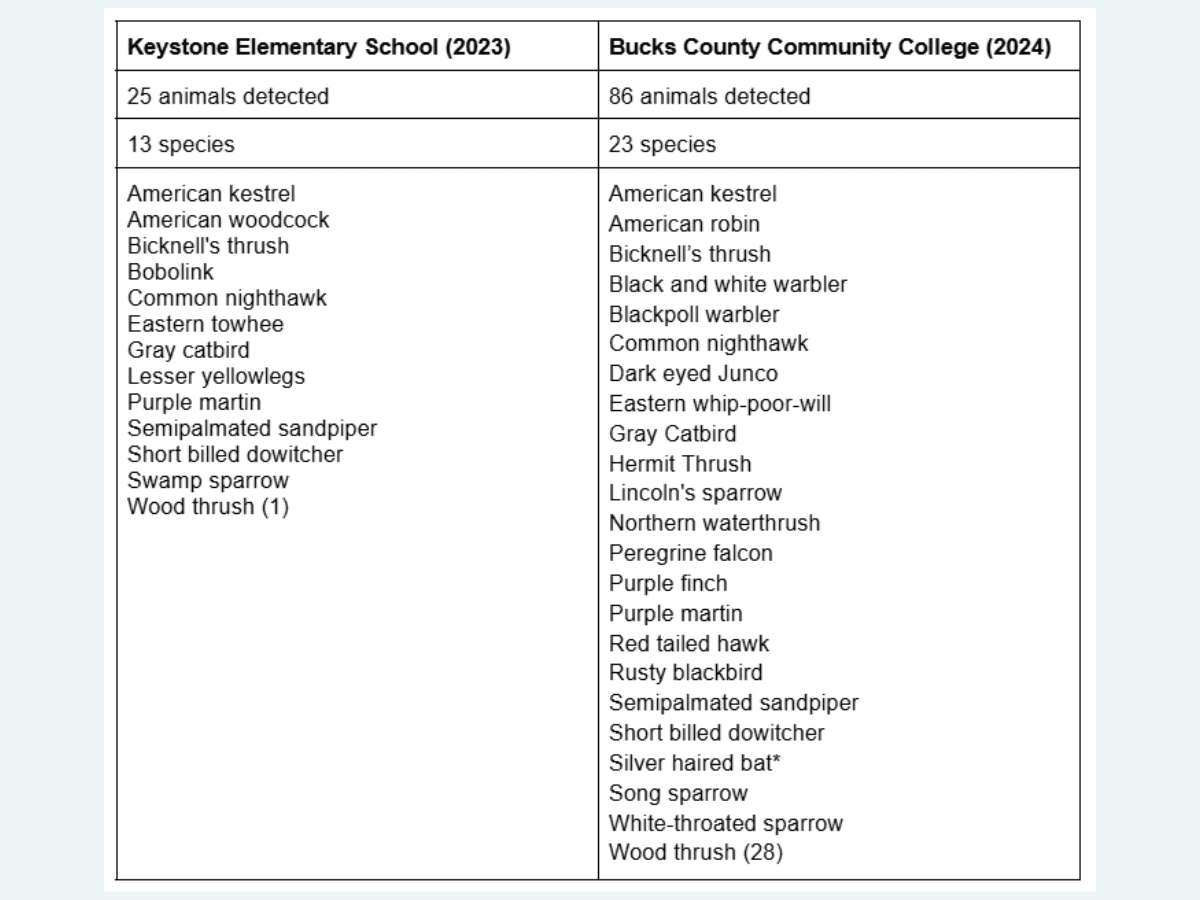
Table of wildlife detections at Heritage Conservancy’s Motus stations.
Since the installation of the two stations in Bucks County, 28 different species have been detected, including a bat species! These species are what scientists are currently investigating, and some are declining in population quickly. Some of the migrants that our stations detected rely on healthy habitats in other countries, including night hawks in Colombia, martins in Venezuela, dowitchers in the Caribbean, and wood thrush in Costa Rica.
We can get migratory trajectories of an individual bird, however we can get much more data from populations that are showing similar patterns. For instance, let’s look at the wood thrush in more detail since it is in steep population decline (~60%), and we received the most detections of this species (1 detection at Keystone Elementary and 28 detections at BCCC).
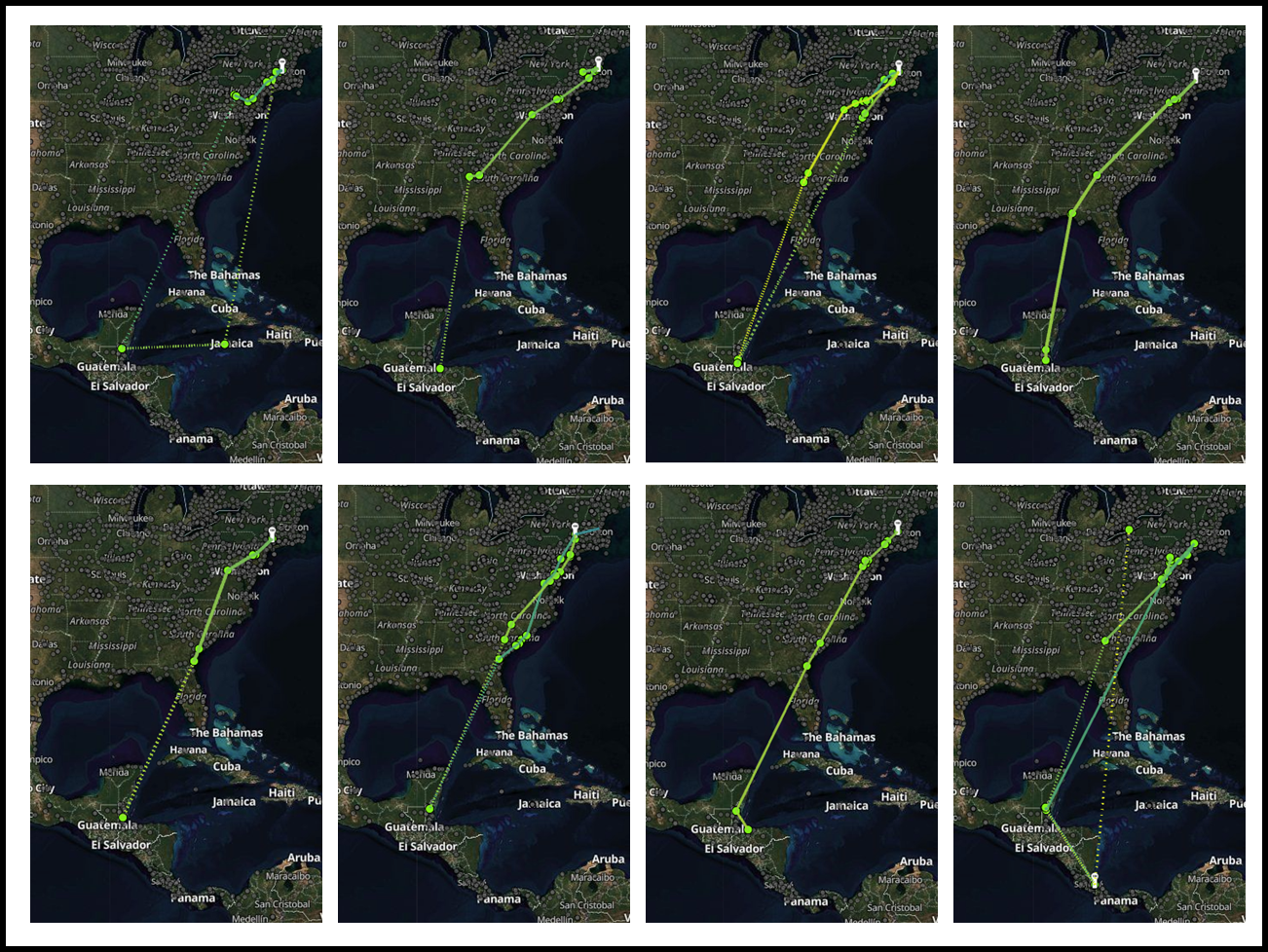
Wood thrush detections map
At a large scale, we can see individuals take similar routes to their wintering grounds in Central America, often passing by the same Motus station in Belize! With this information, conservation efforts can be focused on areas that will make the most impact on this bird’s migration route or wintering grounds.
At a smaller scale, habitat usage and migratory obstacles can be investigated. You may notice that we detected 1 wood thrush at Keystone Elementary School while we detected 28 at BCCC, even though the Keystone station has been active for longer. Why might this be? This pattern was consistent as BCCC received many more detections in a shorter time period.
Wood thrush rely on large tracts of forest to survive, even during migration, as they utilize stopover sites on their way to Central America and back. Keystone Elementary School is in Southern Bucks County, outside of the city of Philadelphia. Other than Heritage Conservancy’s Croydon Woods Nature Preserve, there are not many forests left close to this station. In comparison, BCCC is situated next to Tyler State Park, a very different land use coverage that is likely more favorable to wood thrush.
Another aspect to consider is light pollution. Most birds, including wood thrush, migrate during the night. Light pollution has been shown to disrupt these evening migration patterns as they disorient the birds. Wood thrush, which rely heavily on the dark tracts of forests, may be avoiding the light pollution of Philadelphia and going around it. These are just some inferences that can be considered that can lead to future conservation actions for species that are in decline.
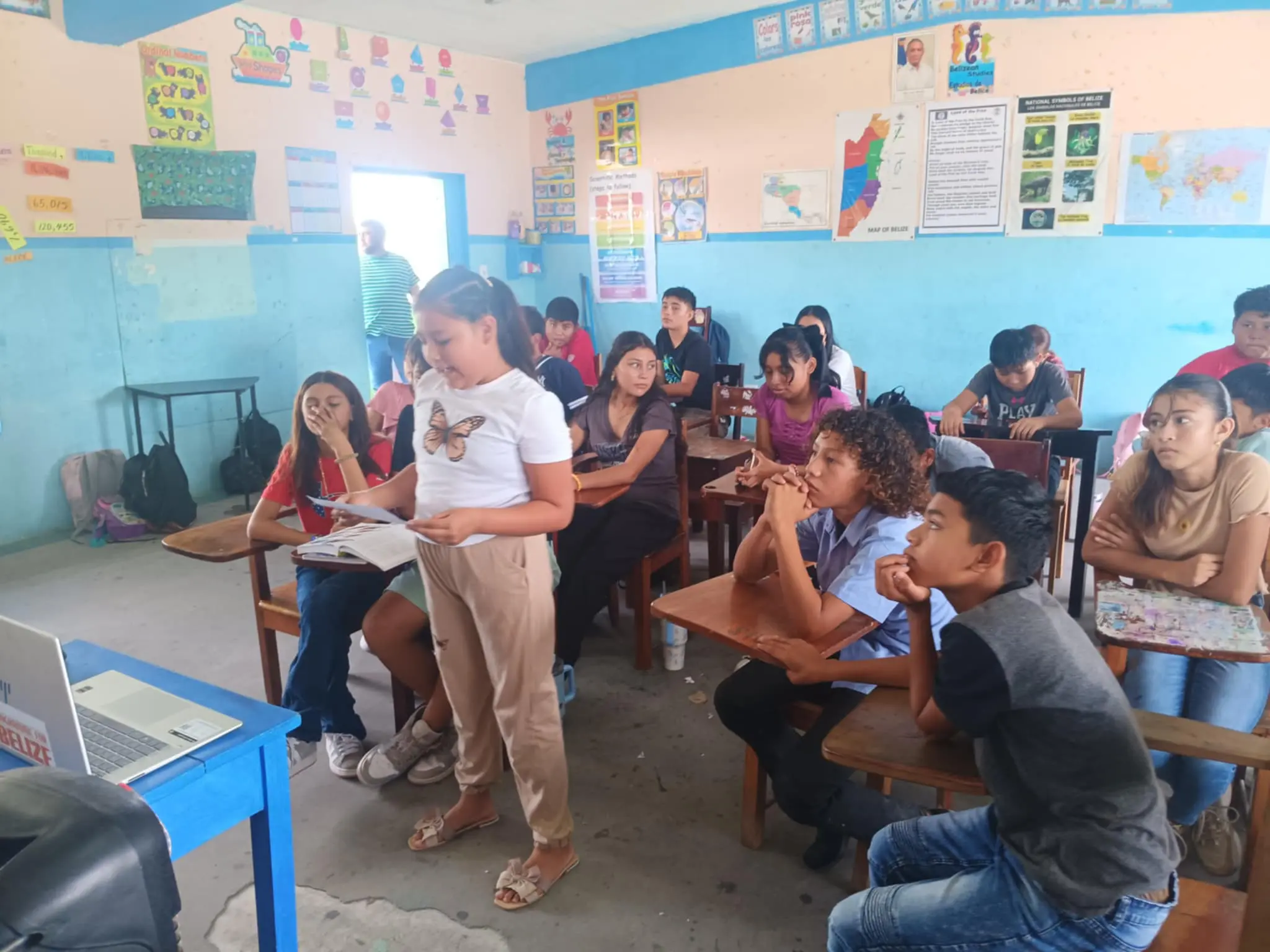
Students from St. Michael School in Belize give presentations to Keystone Elementary students via Zoom
Connecting Motus and Education
Our education department is bringing migration data to the classroom. Children from the Bristol Township School District (including Keystone Elementary School) have been learning about migration ecology and how the Motus antennae on the top of their school are helping scientists around the world. Through school assemblies with live birds, to bird migration obstacle courses, these children are getting an understanding of how technology at their school is helping conservation around the world. Learn more about how our education department partnered with a school in Belize, and stay tuned to see how this data can be further incorporated into future environmental curriculum.
Learn more about Motus wildlife tracking systems and explore all the data here: https://motus.org/
Article written by Tyler Kovacs, Senior Conservation Biologist at Heritage Conservancy