
Trails, Turtles, and Torches: Summer 2026 with the Conservation Steward Interns
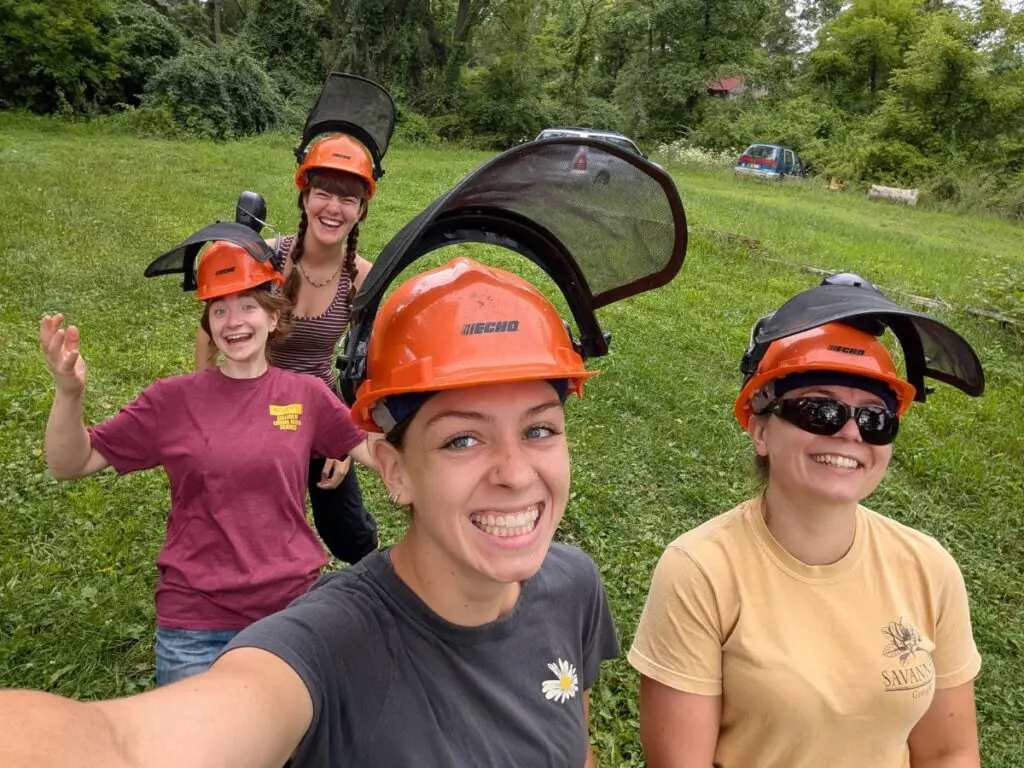
Each summer, Heritage Conservancy’s stewardship team brings on a group of Conservation Steward Interns, students studying environmental science, biology, ecology, or other related sciences, who spend the season working directly on land management and field research across our preserves. This year’s cohort took on invasive species control, bird banding, turtle surveys, and trail construction, along with a long list of other projects. Here’s a look at four of their most memorable projects, in their own words, followed by an overview of everything else the team got done this summer.
Mathilda: Trail Construction at Lindsay Farm Preserve
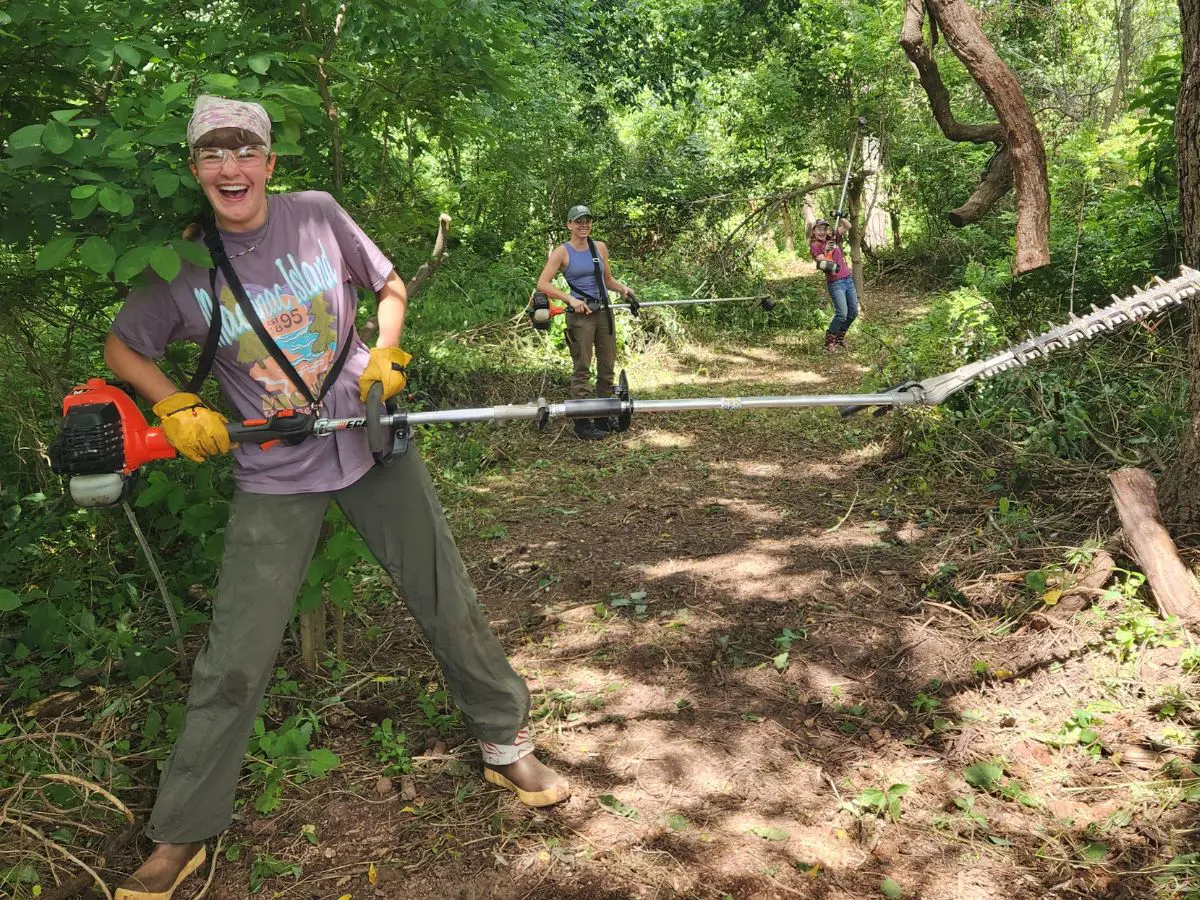
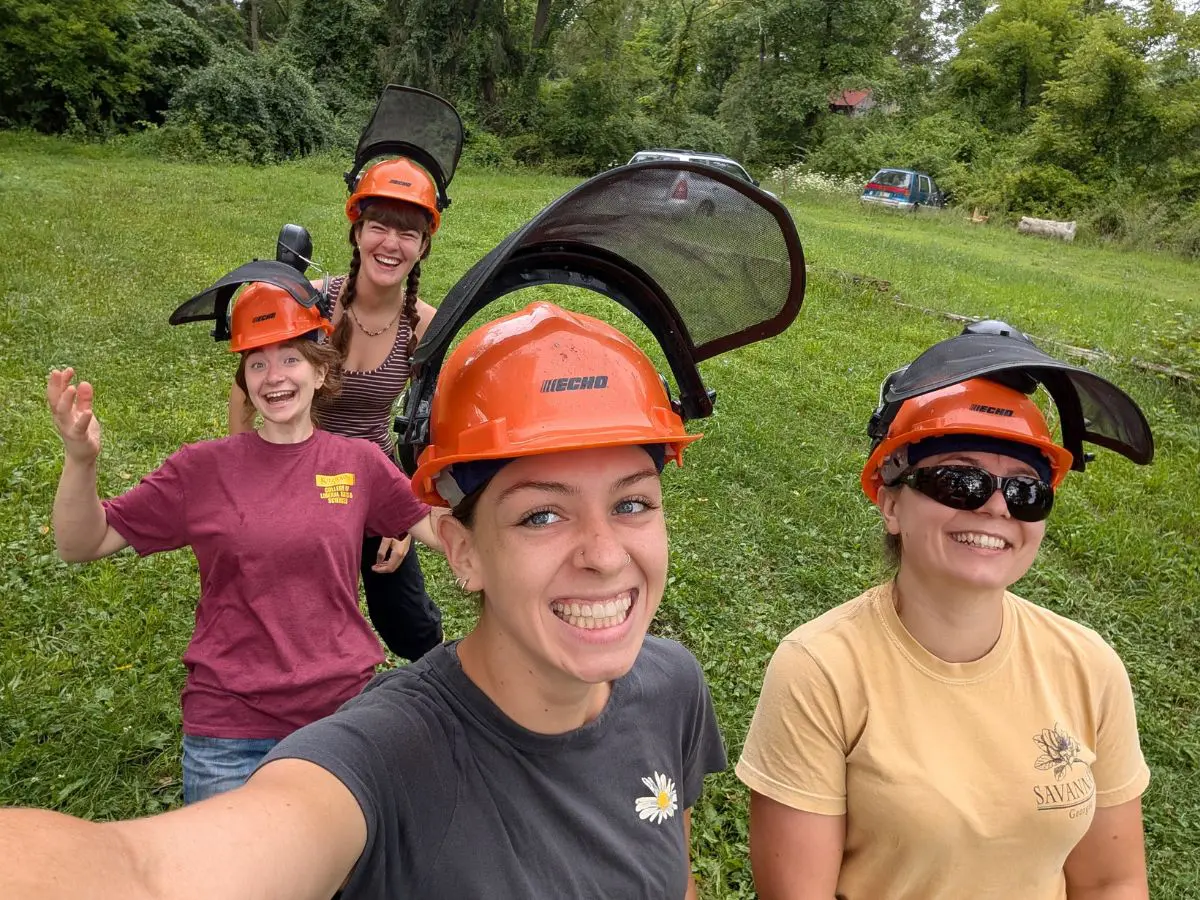
“There have truly been so many wonderful experiences during my time as a Conservation Steward Intern this summer. However, one activity that stands out to me has to do with our creation of a new trail system at Heritage Conservancy’s Lindsay Farm Preserve. Last year, the summer interns worked hard to transform a 15-acre cornfield into a native pollinator meadow in hopes of supporting local biodiversity and educating the public on the importance of pollinators. This year, we extended these existing meadow trails into the nearby forest. In order to clear the trail and rid it of invasive plant species, we learned how to use brush cutters, weed whackers, loppers, and mattocks. A full-sized tractor was also utilized to perfect our work and to remove stubborn root systems. In the end, our trail stretches from the far corner of the pollinator meadow to Neshaminy Creek. Though the preserve is not yet open to the public, it is an amazing feeling to know that our hard work will soon promote easy access to nature and provide environmental education to nearby communities.
Overall, I learned so much from this experience and will continue to look back on it as I move forward with my career. For example, I not only learned how to use tools such as the brush cutter, weed wacker, and tractor, none of which I had experience with prior to this internship, but we also talked in great detail about balancing our conservation goals with the desire to make nature more accessible in our communities. More specifically, while having public trails is an exceptional way to educate and impassion individuals about the environment, it remains true that these same trail systems often disturb wildlife species and decrease available habitat. This is a dilemma I’m looking forward to delving deeper into as I continue working in the environmental field.”
Sarah: American Kestrel Banding at Russell-Mandel
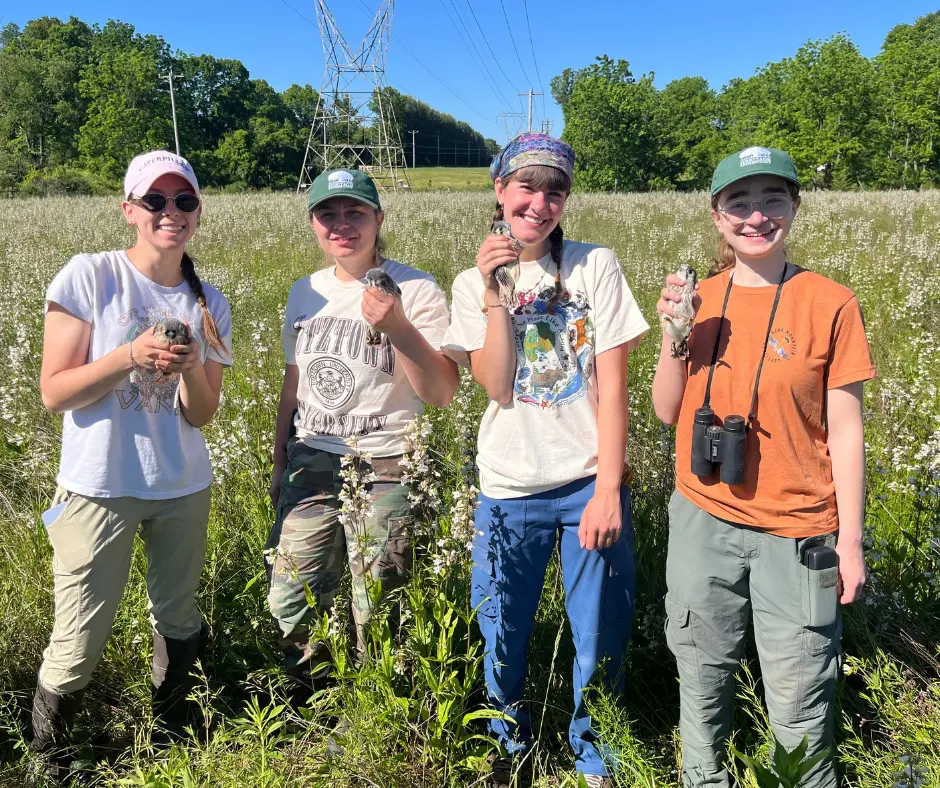
“Though I’m grateful for every experience I’ve had while working as a Conservation Steward Intern, there’s definitely one encounter that stands out. For numerous years, Heritage Conservancy has welcomed Jere Schade, master bander of the Paul Karner Memorial Banding Team, to their Russell-Mandel Nature Preserve. Jere has deployed a large nest box on the property, targeted at occupancy by American kestrels. American kestrels are Pennsylvania’s smallest falcon and play a very important part in farmland ecosystems. They dine on rodents and insects, providing natural pest control. Sadly, like many other birds of prey, kestrels are experiencing population declines due to habitat loss and pesticide exposure. To mitigate these losses, artificial nest boxes are provided to encourage reproductive success.
Jere and his team visit nest boxes across Bucks and Northampton counties in early summer, the hatching season. When he came out to our box, he first checked on the state of the chicks. The chicks were then carefully removed from the box to be banded. Banding these birds allows researchers to track their long-term movements and survival, better informing conservation efforts for the species. Each hosting a unique identification number, the leg bands weigh less than a gram and don’t interfere with the bird’s movement at all. We were very fortunate to have the opportunity to safely handle the chicks as Jere banded them.
I appreciated the opportunity to learn about the kestrel project through Jere’s eyes and receive insights about broader raptor conservation as shaped by his own experiences. The part of this experience I found most personally valuable was hearing how different environmental and ecological professionals found their way into the field.”
Chloe: Invasive Species Management at Fuller Preserve
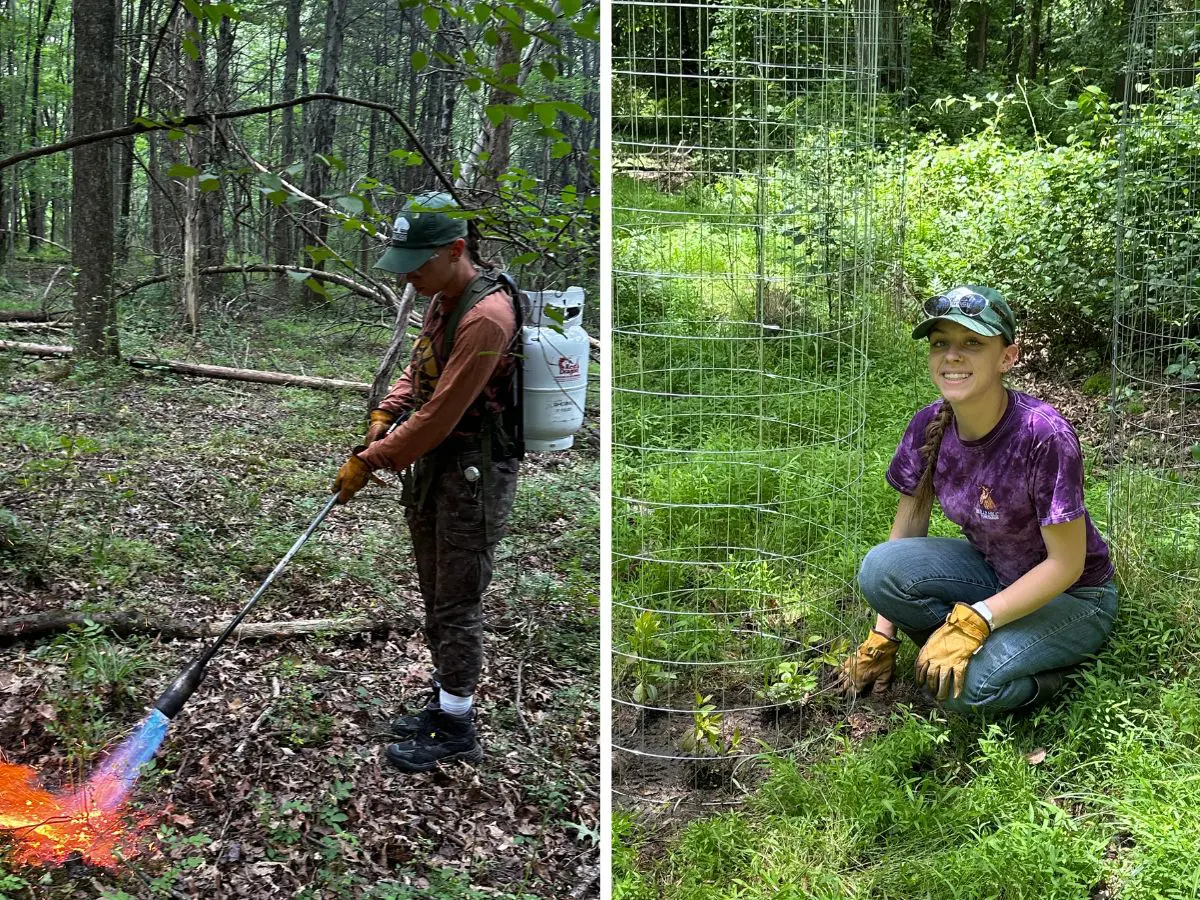
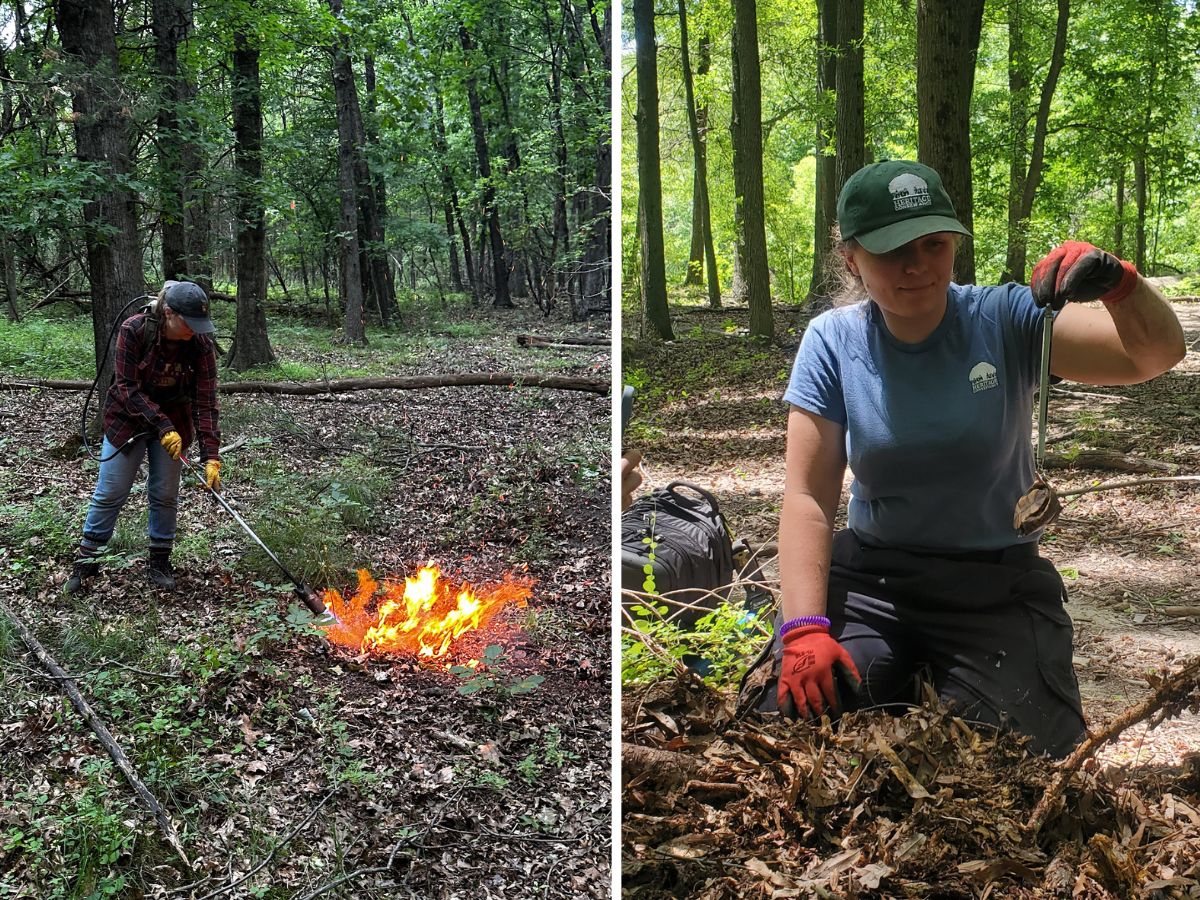
“My time with Heritage Conservancy has changed the way I see the landscape around me, transforming what once looked like an ordinary forest or meadow into a complex network of native plants, insects, birds, and rare ecosystems that all depend on one another. One of my favorite experiences was managing invasive plants at Fuller Preserve by using a propane tank and handheld flame wand to burn species such as Japanese barberry. We completed this work during June because much of the plant’s energy was concentrated in its leaves, so burning the foliage weakened the plant and slowly caused its roots to die. Since many invasive plants at Fuller Preserve grow on steep hillsides, burning reduced the need to disturb the soil, helping prevent erosion of the substrate.
Through this work, I learned how to safely operate propane equipment, follow fire safety procedures, and understand which weather conditions were appropriate for burning. Removing invasive species gives native plants the sunlight, nutrients, water, and space they need to grow, while also supporting the insects, birds, and other wildlife that rely on those plants for food and habitat. I learned that although burning can require less labor than manual removal, it is not suitable for every species, and the wrong management method can sometimes cause an invasive plant to spread or return more aggressively. Moving forward in my environmental career, I will carry this deeper understanding of native ecology with me and use it to make thoughtful land-management decisions that protect biodiversity and restore healthy, resilient habitats.”
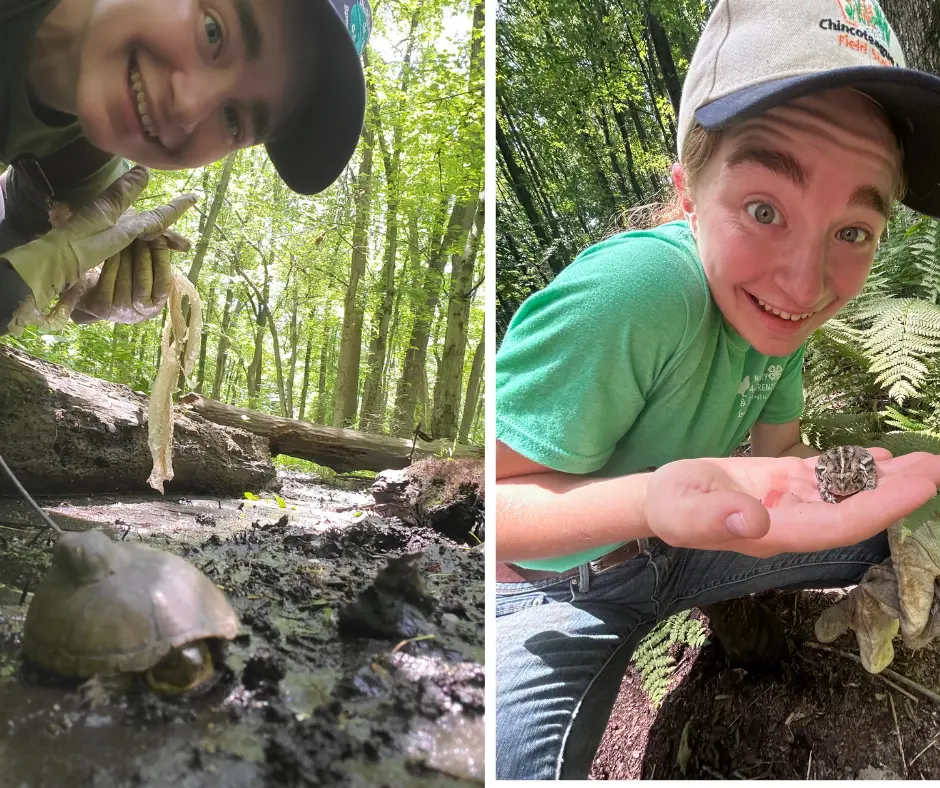
Liz: Turtle Population Surveys Across Our Preserves
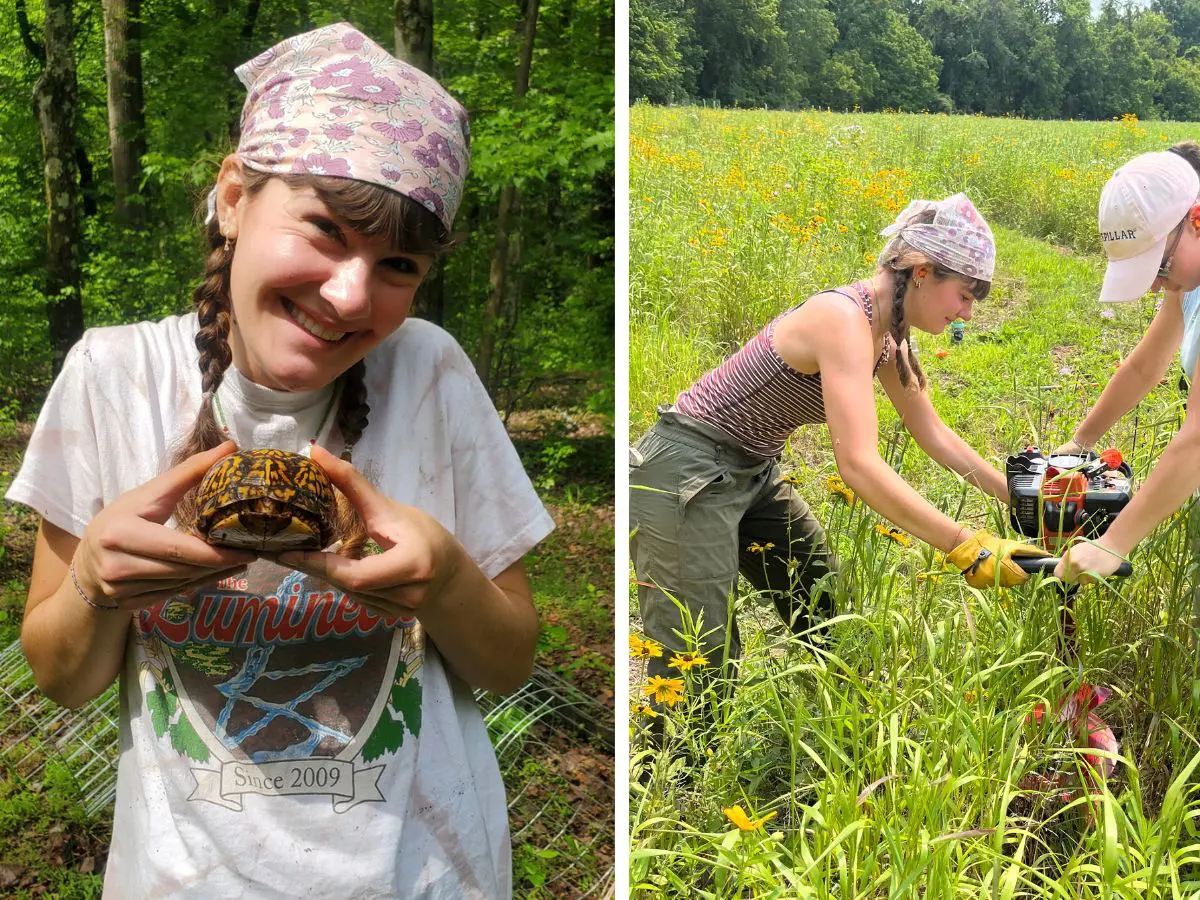
“Reflecting on the many educational and community improving projects I was fortunate to be a part of as a Heritage Conservancy Conservation Intern, choosing a favorite experience is difficult. One of the most impactful opportunities for me was participating in turtle surveys alongside experienced herpetologists. During these outings, I learned about native eastern Pennsylvania turtle species, introduced species, and gained hands-on experience sampling and examining both terrestrial and aquatic turtles. Our team used a variety of survey methods, including baited live traps, radio telemetry, and visual tracking, each providing valuable insight into the diversity, abundance, and health of turtle populations on lands stewarded by Heritage Conservancy.
Learning to use telemetry to locate turtles hidden among dense vegetation was especially fascinating and gave me a firsthand appreciation for the role scientific monitoring plays in conservation. Working alongside passionate educators, researchers, and volunteers strengthened my understanding of turtle ecology, the challenges these animals face as habitats disappear, and the importance of protecting these natural spaces so that wildlife and the people who enjoy experiencing it can continue to thrive for generations to come.”
And the Rest of the Summer
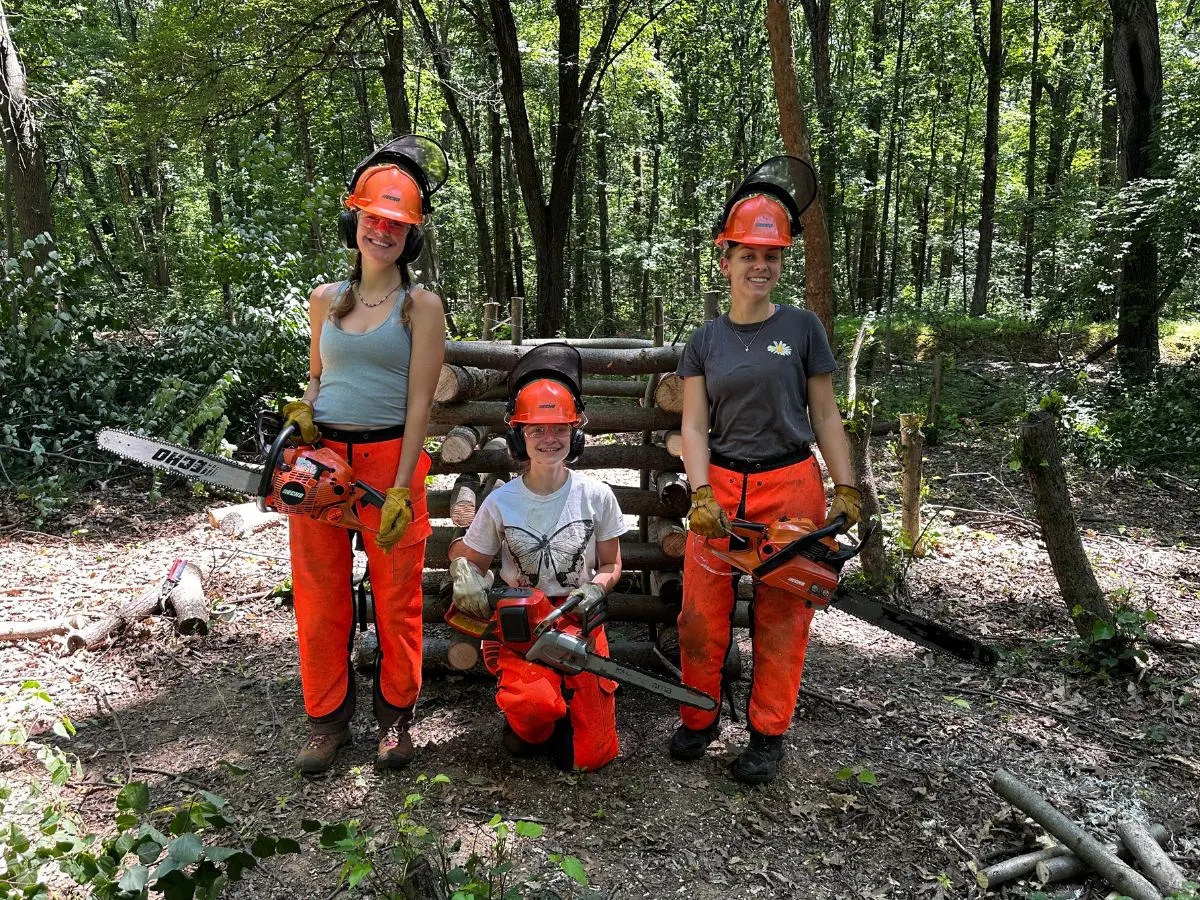
These four projects were just part of the picture. The intern team also planted and caged Atlantic white cedar and magnolia at Croydon Woods Preserve, worked on rare plant preservation there, and planted a cover crop as part of ongoing pollinator meadow development. At Russell-Mandel, they added native plantings and helped build new garden beds ahead of the Farm to Table event. Elsewhere, the team maintained tree and shrub cages and tubes at Quakertown Swamp, tackled Japanese stiltgrass at Buckingham Mountain, and kept up trail maintenance at Bellwood Preserve. They joined retired professor Tim Block for a botany survey at some of our private preserves, completed chainsaw safety training, and helped run the intern plant sale and an evening bat count at Russell-Mandel.
Support for our summer intern program is provided by the Hart Rufe Legacy Fund, created to remember and honor Judge Ruf’s many years of service on the Board of Directors of Heritage Conservancy, and his many contributions to the well-being and natural beauty of his local community. This fund supports paid, hands-on internships that immerse participants in real conservation work at Heritage Conservancy. Interns gain practical experience in land stewardship while expanding our reach and capacity, training the next generation for careers in conservation.