

Tick or Treat! Landscaping Tips to Reduce Tick Habitats
Happy spooky season! Ticks, Lyme disease, Rocky Mountain Spotted Fever, oh my! While the increase in tick-borne diseases across Pennsylvania is concerning, there are steps you can take to reduce the likelihood of encountering ticks around your home. With a few thoughtful landscaping practices and some simple precautions, you can help make your yard less inviting to ticks and their hosts.
Know Your Pennsylvania Ticks
Before we talk about ways to reduce tick habitats, it helps to know the most common ticks you may encounter in Pennsylvania.
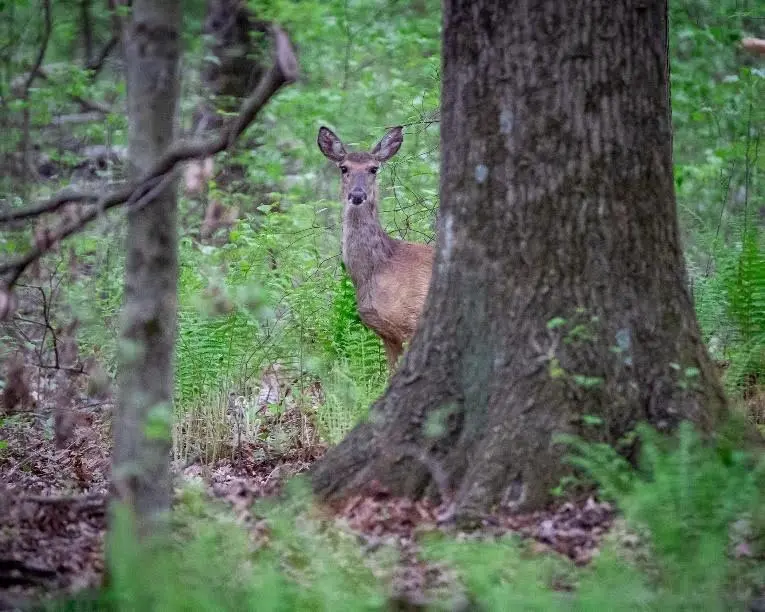
- The blacklegged tick (Ixodes scapularis) can be found throughout Pennsylvania, particularly in wooded and brushy areas and along grassy edges. These ticks are typically very small and adult females have a distinctive reddish-orange abdomen. These ticks are best known for spreading Lyme disease and are also commonly called deer ticks. Adult deer ticks feed on larger animals, especially white-tailed deer, which is how the nickname originated. While deer are a common host for ticks, they do not carry Lyme disease, unlike the White-footed mouse. Although they are commonly called “deer ticks,” it is a misconception that the abundance of deer in an area determines the number of nymphal ticks, which is the life stage most likely to transmit Lyme disease to humans. Mice play a much larger role in Lyme disease risk. A year with a large mouse population can result in as much as a 40 percent increase in nymphal ticks the following year. Mice are effective hosts for larval ticks and are highly efficient at transmitting the bacterium responsible for Lyme disease.
- The American dog tick (Dermacentor variabilis) is also found throughout Pennsylvania. Unlike blacklegged ticks, American dog ticks prefer open areas with little or no tree cover, such as grassy fields. As their name suggests, they are commonly found on dogs but also feed on other medium to large sized mammals. American dog ticks can transmit Rocky Mountain Spotted Fever. They are larger than blacklegged ticks and are generally brown with whitish markings.
- The lone star tick (Amblyomma americanum) is more common in the southern counties of Pennsylvania. These ticks feed on a broad range of hosts and are aggressive biters that readily feed on humans. Lone star ticks can transmit several diseases and are associated with STARI (southern tick-associated rash illness). They are also associated with alpha-gal syndrome, a potentially serious allergy to red meat. Adult female lone star ticks can be identified from a distinctive white dot on their back.
Make Your Yard Less Tick-Friendly
Residential backyards can be a common place to encounter ticks, especially when properties border wooded areas where tick hosts live. Pennsylvania residents are no stranger to white-tailed deer, which are an important host for adult ticks. Fortunately, thoughtful landscaping can help reduce favorable tick habitat and create more separation between your frequently used outdoor spaces and areas where ticks and their hosts are more likely to occur.
Create a wood-chip barrier: Establish a woodchip or mulch barrier between wooded areas and frequently used spaces, such as playgrounds, patios, and outdoor seating areas. This can create a transition zone between tick habitat and the places where your family spends time.
Choose deer-resistant plants: Deer can transport ticks into residential areas, so selecting plants that are less attractive to deer may help discourage them from spending time near frequently used areas. For sunny locations, consider plants such as mountain mint, bee balm, and butterfly weed. For shade or part-shade areas, consider Christmas fern, foamflower, or woodland phlox.
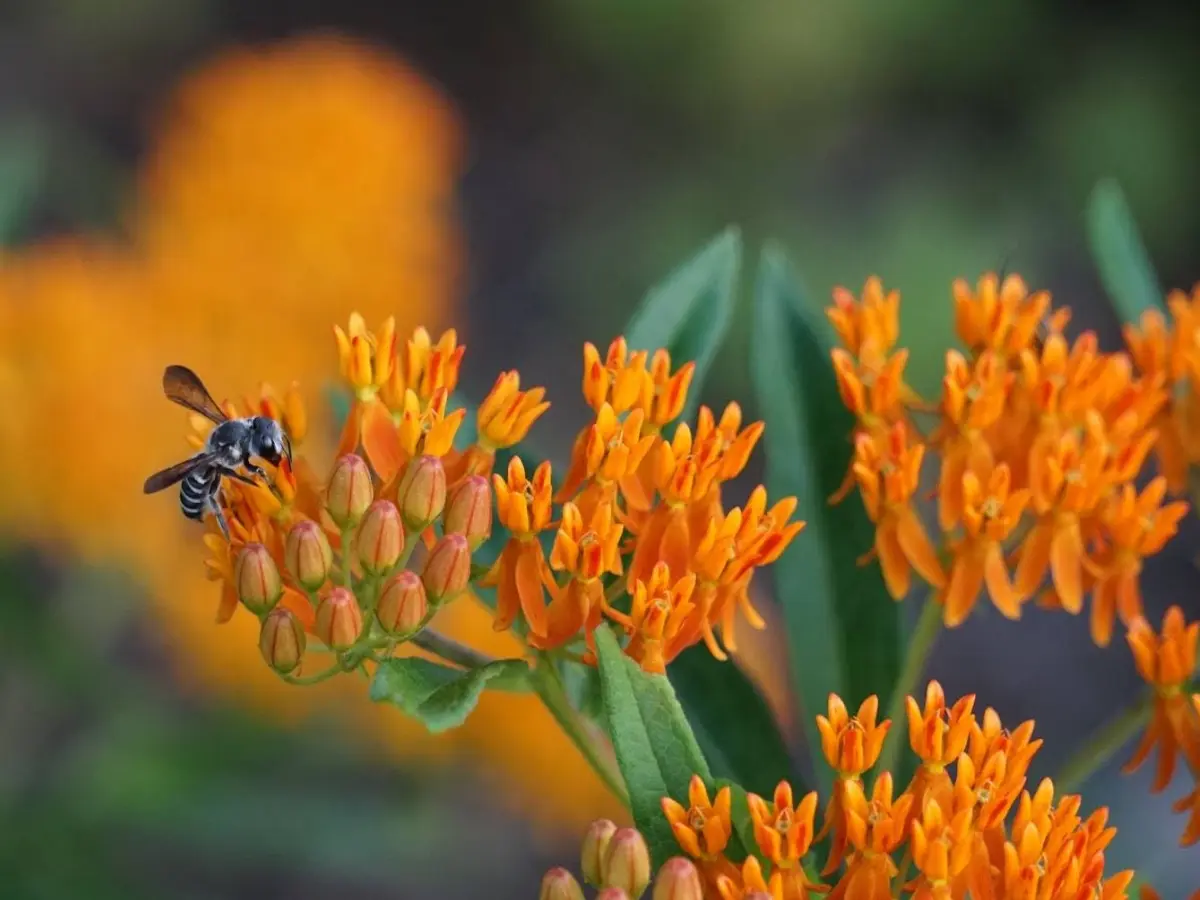
Choose plants that tolerate dry conditions: Ticks thrive in shady, humid environments, so landscaping with plants that tolerate drier conditions can help create a less favorable environment. Little bluestem, wild bergamot, black-eyed Susan, and lanceleaf coreopsis are examples of plants that can tolerate drier conditions once established.
Remove invasive plants that provide habitat for tick hosts: Some invasive plants can create dense cover that attracts or shelters rodents and other animals that serve as tick hosts. Barberry, multiflora rose, and nonnative shrub honeysuckle are examples of invasive species to watch for. Barberry is particularly concerning because its dense, low-growing thickets can trap moisture and provide excellent cover for mice.
Increase Habitat for Birds of Prey: Owls and hawks hunt white-footed mice as a key part of their diet, so here are some steps we can take to support these important predators. Leave cavity trees. As tempting as it can be to immediately remove dead trees, many birds of prey rely on cavity trees for nesting. Without these trees, we could see a decrease in birds of prey that help control rodent populations. If you have cavity trees on your property that aren’t a hazard to people or property, leave them be and your forest’s biodiversity will thank you! Many raptor populations are declining due to habitat loss, so another action landowners can take is to put up nest boxes. Common cavity-nesting raptors include American Kestrels, Barn Owls, and Barred Owls. The Cornell Lab’s NestWatch program has great resources on how to build a nest box for individual species, the type of habitat each species needs, how to troubleshoot issues, and more!
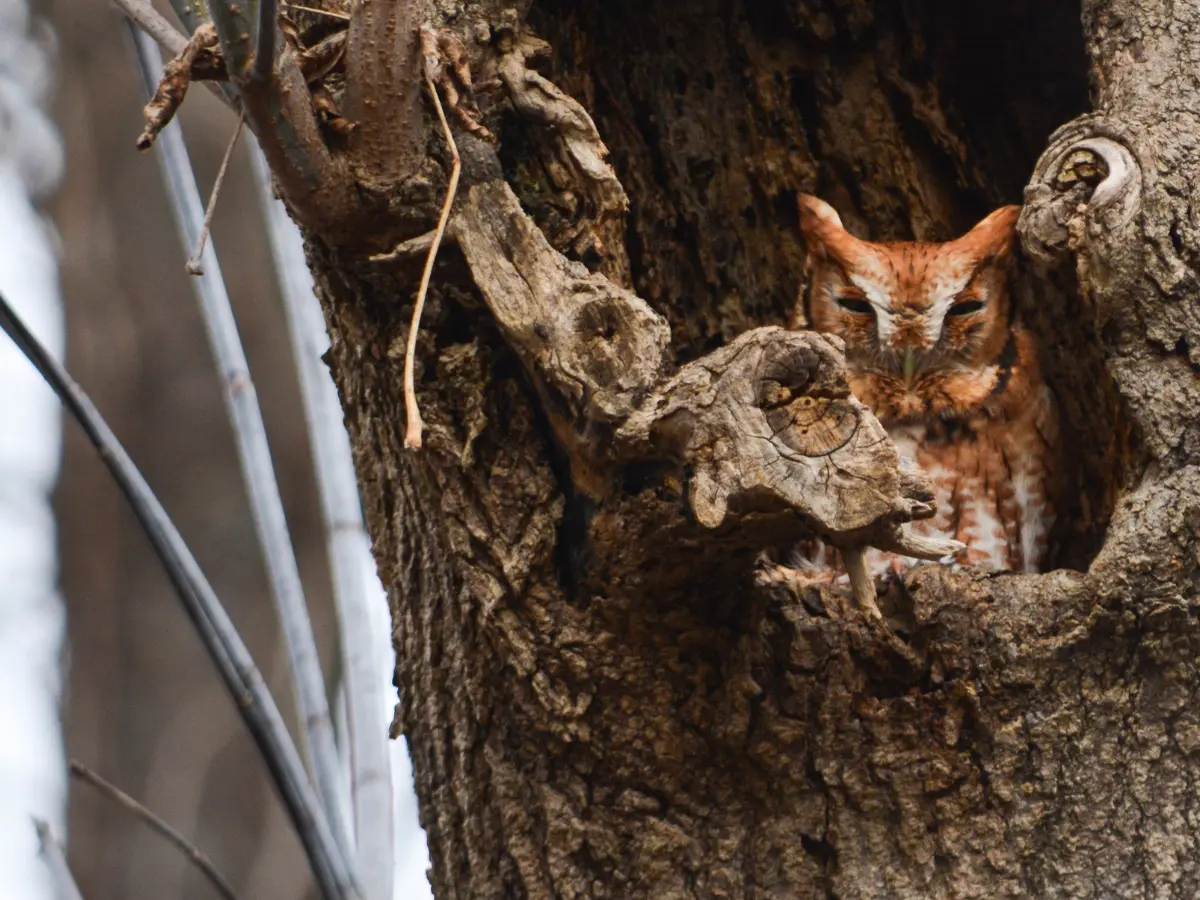 Eastern Screech Owl, photo by Sebastian Harris
Keep firewood neat and dry: Stack wood piles neatly in dry areas, preferably away from the house and frequently used outdoor spaces. This can help discourage rodents and other wildlife from making themselves at home in your wood pile.
Let the sunlight in: Because ticks prefer shady, humid environments, increasing sunlight and air circulation can make your yard less favorable. Prune low tree branches where appropriate, keep grass short, and mow frequently.
Don’t Forget Personal Protection
Even with careful landscaping, ticks can still find their way into your yard. Make a habit of checking yourself, your family members, and pets for ticks after spending time outdoors. Pay particular attention to areas where ticks can easily hide, such as around the hairline and behind the ears.
You can also treat appropriate outdoor gear, including clothing, camping equipment, and shoes with permethrin, an insect repellent specifically designed for use on clothing and gear. Always follow the product label instructions carefully.
A tick-conscious landscape doesn’t have to mean giving up your backyard. By creating barriers, choosing plants thoughtfully, reducing dense habitat, and taking personal precautions, you can make your outdoor space less inviting to ticks while still enjoying your property all season long.