What might be on a Christmas list for our wildlife, if they could come together to generate one? “Wildlife” is a very broad term, so wishes would likely vary. Pine martens might jot down “more trees please” while meadowlarks would request “fewer forests, more grasslands.” Even with that variability, there are some goods that I think most wildlife would appreciate.
Here are some gift ideas that we as a community should consider delivering to the wildlife we live alongside.
1. Habitat Connectivity
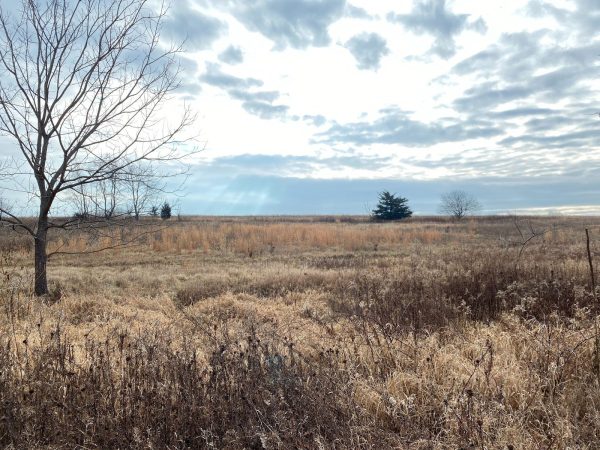
As humans have sprawled into every ecosystem imaginable, we’ve rearranged the landscape into a fragmented state. Whereas forests, grasslands, and wetlands stretched for wide expanses centuries ago, what we have now are scattered patches of wild spaces. In between those patches, we’ve built busy highways, housing developments, monocultures of soy and corn, excessive amounts of lawn, and the list continues. What this does is force wildlife into one of two scenarios: either they venture out across the habitat gap, exposed to dangers of many kinds, or they remain restricted on their islands, making do with what habitat there is to utilize.
So somewhere high on a wildlife wish list would be an increase in habitat connectivity. This can be achieved in a number of ways:
- Preserving natural tracts of land in between already protected spaces, bridging the gap
- Building wildlife crossings across major roadways that transect large tracts of wild spaces
- Allowing strips of agricultural land to be restored into wild habitats, creating a corridor between isolated patches of forest or meadow
- Building culverts beneath roads that allow the passage of aquatic wildlife, also dissuading semi-aquatic critters like turtles, amphibians, and mink from attempting to cross busy roads to access nearby habitats
Most of the above require a bit of funding and state/municipal support, but even with the extra work, these solutions are feasible. They’ve been implemented elsewhere in the country with great success, so we should push for more of the same.
2. Increased Native Plant Diversity
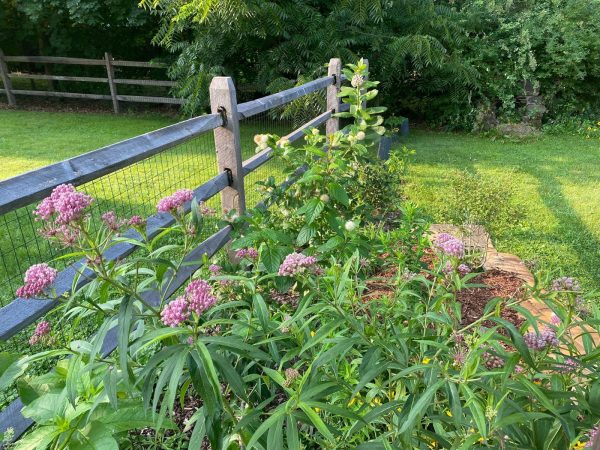
Thinking more generally, and more feasibly, the addition of native plants to the landscape benefits all wildlife. Native plants (ispecies that were present in a region, pre-European settlement) form the foundation from which wildlife evolve, grow, and continue to thrive.
Some animals feed on the plants directly (think caterpillars to oak leaves, or goldfinches to birch seeds) while others feed on the plant-eaters (think a warbler eating a caterpillar, or a goshawk eating a goldfinch.)
Others simply find refuge within them, such as an Indiana bat roosting beneath the pealing plates of a Shagbark Hickory, or a family of wood ducks living in the hollow of a mighty American sycamore.
The benefits of native plants for wildlife are seemingly infinite, which is why an increase in native plant diversity is guaranteed to make a wildlife Christmas list.
3. Support for Allied Organizations
I don’t think wildlife are aware that, spread out across the country, there are congregations of humans who spend 40-ish hours a week figuring out ways to protect them and the wild spaces that they occupy. But in this mad scenario where animals create Christmas lists, I like to imagine they’d also be advocates of conservation organizations.
Support can come in many forms. Of course money, which is understandably a constraint for most, goes a long way in ensuring that conservation-focused non-profits stay afloat and continue their good work. Things like wildlife corridors, land preservation, and ecological restoration all come at a cost. To execute any of the above, conservation organizations need donations from those who are willing and generous enough to help.
Another form of support is volunteering. Many land trusts are small and rely on volunteers to help accomplish their stewardship and educational goals as well. Here at Heritage Conservancy, volunteers aid us in planting hundreds of trees every year. We even have volunteers who help lead hikes through our preserves, sharing their passion and knowledge about wildlife with others.
All of it, whether money or time spent, is essential and aids in supporting wildlife.
4. Clean Waterways and Wetlands
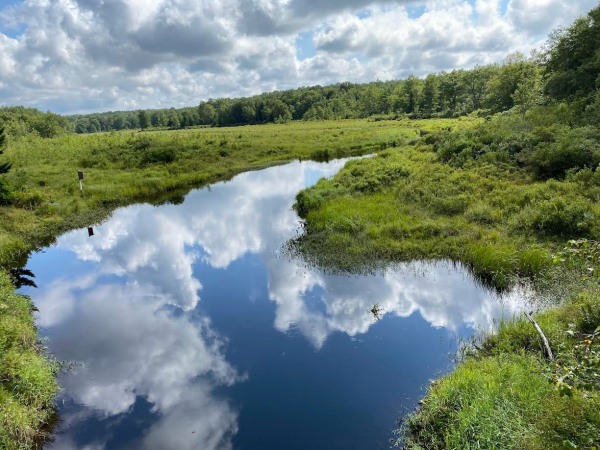
Even the most land-loving reptiles require water to live. Life cannot persist without it, but it’s not just the presence of water that’s vital to wildlife. As our landscapes continue to industrialize and neighborhoods continue to sprawl, byproducts of that expansion often seep into our wetlands and waterways. Water pollution comes in many forms, but in any form, it poses a threat to wildlife and people alike. Some common sources of water pollution include:
- Inorganic fertilizers and pesticides
- Soil erosion
- Manure runoff
- Industrial waste
- Oil spills
- Sewage and wastewater
Combating things like oil spills and industrial waste can be complex, and often requires eco-friendly regulation, improved infrastructure/technology, and accountability from large corporations. However, some things we can do as a community to contribute to cleaner waterways include:
- Increasing tree cover along the edges of our waterways and wetlands: Trees are great at extracting pollutants from the soil. Their roots also stabilize soils and hold them in place, preventing the erosion of polluted soil into aquatic environments. An establishment of trees adjacent to a waterway is what ecologists call, most appropriately, a riparian buffer. Bigger buffers often mean cleaner water.
- Encouraging sustainable agricultural practices: Educating landowners and farmers about the benefits of using organic fertilizers and pesticides is an important step to decreasing water pollution. Similarly, educating farmers about the benefits of utilizing cover crops while fields are inactive is important too. We’ll always need crops but there’s a water-friendly way to go about obtaining them. Simple conversations can go a long way!
- Volunteering for trash cleanups: While this won’t extract any toxins produced by harmful algae or nearby power plants, it’ll certainly aid in preventing washed-up trash from adding to the problem. Not only does trash create traps and choking hazards for wildlife, it can also contain harmful chemicals that readily seep into wet environments. Simply cleaning up debris in and along wet areas is incredibly beneficial.
Clean water, more space, native plants, and support for aligned organizations might not be the most surprising list of conservation Christmas wishes. All are vital, worthwhile pursuits for wildlife, nonetheless. It’s worth mentioning that all of the above benefit people, too. Having space to explore and biodiversity to appreciate has proven benefits for mental health. Having clean water and supporting organizations that work to keep it clean serve our best interests as well.
It’s the giving season, and there’s plenty we have to offer wildlife. I hope you consider acting on anything listed here, but please research more ways that you can help our non-human neighbors. There’s certainly no shortage of charitable actions to take.
Thanks for reading.
Sebastian Harris, Conservation Biologist