
Visit our Preserves
Croydon Woods Nature Preserve
This 80-acre forested property in Bristol Township is one of the last remaining Atlantic coastal plain forests in Pennsylvania, making it an important ecosystem to protect.
About Croydon Woods Nature Preserve
Close to the Delaware River in Lower Bucks County, Croydon Woods provides a publicly accessible green space for recreation like walking, birding, and dog walking. Many mammals, birds, reptiles, and amphibians inhabit the forest, and it serves as a stopover for migrating birds. Heritage Conservancy uses the preserve for educational programs with local schools, especially adjacent Keystone Elementary. By connecting the community with Croydon Woods, the Conservancy hopes to promote stewardship and outdoor recreation in this natural area.
Visitor Info
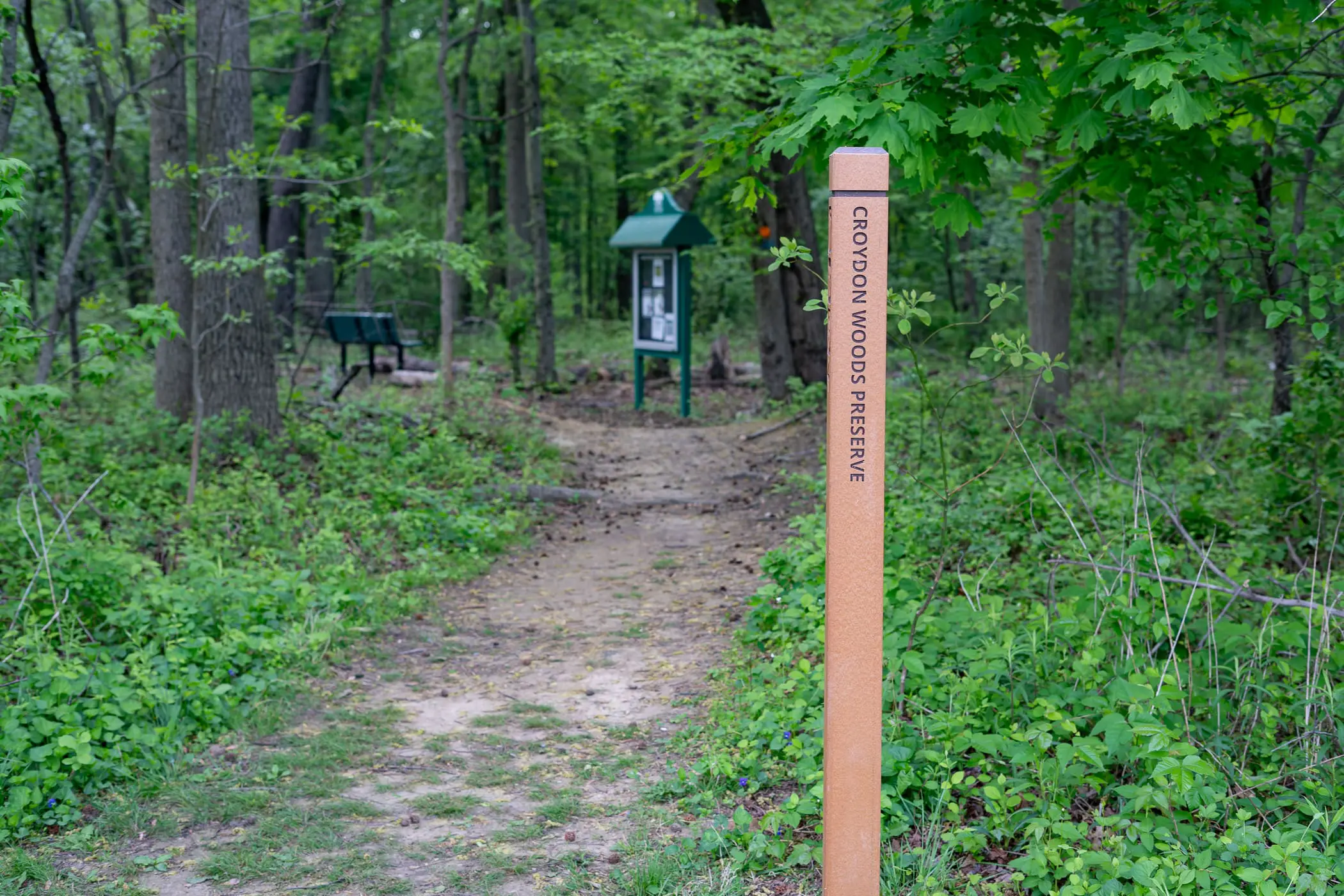
Approximate Address: 1900 Summit Ave, Croydon, PA
Important to Know
- Croydon Woods Nature Preserve is closed to all motorized vehicles.
- ATV use is strictly prohibited. They are a safety hazard for people, animals, and plants.
- Pets are welcome but must remain on leash at all times.
- There are no public bathrooms at the preserve. There is one water fountain by the Little League baseball field, but it is only running during baseball season. Be sure to pack a water bottle!
- There are trash cans by the baseball field. Please do not litter.
- Our deer management program is in effect for tightly restricted bow hunting, mid-September through January. For your safety: Stay on marked trails. Pets must be leashed at all times. Wear brightly colored clothing.
Amenities and Special Features
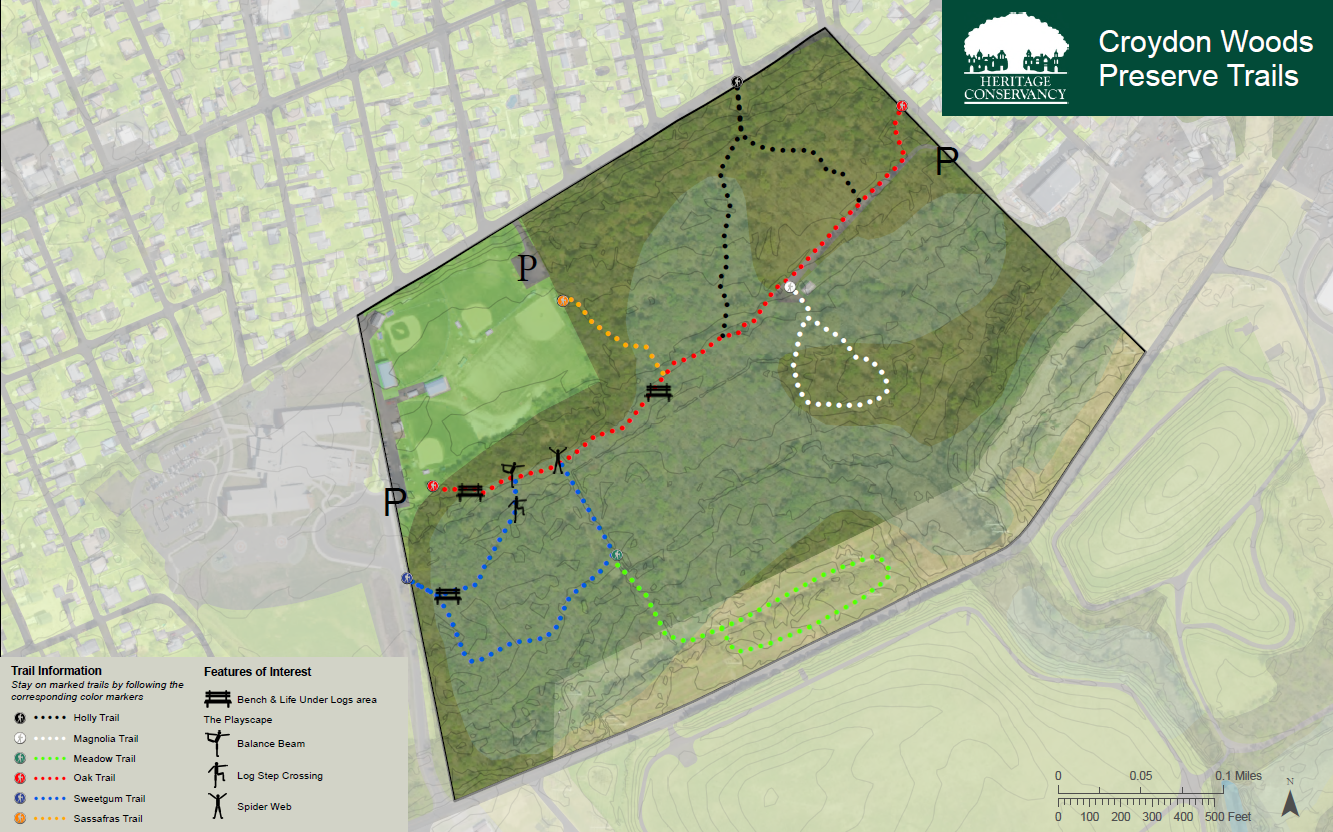
Heritage Conservancy has installed educational signage and three play structures along the Sweetgum Trail: a spider web, balance beam, and log bridge. Visitors can also spend time in the Life Under Logs areas along the same trail. Here, slowly roll over logs to spot insects and other wildlife that like to make their homes underneath! (Remember to place the log back in place, as it is their home.)
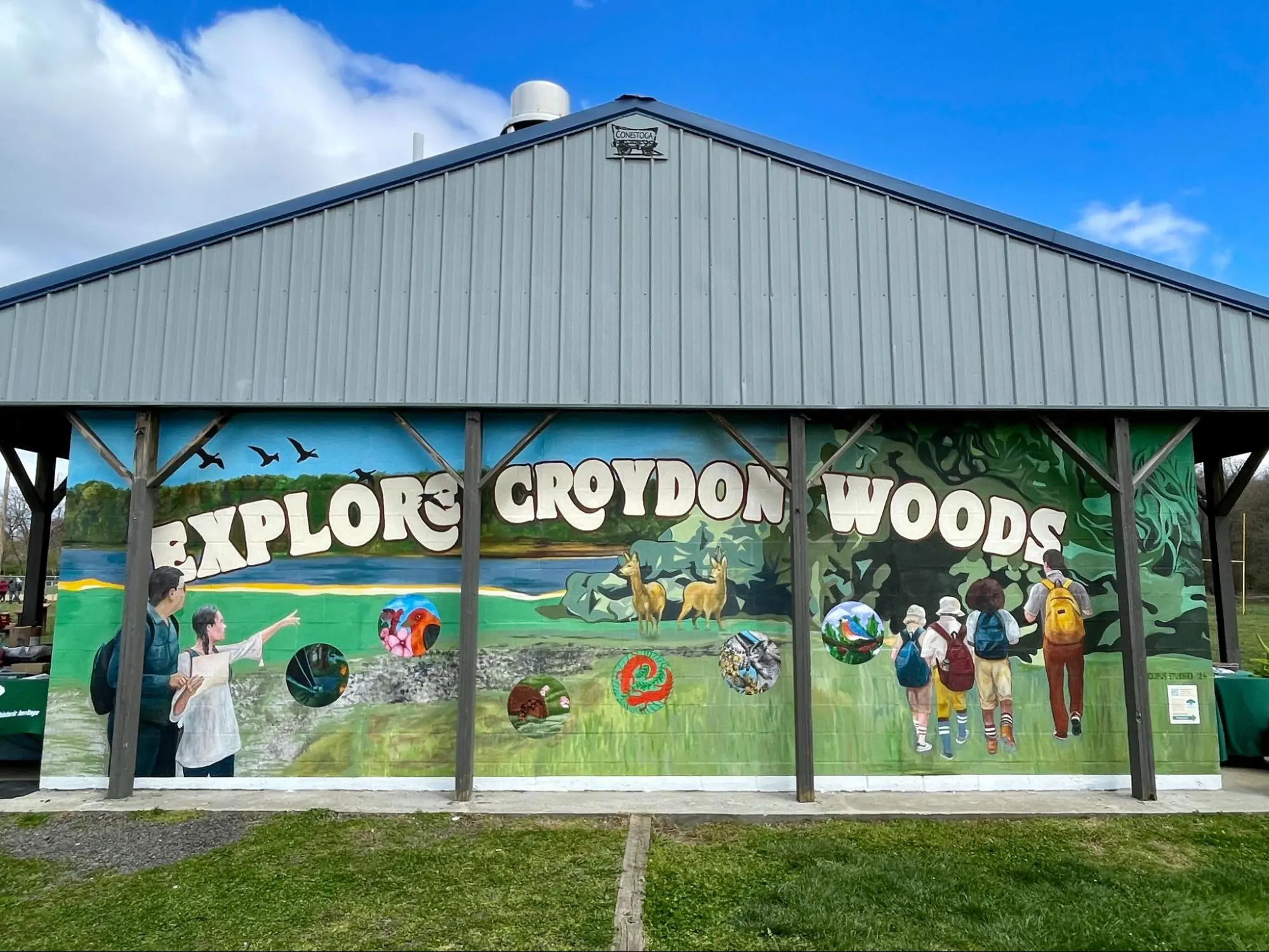
The community mural by the baseball field is another key feature, painted by Bucks County artist Jean-Marc Dubus and Truman High School student artists. The mural depicts Croydon Woods and some native species that inhabit it.
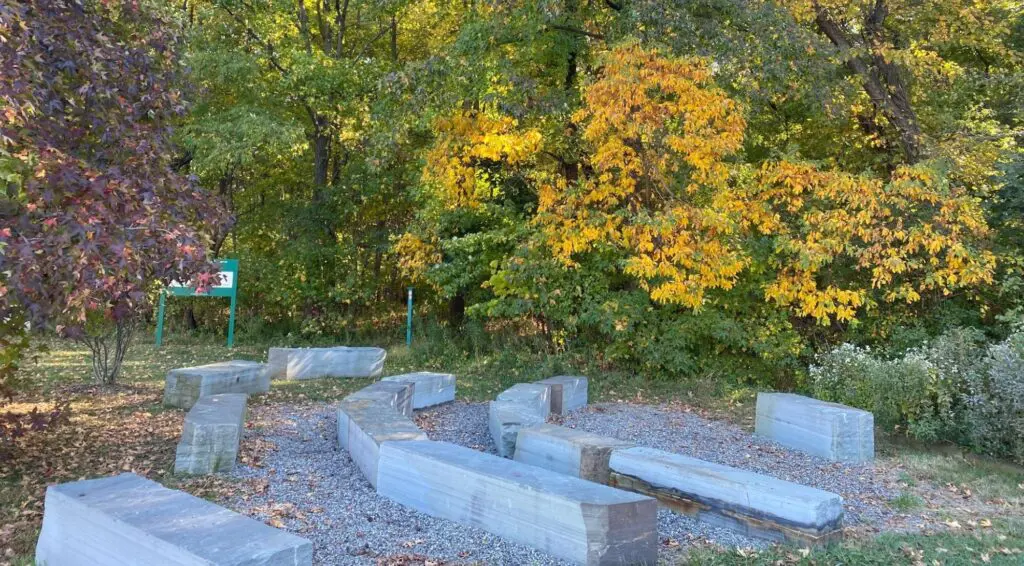
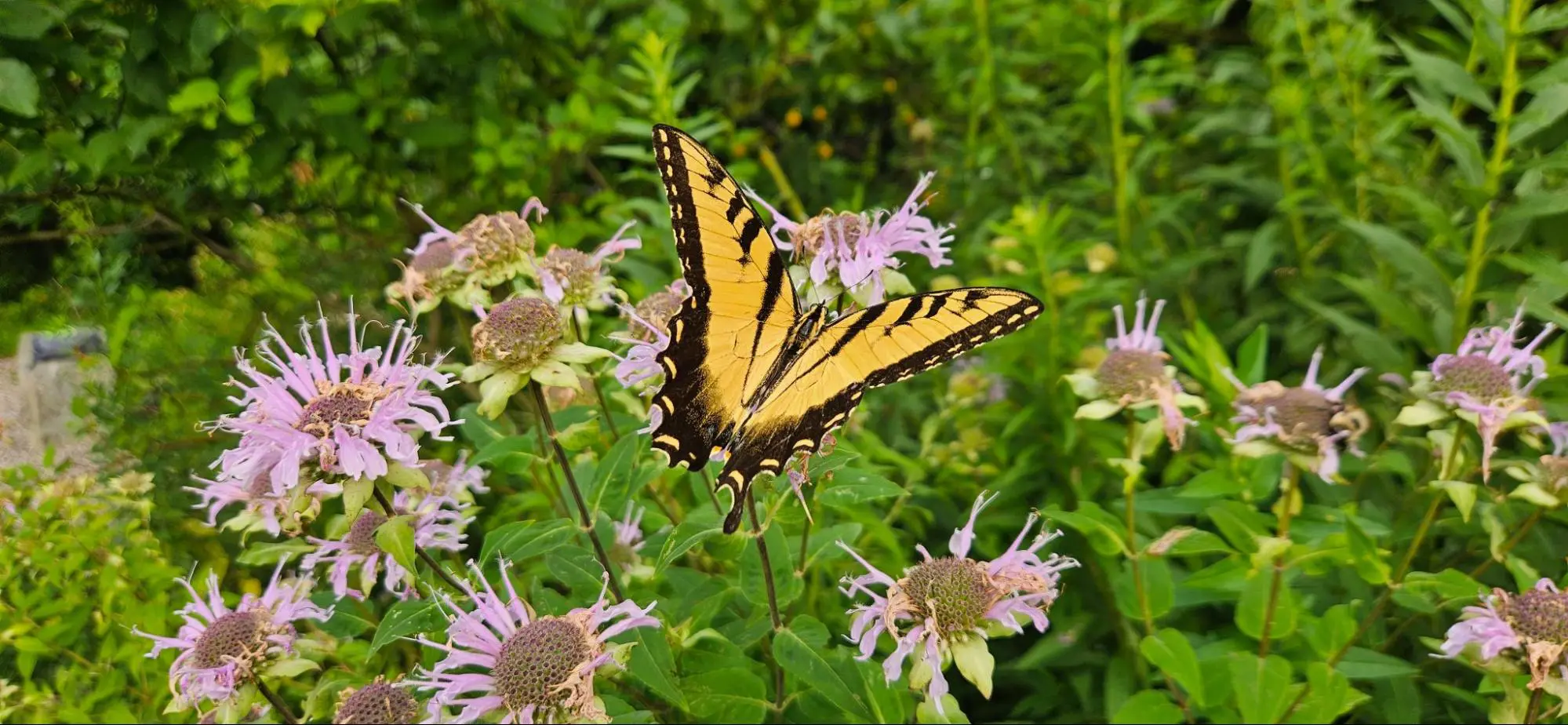
The outdoor classroom is located at the start of the main trail. There is a small pollinator garden at the edge of the forest by the classroom. Heritage Conservancy uses the classroom for education programs, and visitors can use it for picnicking! The pavilion located by the baseball fields has additional picnic seating and a bike stand and repair station. There are two kiosks on the preserve near trailheads with trail maps and other educational information.
Accessibility
From the main parking area at Summit Ave., it is a short walk through a grassy area to the trailhead. The flat dirt paths have ruts and protruding tree roots and there are some steep dips along the trail.
Exploring Croydon Woods Nature Preserve
Oak Trail (Red) - 0.4 miles

This trail connects both main trailheads from the outdoor classroom to Stella Avenue. There is a 12° dip right at the start of the trail from Summit Ave. The trail will take you across the entire preserve through the shade of the Atlantic coastal plains forest. You will pass mature oak trees and some of the play structures, as well as an old decommissioned pump house.
Sweetgum Trail (Blue) - 0.4 miles

Access the blue trail from the red trail (this includes the 12° dip at the beginning) and follow the tree markings past large sweetgum trees, vernal pools, and Life Under Logs play areas. The trail is shaded and is a dirt path with some uneven rocks.
Holly Trail (Black) - 0.4 miles

Access this trail from the red trail or the trailhead on Summit Avenue. This trail goes through the mixed deciduous forest with evergreen holly trees and is completely shaded.
Sassafras Trail (Orange) - 0.1 miles

Access this trail from the trailhead behind the baseball field to connect to the red trail. The trail continues to the right of the old mound and jumps through a sassafras grove.
Meadow Trail (Green) - 0.3 mile grassy lollipop loop

Access the meadow trail from the blue trail as it turns. The green trail continues straight on towards the meadow, continuing over the dips in the trail. The meadow trail goes under the power lines and has limited shade. There is one 23° brief dip in the trail.
Magnolia Trail (White) - 0.3 mile lollipop loop

Access the Magnolia Trail from the Red Trail near the pumphouse. The trail continues behind the right side of the pumphouse and is a short loop through some mixed deciduous forests. Keep your eye out for some of Pennsylvania’s threatened magnolia species along the trail. This trail is flat with occasional rocks and muddy areas.
The Story of Croydon Woods
Croydon Woods is a model of natural land reclamation.
Croydon Woods is a model of natural land reclamation. The preserve sits on the edge of an industrial area, and in 1984, it was determined that the surrounding area’s groundwater was contaminated with TCE and DDT, both toxic organic compounds. In 1986, the EPA designated the area a Superfund site and implemented a groundwater extraction and treatment system that pumped the contaminated groundwater to the surface, where it could escape as a harmless gas. The pumphouse treated the TCE. The DDT was remediated by removing the soil from the area it impacted. The EPA’s cleanup ended in 1996, and the area has been considered safe for recreation since.
Although a majority of the chemicals had been removed or deemed at acceptable levels by the EPA and DEP, Croydon Woods was far from becoming a safe, green space for the community. Illicit activity, ATV riding, and illegal trash dumping continued. In 2015, Heritage Conservancy purchased Croydon Woods from Dow Chemical. With the help of over 200 local volunteers and corporate partners, Heritage Conservancy removed over 22,000 pounds of trash from Croydon Woods. Trails and other amenities were established, signs to discourage ATVs were posted, and the outdoor classroom was built. Croydon Woods now supports over 300 species of plant life and wildlife and celebrates the community activism that has made this ecosystem healthier.
Wildlife at Croydon Woods
Atlantic coastal plain forests vary from other ecosystems in their geology, soil type, and the wildlife communities they are able to support.
Coastal plain forests often have gravely or sandy soil left over from glacial deposits and are often very flat. You may not think of Croydon as coastal, but the section of the Delaware River that is closest to the forest is actually a tidal zone. It is close enough to the Atlantic Ocean that some areas, like Bristol Marsh, are brackish water (meaning it has low levels of salt). These conditions are rare in Pennsylvania, as most of the Atlantic coastal plain forests were developed, leaving little habitat left for species that need these forests to survive.
Video: Senior Conservation Biologist, Tyler Kovacs, discusses a vernal pool, a temporary body of water.
Animals
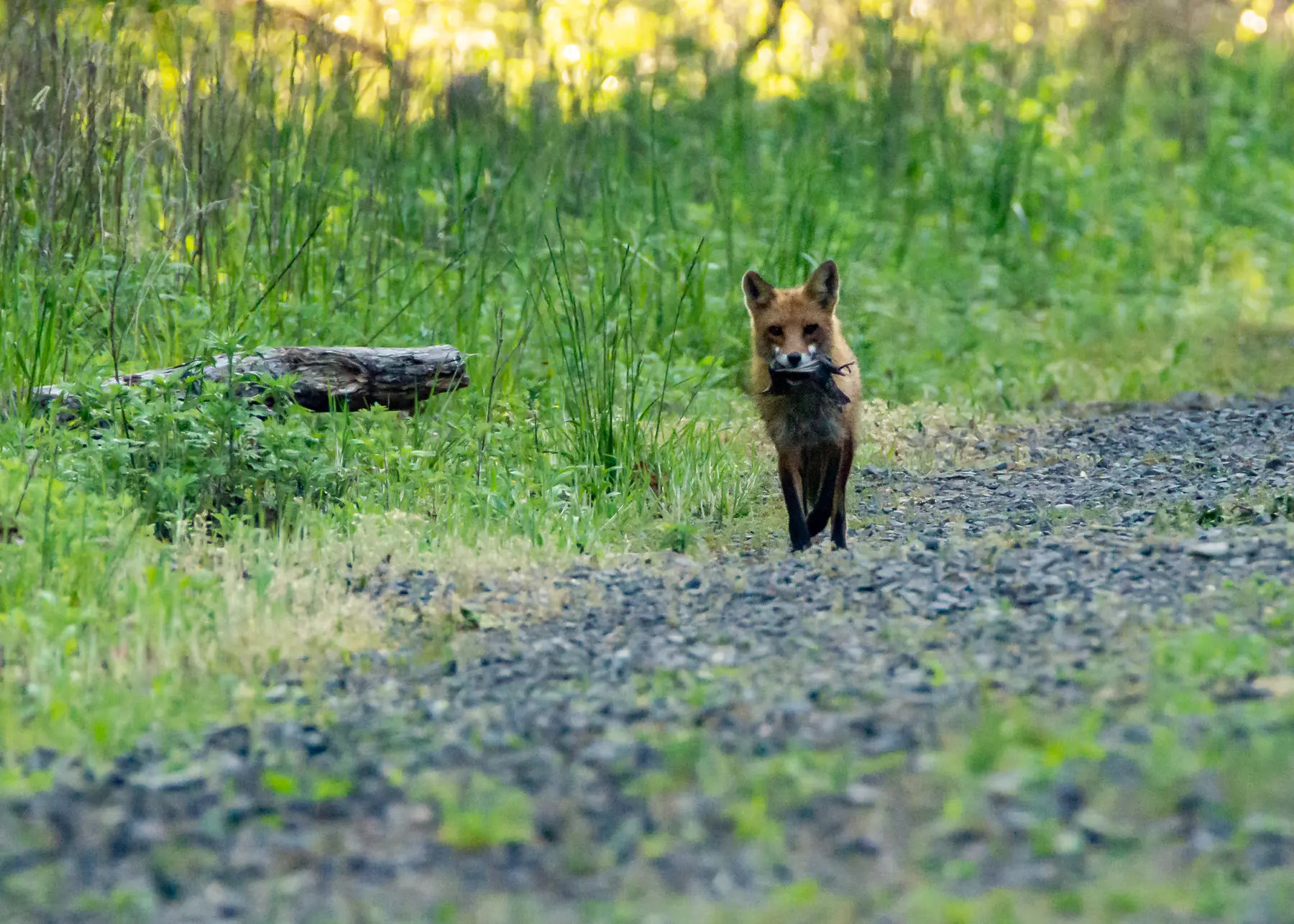
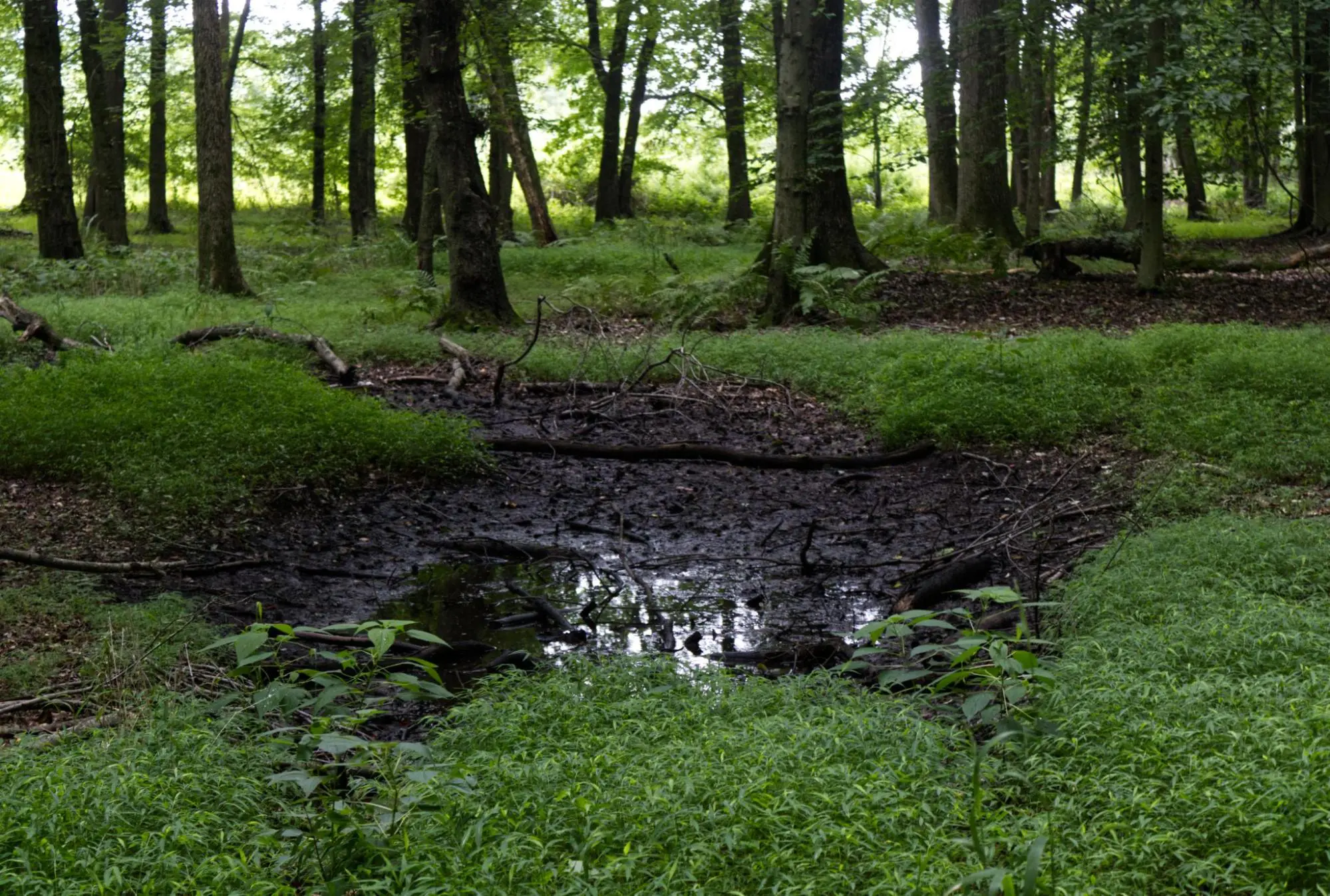
There are many animals that live in the preserve, including white-tailed deer, beavers, muskrats, raccoons, foxes, groundhogs, and multiple species of bats. Amphibians and reptiles use the vernal pools found throughout Croydon Woods as breeding grounds and sources of food and water. Vernal pools fill with water during certain parts of the year and are vital to the life cycle of the amphibians that live here. During the spring and summer, listen for the trills of gray tree frogs.
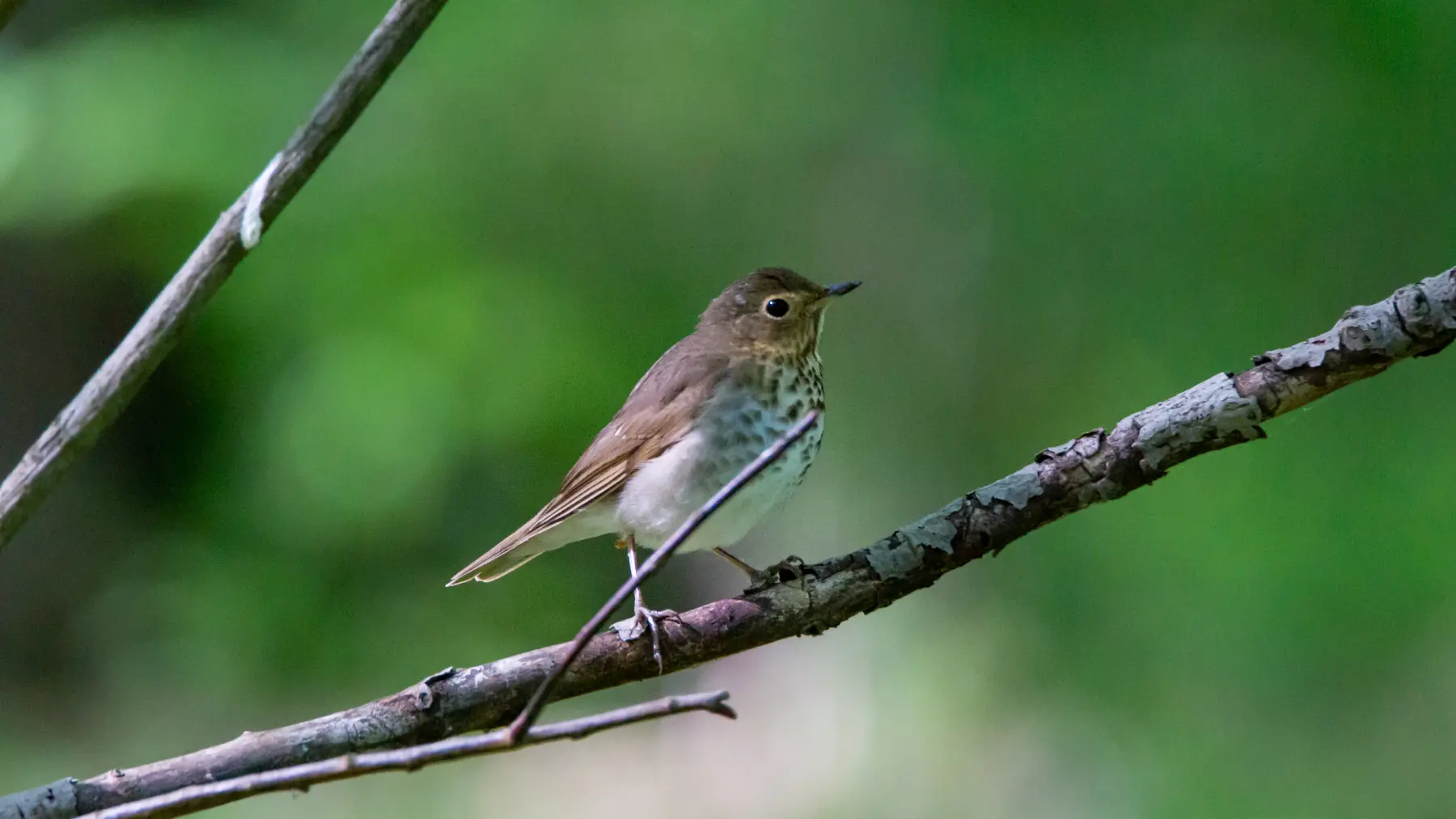
The wooded area also makes a great home for birds. In our last survey, a total of 60 bird species were recorded! Bring binoculars with you when you visit to glimpse eastern bluebirds, goldfinches, Baltimore orioles, scarlet tanagers, a variety of woodpeckers, great horned owls, hummingbirds, and hawks.
Finally, always remember to check for ticks after a walk in Croydon Woods.
Plant Life
Croydon Woods is home to many plant species that prefer Atlantic coastal plain forests. Some Pennsylvania specific species like willow oak, American holly, and sweetbay magnolia are doing well in this protected tract of Atlantic coastal plain forest. Many wetland species including swamp rose mallow are found in the open wetlands that drain into the Delaware River less than a mile away. The large diversity of plant species, including many oak species, creates habitats that support a large diversity of other species.
Some additional native plants you can find include American holly, whose red berries attract birds in the winter; swamp rose mallow, a wetland perennial with large white-to-pink flowers; jewelweed, an orange flower which Indigenous people historically used as an itch remedy; and northern spicebush, whose leaves smell fragrant and are akin to allspice when crushed.
Community Engagement at Croydon Woods
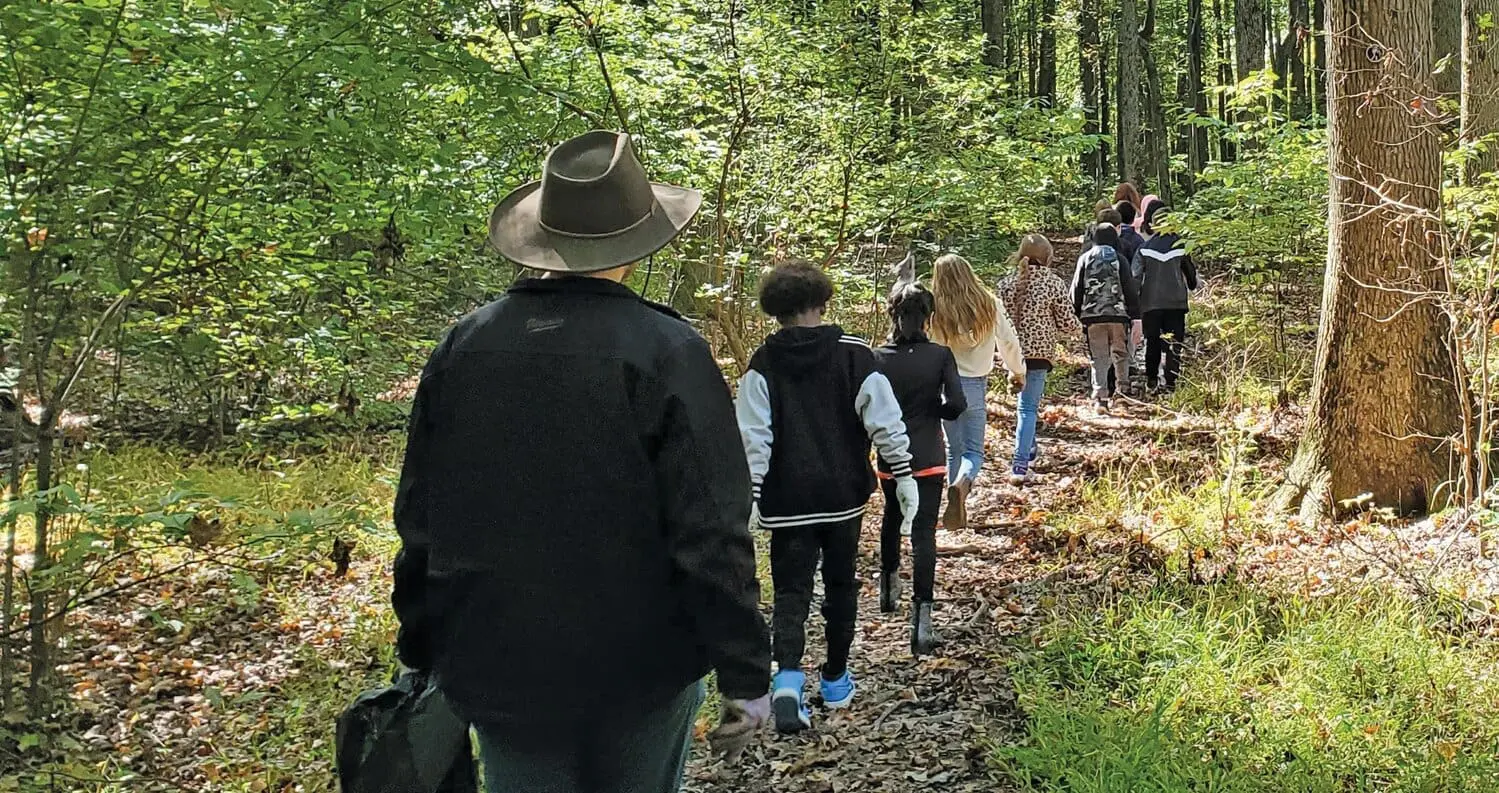
Heritage Conservancy works closely with neighboring Keystone Elementary School to provide educational opportunities at the property. Some of these programs include the outdoor classroom, Tree Guardians Program, and other Environmental Literacy efforts.
The woods and nearby school are also the site of community science. On the roof of Keystone Elementary is a Motus Wildlife Tracking Tower. These towers track migrating wildlife, such as birds, dragonflies, and bats and provide the global science community with critical data on local wildlife migration. In June 2025, a migrating wood thrush picked up by this tower was also tracked by a tower in Belize. Students at Keystone Elementary and St. Michael R.C. School in Belize were connected by Zoom to talk about local birdlife and the habitats that surround them.
In the spring of 2022, Croydon Woods had a BioBlitz event to track the preserve’s biodiversity. They observed 356 plant, animal, and fungal species in the 24-hour survey! These efforts helped earn Heritage Conservancy the 2024 Governor’s Award for Environmental Excellence.
Croydon Woods Mural
Check out our community mural by the Bristol baseball field, created in 2024 with community input and student art to celebrate the rich biodiversity of Croydon Woods. Our mural showcases some of the many species we have documented in this unique and valuable habitat. The mural is a collaboration with Bucks County artist Jean-Marc Dubus and Truman High School student artists, who painted the circle inserts.