

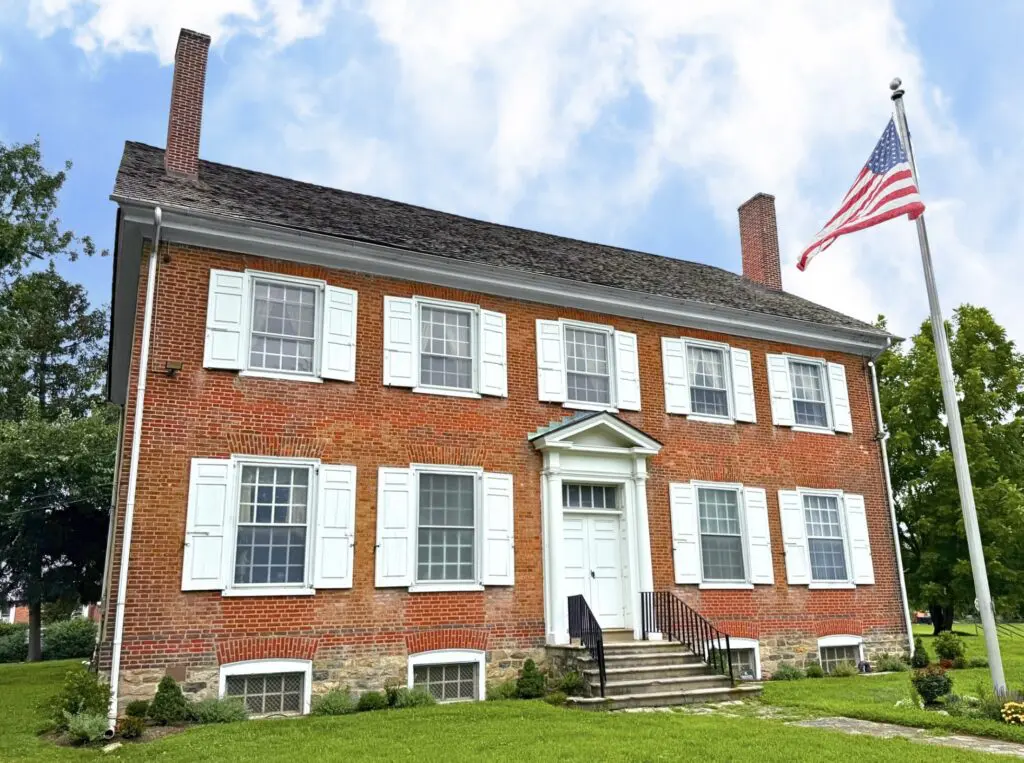
Summerseat’s Place on Our Register, and in History
Every property on Heritage Conservancy’s Register of Historic Places has a story worth telling, but few carry as much historical weight as Summerseat. This brick and stone building in Morrisville was added to our Register on November 16, 1978. Robert Morris and George Clymer, two signers of the Declaration of Independence, both once called it home, and George Washington used it as his headquarters during one of the most pivotal weeks of the Revolutionary War.
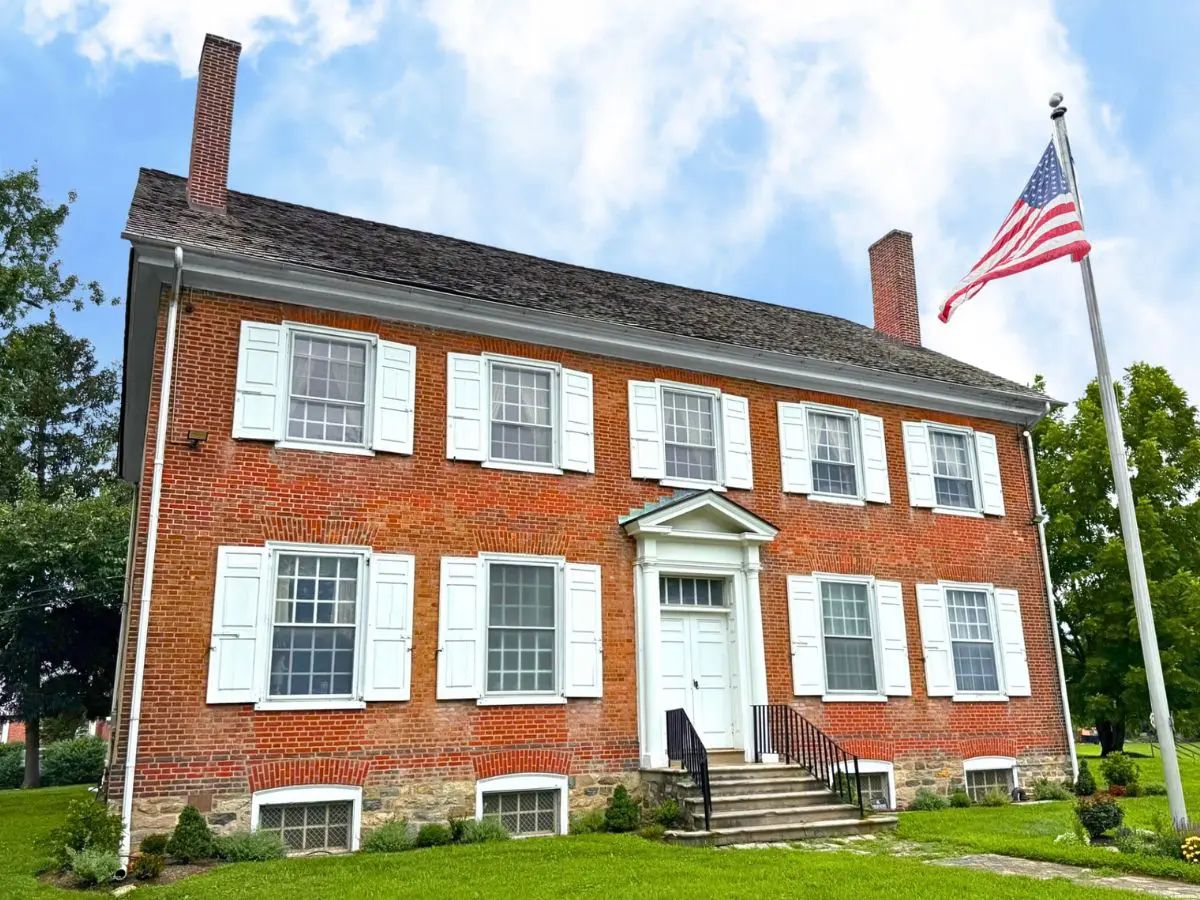
Summerseat as seen from Clymer Ave, Photo courtesy of Historic Summerseat of Bucks County
Summerseat (also known as the George Clymer House and Thomas Barclay House) was built in 1765 by Adam Hoops, a self-made Pennsylvania merchant. By 1773, ownership had passed to his son-in-law, Thomas Barclay, who would go on to become the nation’s first consul overseas and negotiate its first treaty with a foreign power. George Washington chose this place as his headquarters from December 8th through 14th, 1776, in the toughest stretch of the war. His army had just been chased across New Jersey, enlistments were about to run out, and members of Congress were questioning his leadership. While at Summerseat, Washington regrouped and began shaping the plan that would lead to the crossing of the Delaware and the victory at Trenton.
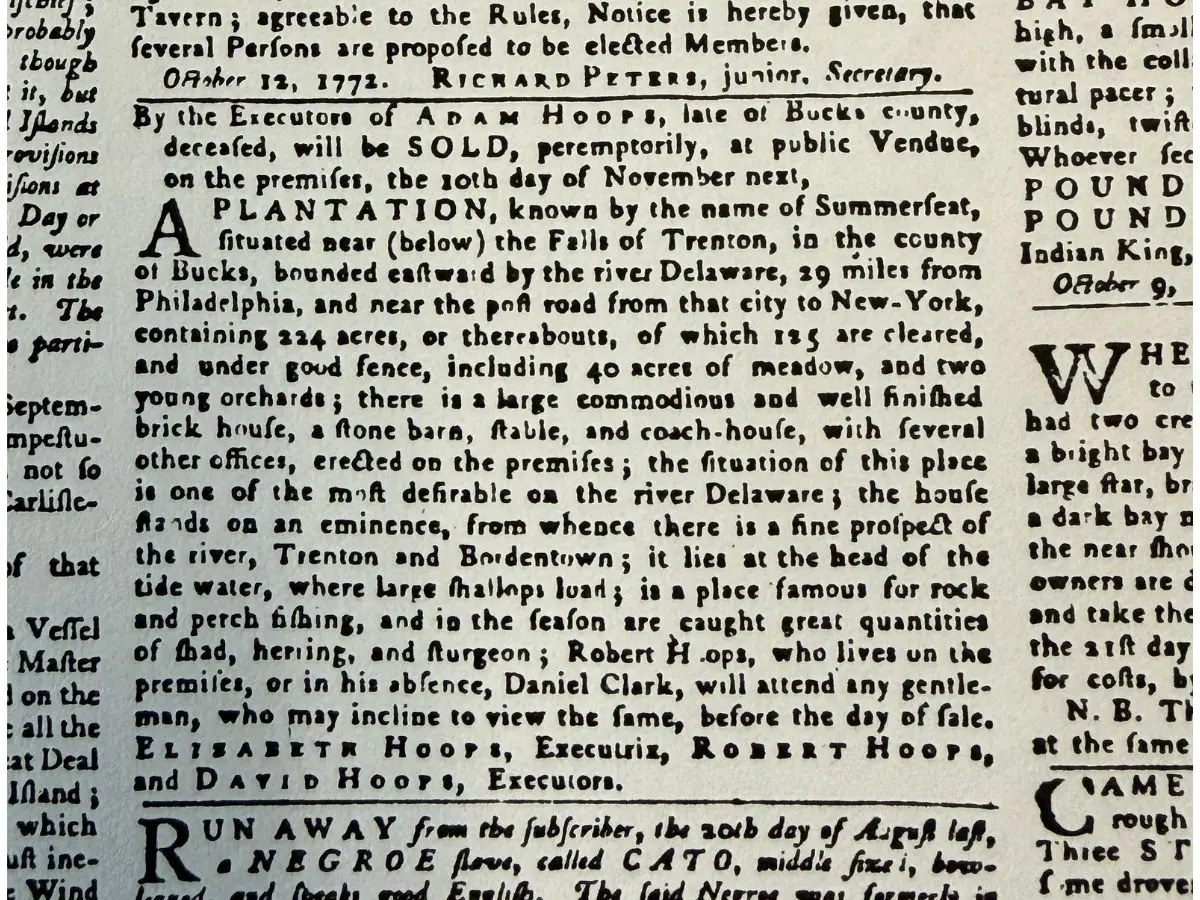
An estate sale notice from the October 1772 Pennsylvania Gazette advertises “a plantation known by the name of Summerseat,” sold by the executors of the late Adam Hoops.
The house’s later owners make it even more unique. Summerseat is the only home known to have been owned by two signers of both the Declaration of Independence and the U.S. Constitution. Robert Morris bought the property in 1791. He was a financier who used his own money and credit to help keep the Continental Army supplied when things were at their worst. George Clymer, a Philadelphia merchant, took ownership in 1798. He was one of the first members of Congress to call for complete independence from Britain, at a time when many still hoped to stay connected with the crown.
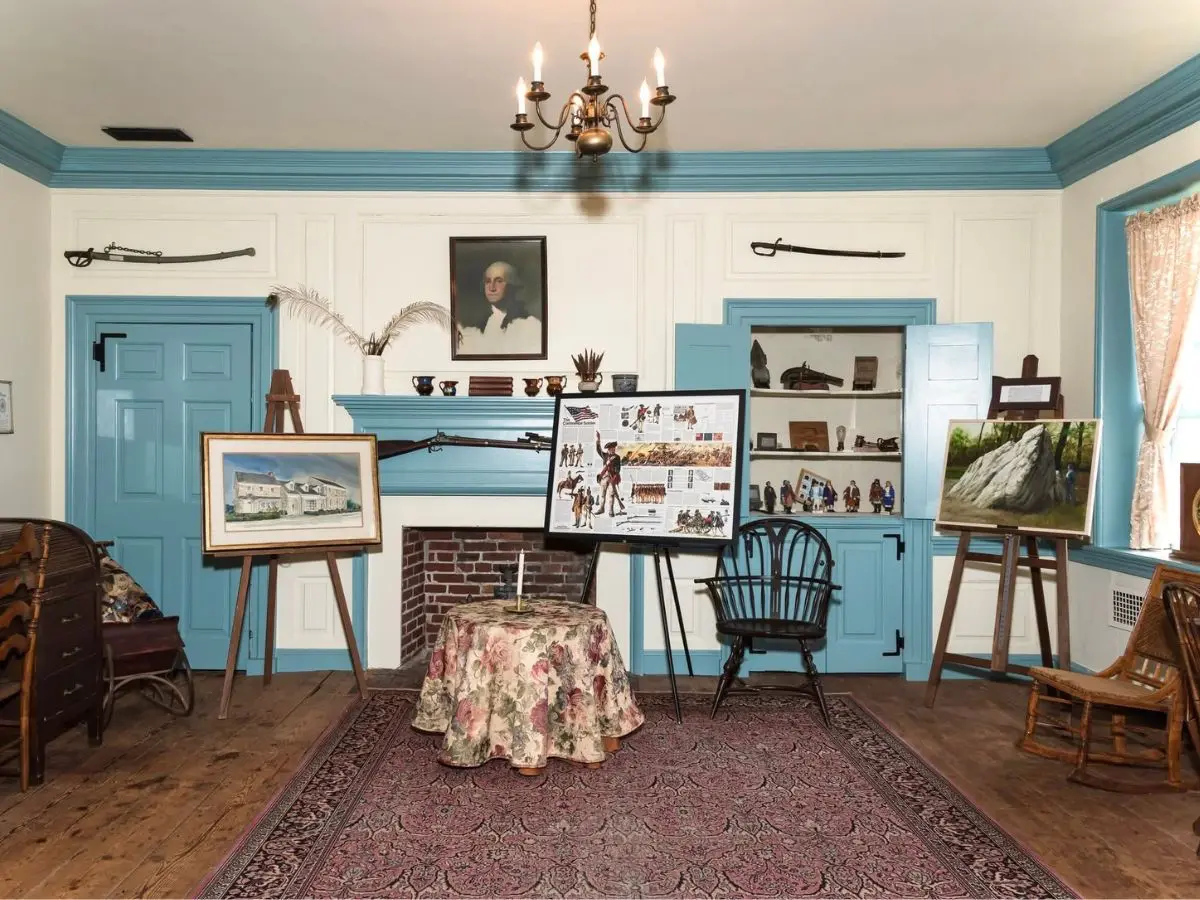
Current interior at Summerseat, now a museum. Read to the end for ways to visit. Photo courtesy of Historic Summerseat.
Near the end of Summerseat’s Revolutionary-era, the home’s dining room held a “court of inquiry” in 1781. General “Mad” Anthony Wayne organized this court where two men were found guilty of spying for the British and held in the basement to await their execution the next morning.
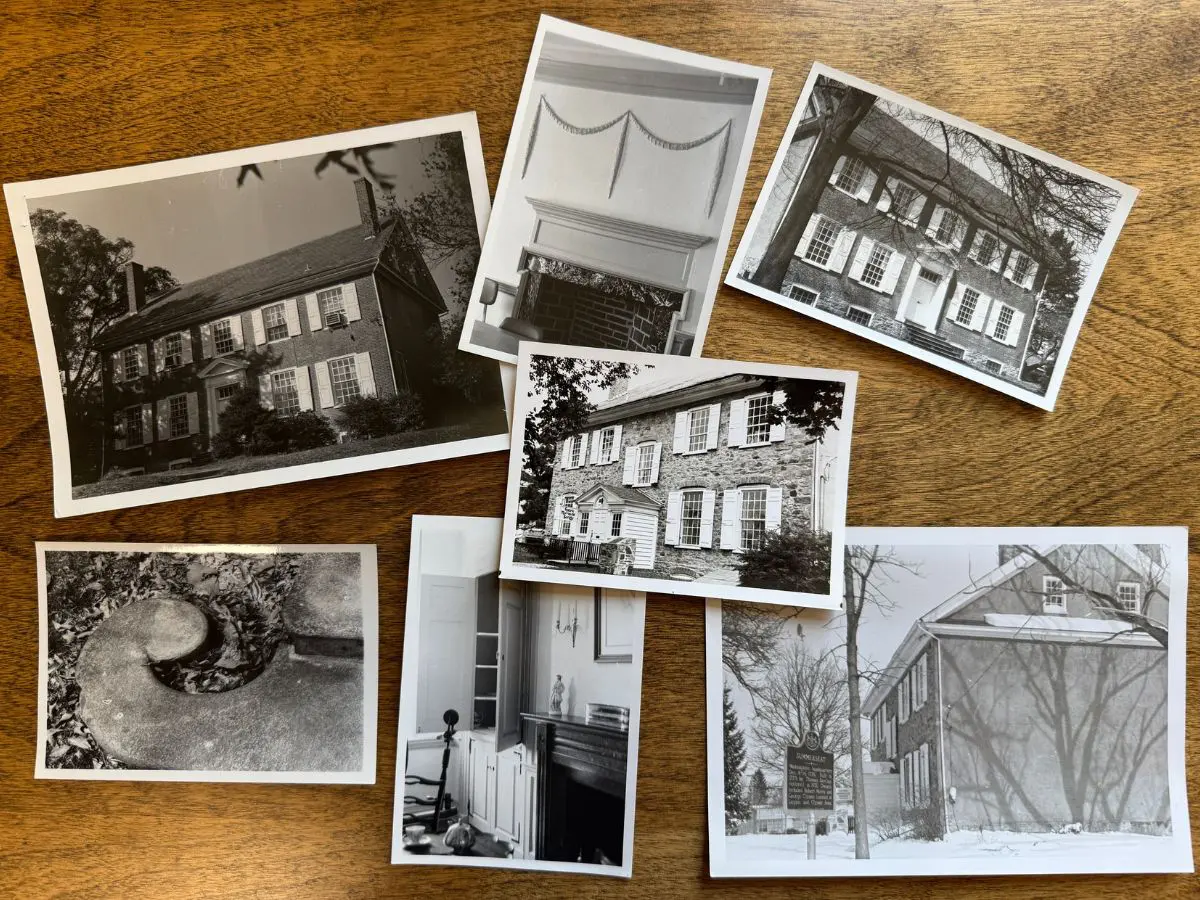
Summerseat, Photos April 1985 from Heritage Conservancy archives. One facade of the house is brick while the other is stone.
On July 17, 1965, Summerseat was designated a National Historic Landmark. Today, the house still stands on its original site, and is now maintained by the Historic Morrisville Society, who continue to open it to the public for tours and lectures. “The house continues to reflect 1700’s–1800’s colonial style in the tastefully decorated rooms, encapsulating history and providing important context for local education. We hope you join us in our mission to provide education, unite the community, inspire future generations, and continue to preserve this Historic Morrisville treasure,” says Becca, the Graphic Designer and Social Media & Marketing professional for Historic Summerseat of Bucks County. Visitors can tour the home on the first Saturday of each month, from 10 am to 1 pm, for $7 per person. Learn more here.
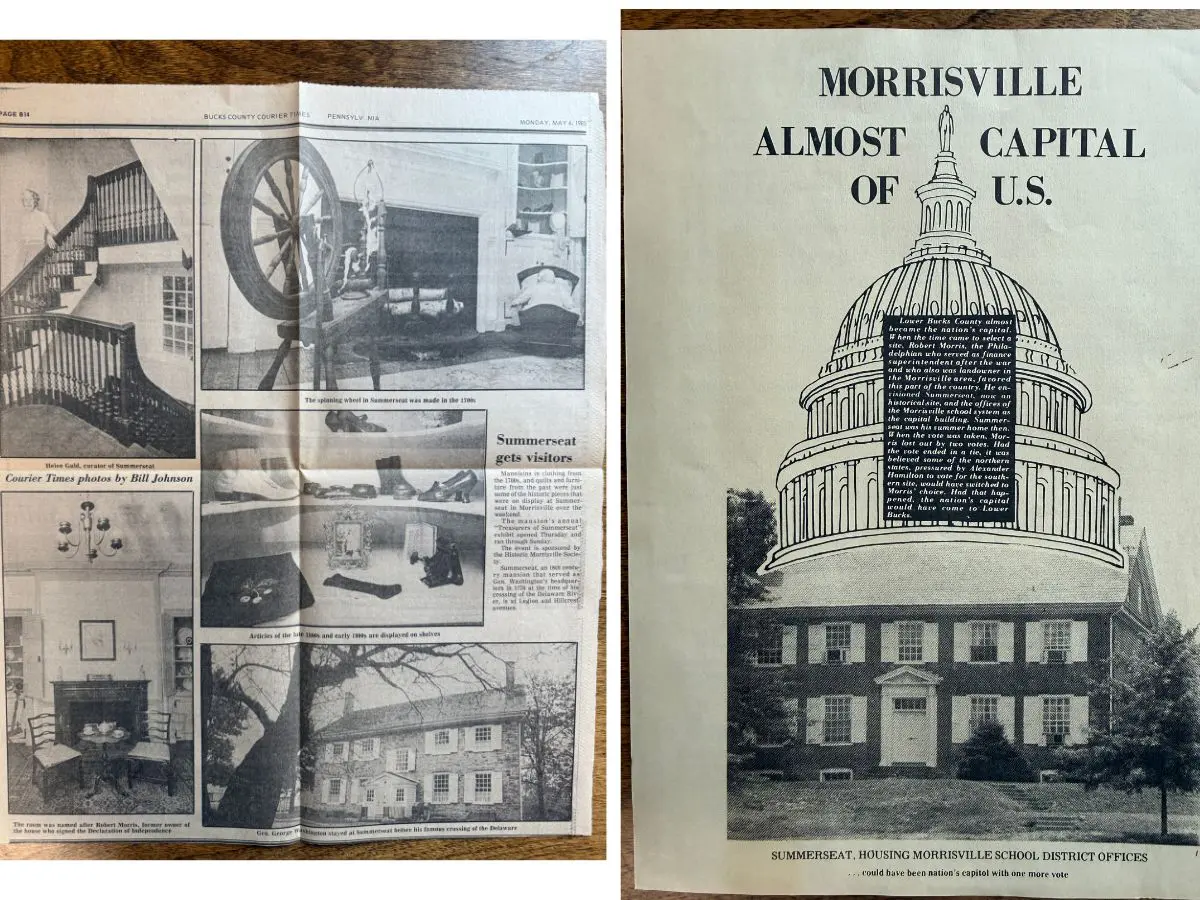
Left: A May 1985 Bucks County Courier Times feature, “Summerseat Gets Visitors,” covered the Historic Morrisville Society’s annual “Treasures of Summerseat” exhibit. Right: A flyer recounts the story of how Morrisville, and Summerseat, narrowly missed becoming the site of the nation’s capital.
Summerseat is one of many buildings on Heritage Conservancy’s Register of Historic Places with a story to tell. If that story matters to you too, we hope you’ll consider supporting the work we do to protect it, one piece of land and one piece of history at a time.