
Come See What’s Blooming at Our Pollinator Meadows!
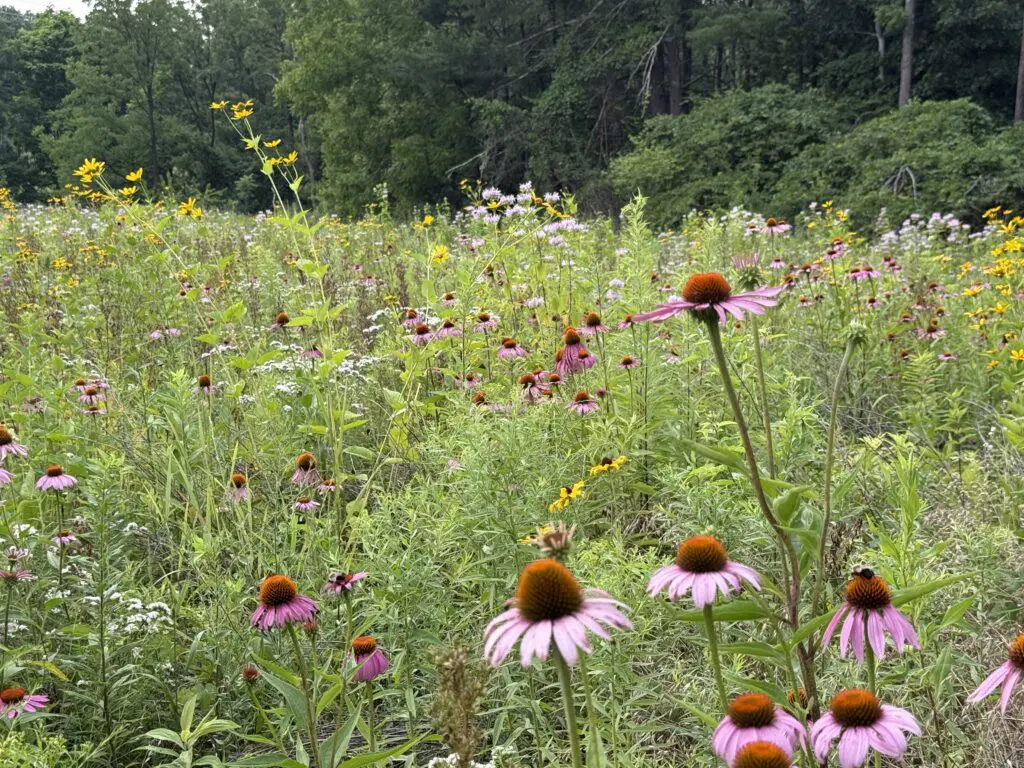
Over the past decade, Heritage Conservancy has been installing pollinator meadows on its nature preserves to help support pollinator abundance and diversity along with other wildlife species. Some of these meadows are publicly accessible, so we encourage everyone to get out to see these habitats while they are busy with life this summer.
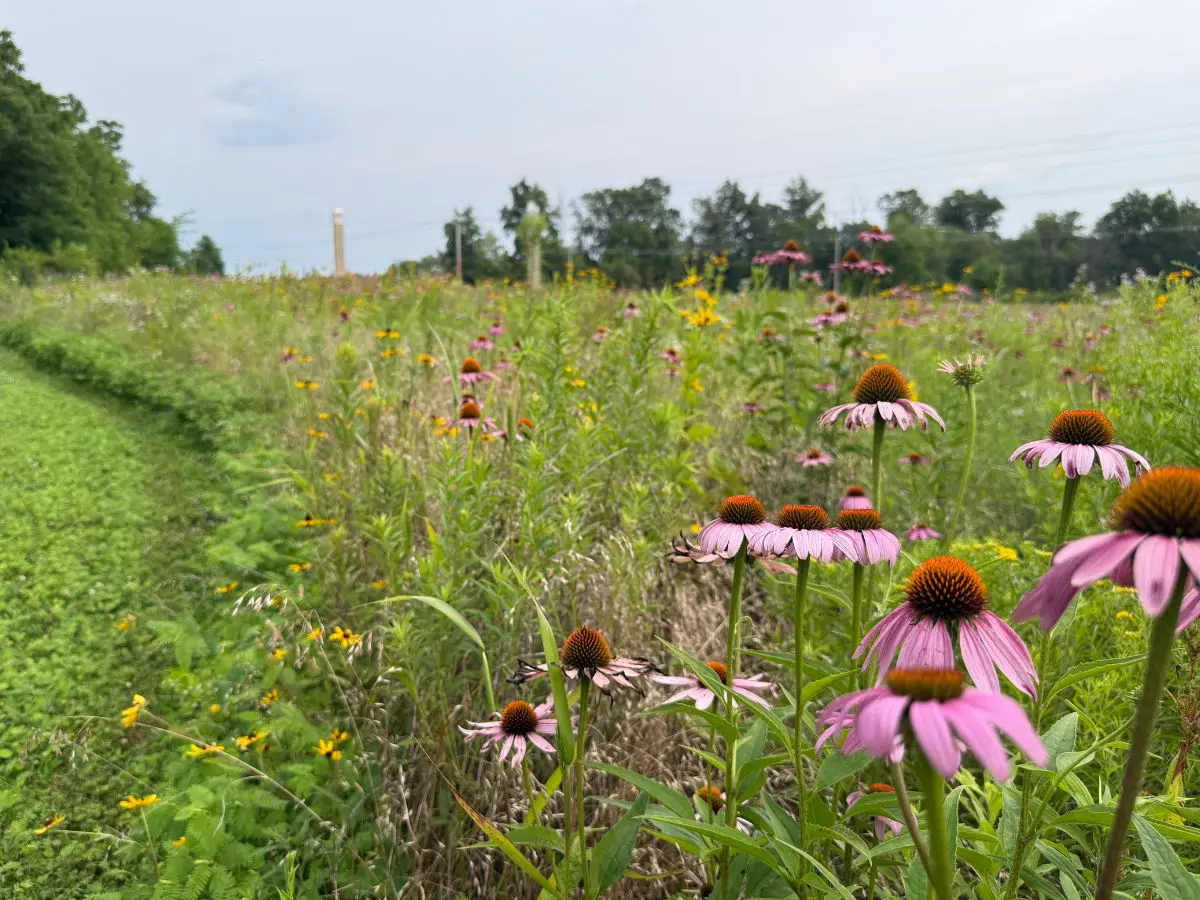
View along the exterior meadow trail at Russell-Mandel Preserve in July.
These meadows not only provide habitat for pollinators, but they also reduce erosion, conserve water, improve soil and water quality, and improve our food production, not to mention their beauty.
A pollinator meadow can be slow to wake up in the spring and start providing resources to our pollinators. Therefore, we plant spring-blooming shrubs around the edges to fill this early season gap in wildflower nectar and pollen. Once the first species starts to flower, usually golden alexander (Zizia aurea), the rest of the growing season will have a full array of different wildflower species blooming. Every two weeks, the palette of colors changes across the meadow as different species start to bloom and provide different resources for our wildlife.
We use many species in our meadows, depending on the structure, purpose, and aesthetics we are planning for. The larger the number of species, the more diversity of wildlife the meadow is able to support and the better the chances are of establishment and long term success. Here are some of our favorite species to use and the purpose for them.
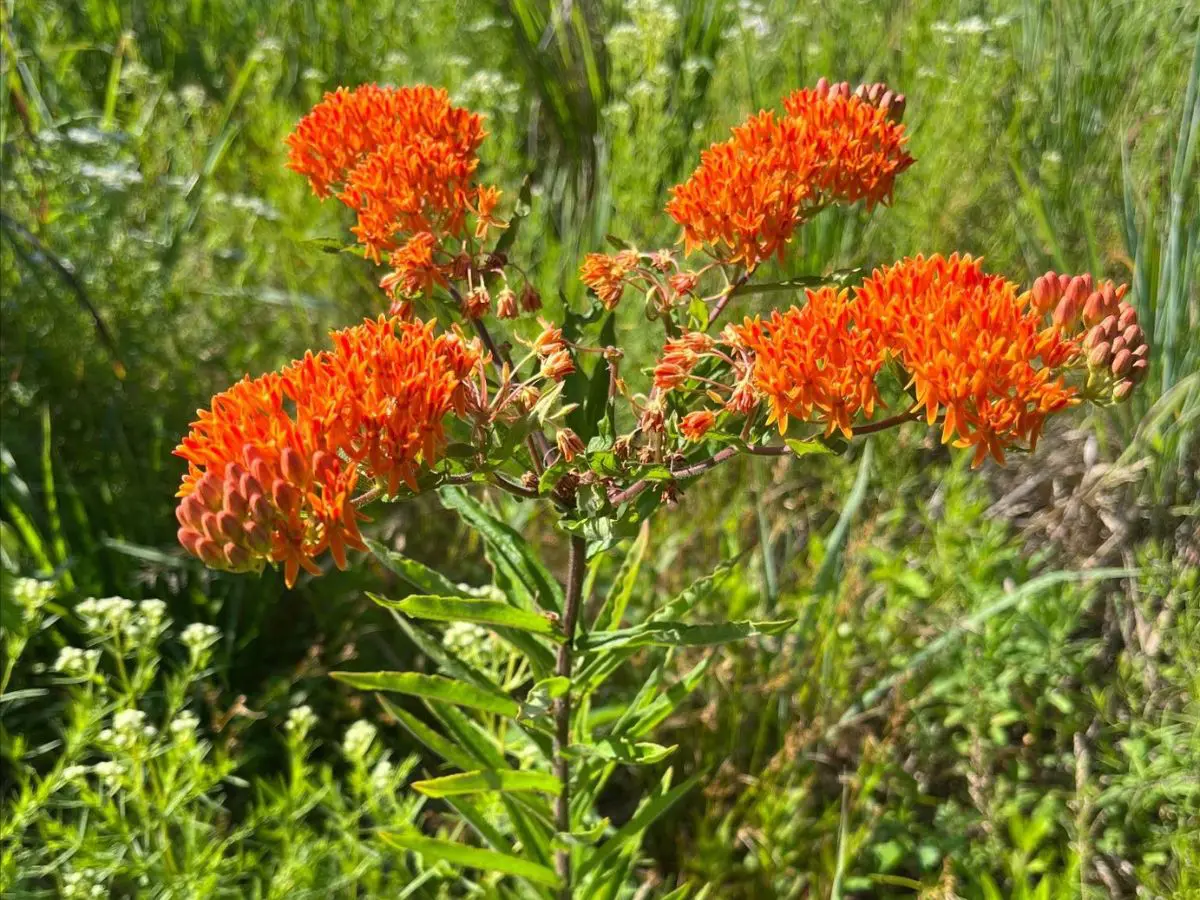
Butterfly milkweed, a host plant for monarch butterflies and a deer resistant species for pollinator meadows.
Species selection highlights:
Annuals and short lived perennials – Partridge pea and black eyed susan are species we add to our mixes that provide flower resources in their first year of growth. Most perennials take a few years to mature before they will flower. These annuals provide both color and resources to pollinators during the early stages of meadow establishment. They will reseed, however, they likely will be outcompeted as the meadow matures.
Deer resistant species – Mints and milkweeds and great to add to every meadow, especially in areas with high deer pressure. Monarda and Pycnanthemum species are diverse and adaptable in most meadow conditions and their minty scent usually keeps the deer from eating them and the plants directly surrounding them. Their minty scent, along with the latex sap of milkweed plants, keeps the deer from eating the plants within a pollinator meadow.
Early blooming species – Golden alexander and our Penstemon species are some of the first species to flower in our meadows. These habitats are not restricted by light, so the plants are not in a hurry to flower before the canopy closes like our woodland spring ephemerals.
Grasses – Grasses are often overlooked as a pollinator plant because they do not provide the showy displays and nectar resources. However, grasses are an important component to all meadows as they are host plants for the larval stages of pollinators. Pollinator meadows need to provide resources for all stages of the pollinators’ life cycle, or they are not truly acting as habitat for them. We use a diversity of cool season grasses like Elymus species (wild ryes) and warm season grasses like blue stems, switchgrass, and indiangrass to provide a diversity of host plants.
Lindsay farm update:
The Lindsay Farm pollinator meadow is Heritage Conservancy’s largest project to date. It is 15 acres and was seeded in 2025 with over 50 species of wildflowers and grasses. It’s only the second year of growth, but the birds and pollinators are already benefiting from it. We are very happy with the success of this project and look forward to seeing how the meadow matures and what wildlife it attracts in the coming years.
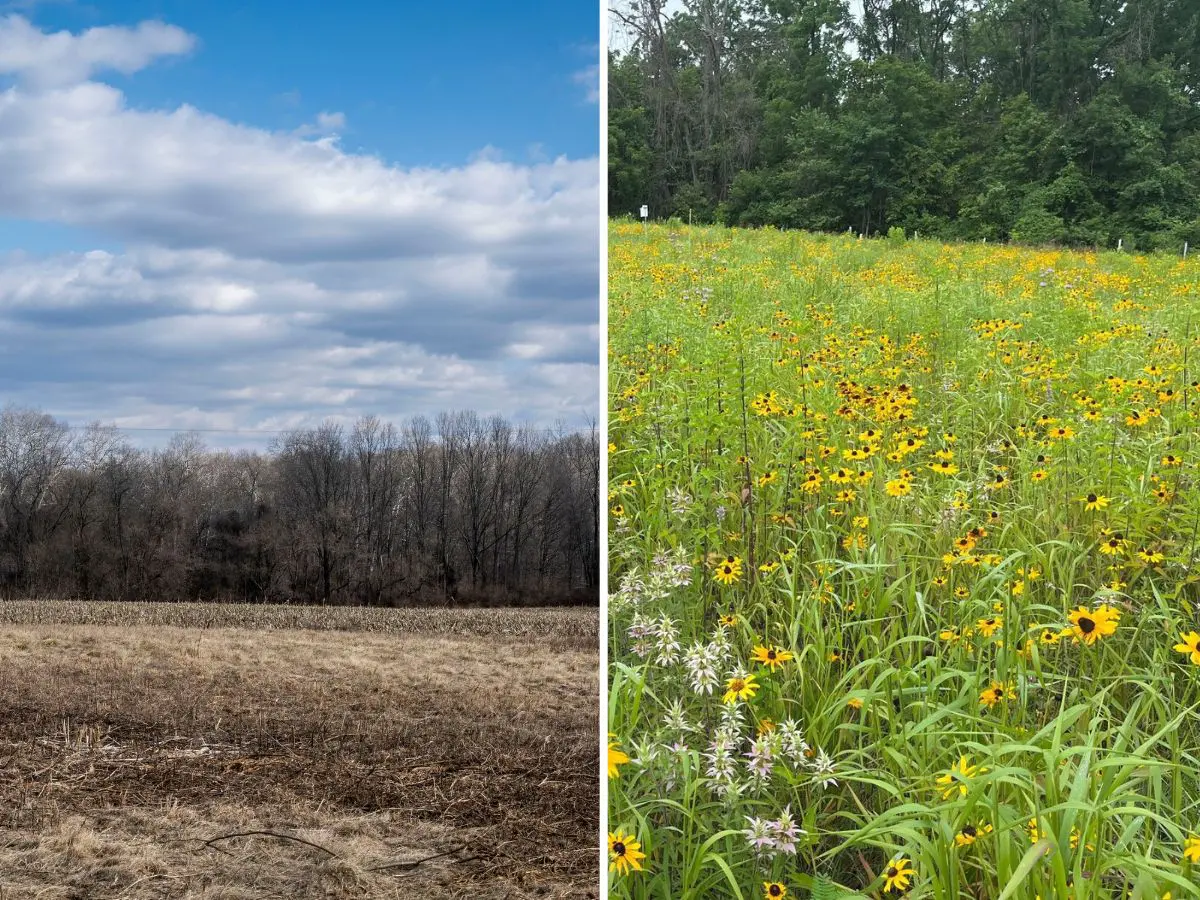
Left: Lindsay Farm, February 2025 before seeding. Right: Lindsay Farm, July 2026.
Come visit!
Jackson Pond and Russell Mandel are two of our established meadows with trails that are open to the public. Heritage Conservancy conducts biological surveys of these meadows and gets help from our community science volunteers to conduct them. We have multiple events coming up for the public to get out to see and enjoy these meadows. The Glow Hike and Moth Night event is taking place at Jackson Pond on July 29th and Butterfly Bonanza will be taking place at our Russell Mandel Preserve on September 19th.
Interested in installing a pollinator meadow on your property? Join us for our pollinator meadow workshop geared toward private landowners on August 29th at Russell Mandel Preserve. Register and learn more HERE.