

An Evening with Bats: What We Counted, and Why It Matters
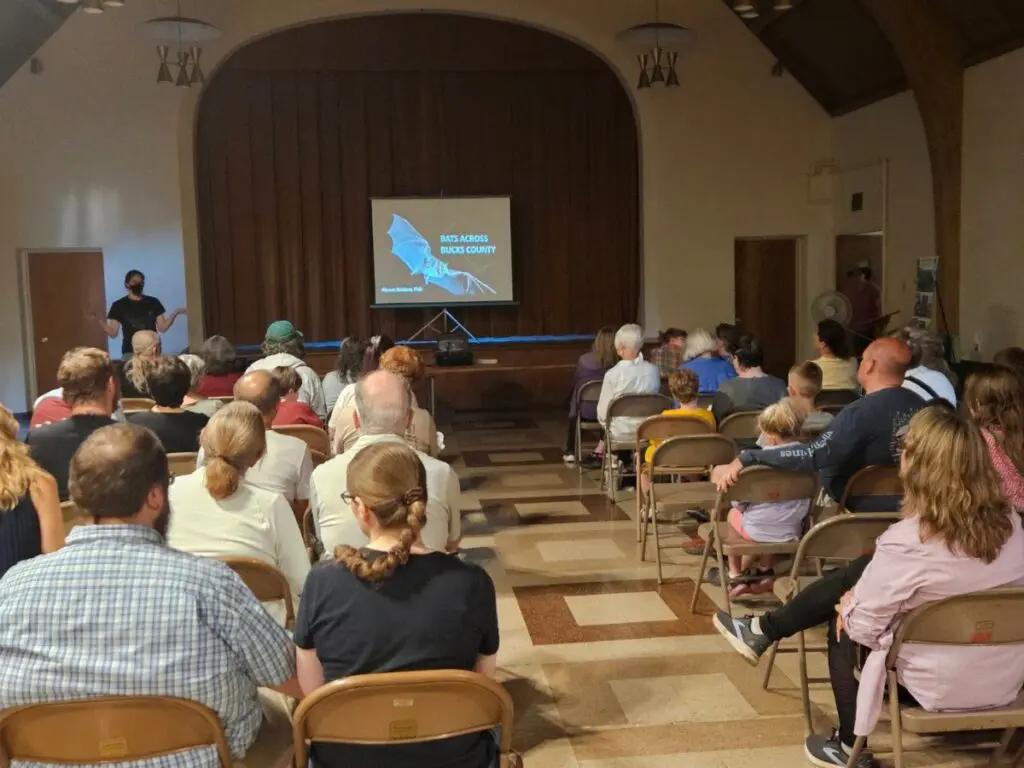
Over 60 community members gathered at Christ Lutheran Church in Pipersville for an evening celebrating one of nature’s most fascinating and misunderstood creatures: bats. As dusk settled in, guests watched the resident colony emerge into the night sky, a nightly ritual that few people ever get to witness up close. The outdoor bat count was preceded by a presentation on bats, led by our educators. At the end of the event, the official count came out to 32 big brown bats and 136 little brown bats, quite a showing for the evening. Compared to last year around the same time, results were very similar: 119 little brown bats and 34 big brown bats.
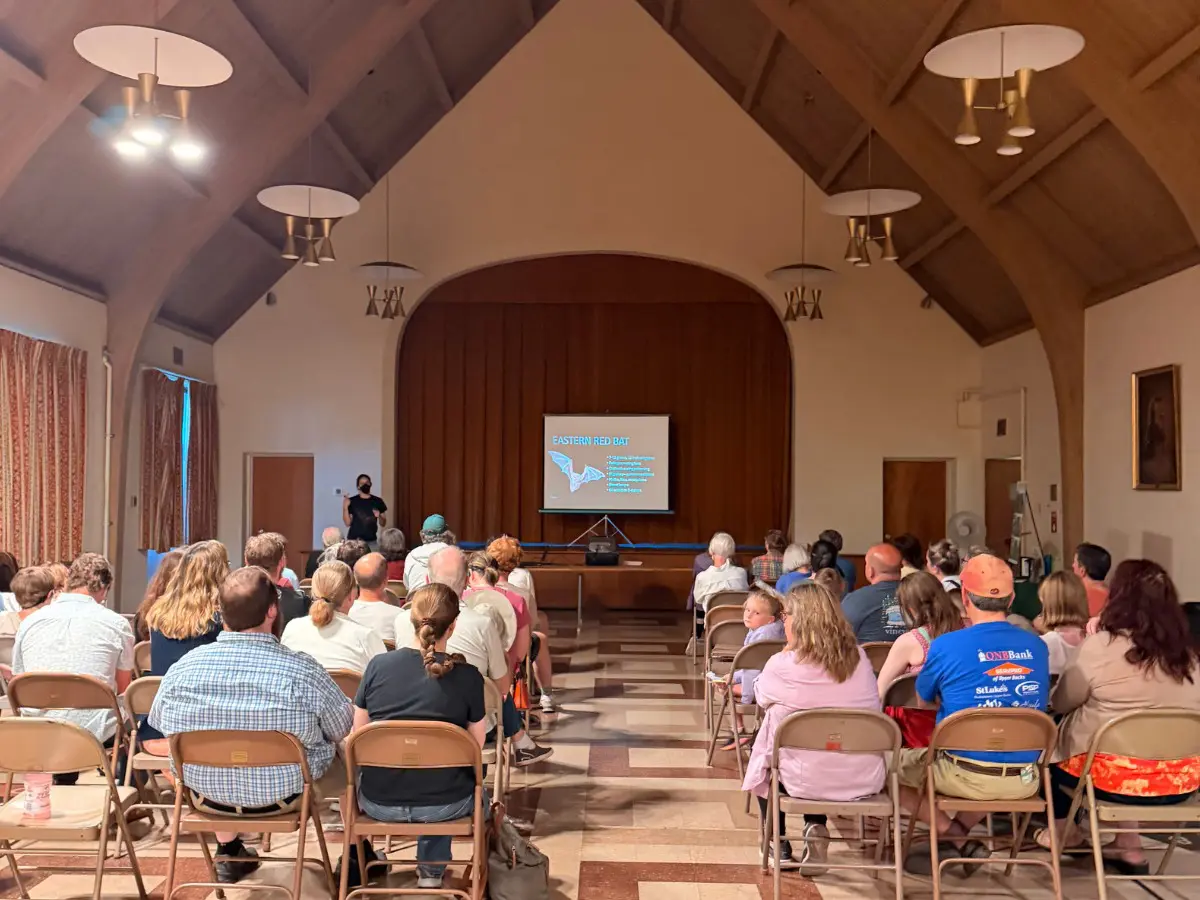
Dr. Alyson Brokaw, behavioral ecologist, bat scientist, and Assistant Professor at Cedar Crest College, brought her expertise and enthusiasm to the program. Alyson walked attendees through the incredible roles bats play in our local ecosystem, from pollinating plants to keeping insect populations in check (a single little brown bat can eat thousands of mosquitoes in a night!). She also helped dispel some common myths, leaving many guests with a newfound appreciation for these often-overlooked neighbors. Counting bats at their summer roosts helps track how their populations are doing over time. This data shows conservationists where different bat species live, how environmental changes are affecting them, and how well colonies are recovering from disease.
Bat populations in PA have declined significantly in large part due to habitat loss and White-nose syndrome (a deadly fungal infection impacting hibernating bats in North America). Many of the efforts people may take in their own yards to help wildlife like pollinators and birds, can also be beneficial in supporting bats. Improving your yard with native plants and reducing the use of pesticides and herbicides can have huge positive impacts across the entire food web. Efforts to keep our streams clean and supporting land preservation efforts are also critical steps to helping bat populations.
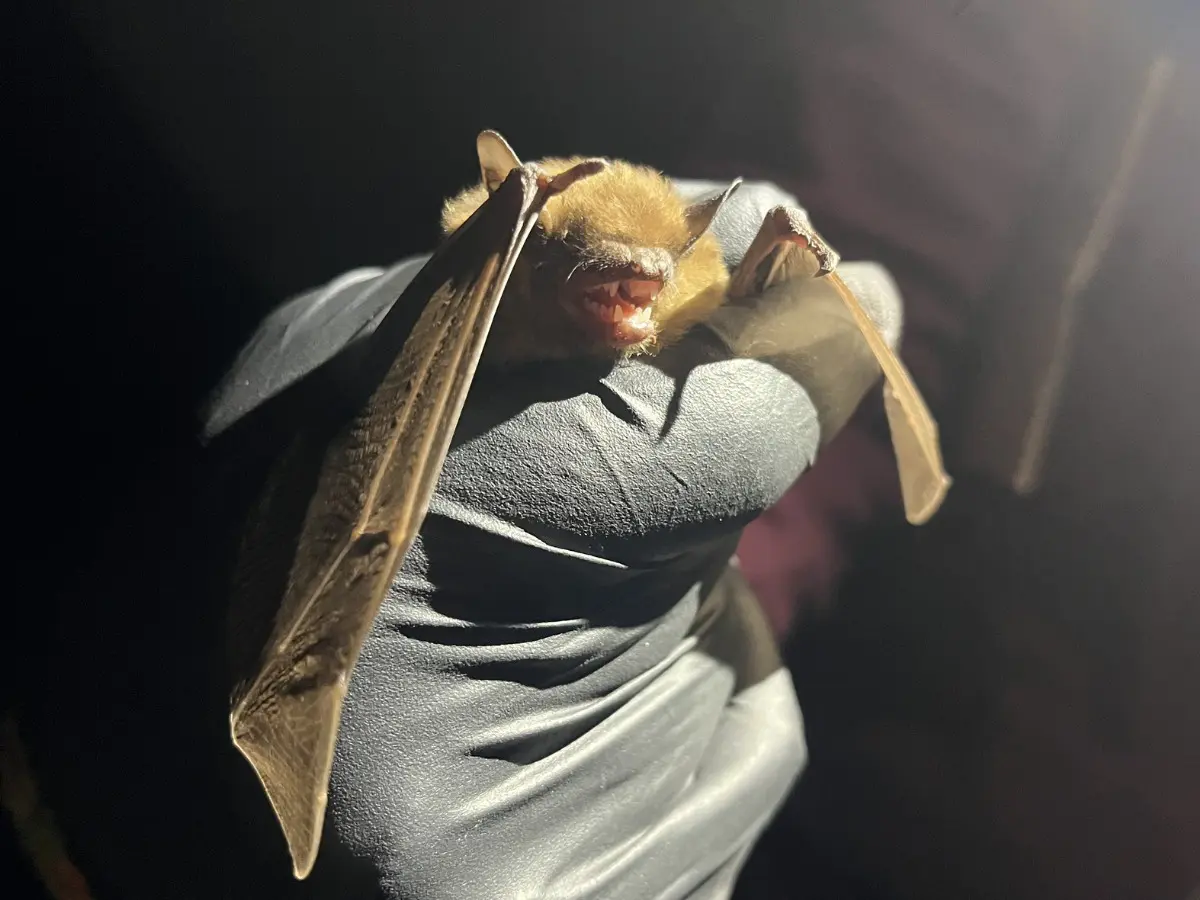
Big Brown Bat from our Croydon Bioblitz
While many PA bat species live fairly independently during the summer, little brown and big brown bat females establish maternal roosts. These groupings can be around 10 bats or house hundreds of bats. The females return to these sites year after year to have their pups and raise them until they are volant (flying). Heritage Conservancy staff and volunteers monitor a couple of maternal colonies in Bucks County, meaning they count the bats as they emerge from their roosts right around sunset. Early in the summer, the mothers are counted as the babies are not yet flying. A little later in the season, about mid-summer, the pups are flying. These two data points help to provide population estimates, including an estimate on the number of offspring produced each year at that site. This data is submitted to the Pennsylvania Game Commission annually, as part of the Appalachian Bat Count.
The post-volant counts can be quite interesting as the young bats learn to become independent. Imagine what it would be like to give a two-year old a driver’s license…that’s how some of the young bats fly. It is often possible to tell from observation which bats are the babies because they might fly a bit erratically as they get used to their new powerful wings. When listening quietly during the counts, the encouraging chirps of the mother bats can often be heard, prodding their pups to drop from the roof overhang and fly. Or perhaps they are calls to get their pups to wake up for breakfast. Either way, these maternal roosts highlight that it takes a village to raise young, even in the bat world.
Interested in being a part of events like this bat count? Stay up to date with Heritage Conservancy’s upcoming events and news by joining our monthly e-newsletter HERE. We have a butterfly survey and a glow hike + moth count coming up as well!