
Conservation-Speak: Native vs Naturalized vs Introduced vs Invasive Species
One of the major challenges for conservation-minded landowners today is the management of invasive species. “Invasive species” is a term that is often used by conservation professionals and researchers, but what does it actually mean? How does an invasive species differ from an ornamental one, or a weedy native species? When does a species become naturalized? All of these are common questions that I aim to give an introductory answer to here.
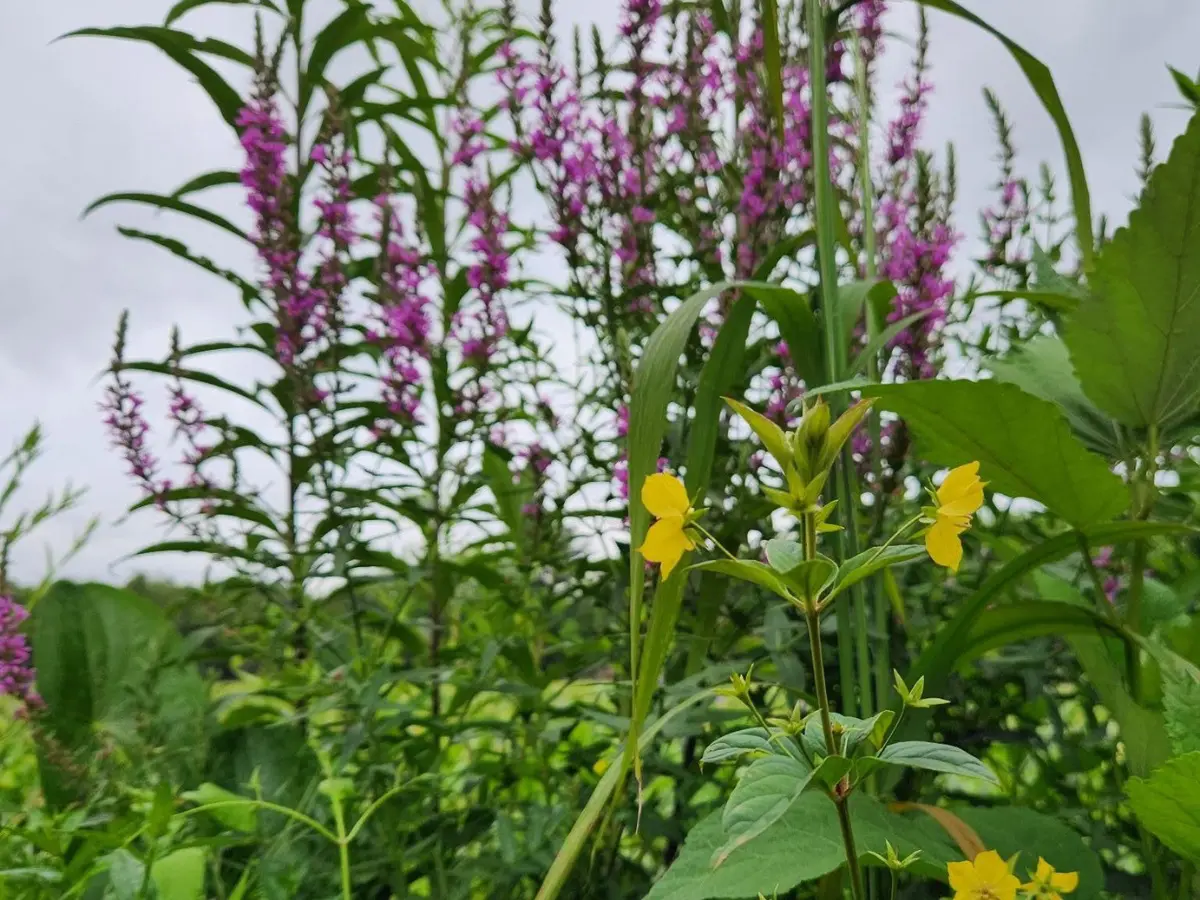
The native fringed loosestrife with its yellow flowers blooms next to the invasive purple loosestrife on the edges of Bristol Marsh.
Criteria for Invasiveness
The broadest commonly used definition of “invasive species” is a species that does not originate in the place where it is found, grows/propagates itself beyond human cultivation, and causes environmental and/or economic harm. Crucially, an invasive species has to meet all three of these qualifications. It’s not enough for a species to just grow wildly out of control (“weedy,” “aggressive”), or just cause harm (“noxious,” “undesirable”), or just be non-native (“introduced,” “ornamental”). An invasive species must be all three. As a result, this definition is time and place specific. For example, lesser celandine is native across central Europe, northern Africa and western Asia, was a nice ornamental in North American gardens from the 1860s until the 1990s, but has become invasive here ever since then as conditions have changed to allow their extensive spread. In theory, an invasive species can be a plant, animal, fungi, microbe, any form of life, but in practice, most of the species studied and tracked for their invasive qualities are plants and animals.
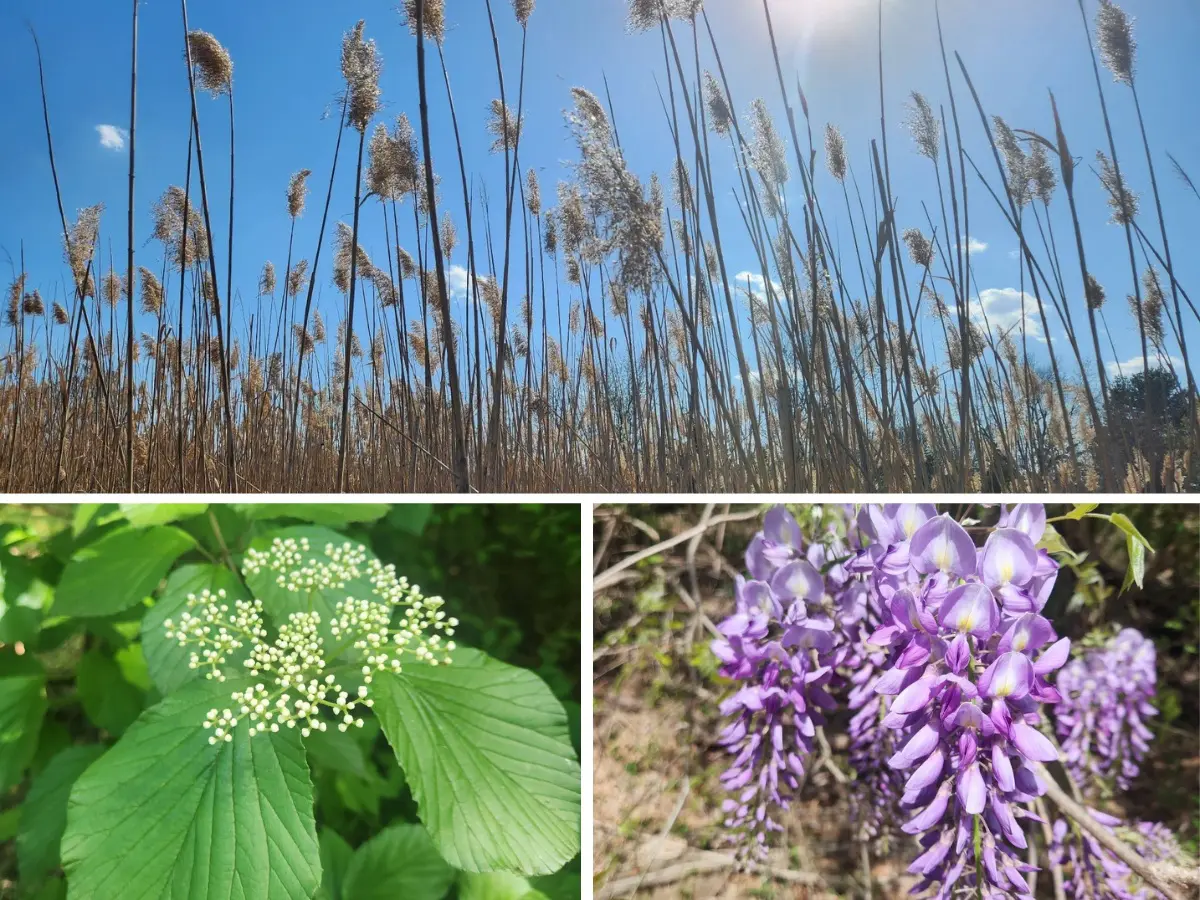
Phragmities aka common reed (top), linden viburnum (bottom left) and Asian species of wisteria (bottom right) are all examples of invasive species that you might realize are invasive.
The types of harm caused by invasive species tend to fall into several categories:
- Attacking desirable species such as native flora and fauna, and/or crops and livestock, such as in the case of…
- Fungus which attacks American chestnuts causing chestnut blight
- Emerald ash borer which attacks ash trees
- Spotted lanternfly which attacks both cultivated and wild grapes among other species
- Altering abiotic (non-living) environmental conditions to the detriment of native species and/or crops, such as in the case of…
- Garlic mustard which releases a chemical into the soil to suppress the germination and growth of surrounding plants
- Amur honeysuckle which also releases germination-inhibiting chemicals into the soil, as well as creating deep shade with its wide arching branches, further suppressing growth beneath it
- Outcompeting native species, thereby reducing species diversity and habitat quality, and in severe cases, collapsing the local food web, such as in the case of…
- Dense, fast-growing plants such as bamboo, multiflora rose, and knotweeds
- Red-eared sliders, particularly competing with other turtle species
- House sparrows, particularly competing with blue birds
Non-native species can be introduced to new places intentionally, or accidentally, hitching rides on our many modes of global transportation and trade. Common pathways include agricultural and horticultural plant trade, exotic pet trade, and contamination of ships or shipping containers. Once here, most non-native species do not become well established, let alone invasive. There are a couple of factors that create a window of opportunity for invasion and help a species become invasive, such as …
- the similarity of the new climate to the species’s place of origin,
- the species’s ability to rapidly reproduce and withstand disturbance,
- and a high level of disturbance in the surrounding new environment.
The study of how species get introduced, do or do not become invasive, and interact with their new environment is called Invasion Ecology. Organizations like the US Fish and Wildlife Service (USFWS), PA Department of Conservation and Natural Resources (DCNR), PA Governor’s Invasive Species Council (PISC), Penn State University, and iMapInvasives all track emerging invasive species in Pennsylvania, manage existing invasive species and inform policy decision-making. You can go to their websites for further information about any of the above noted species.
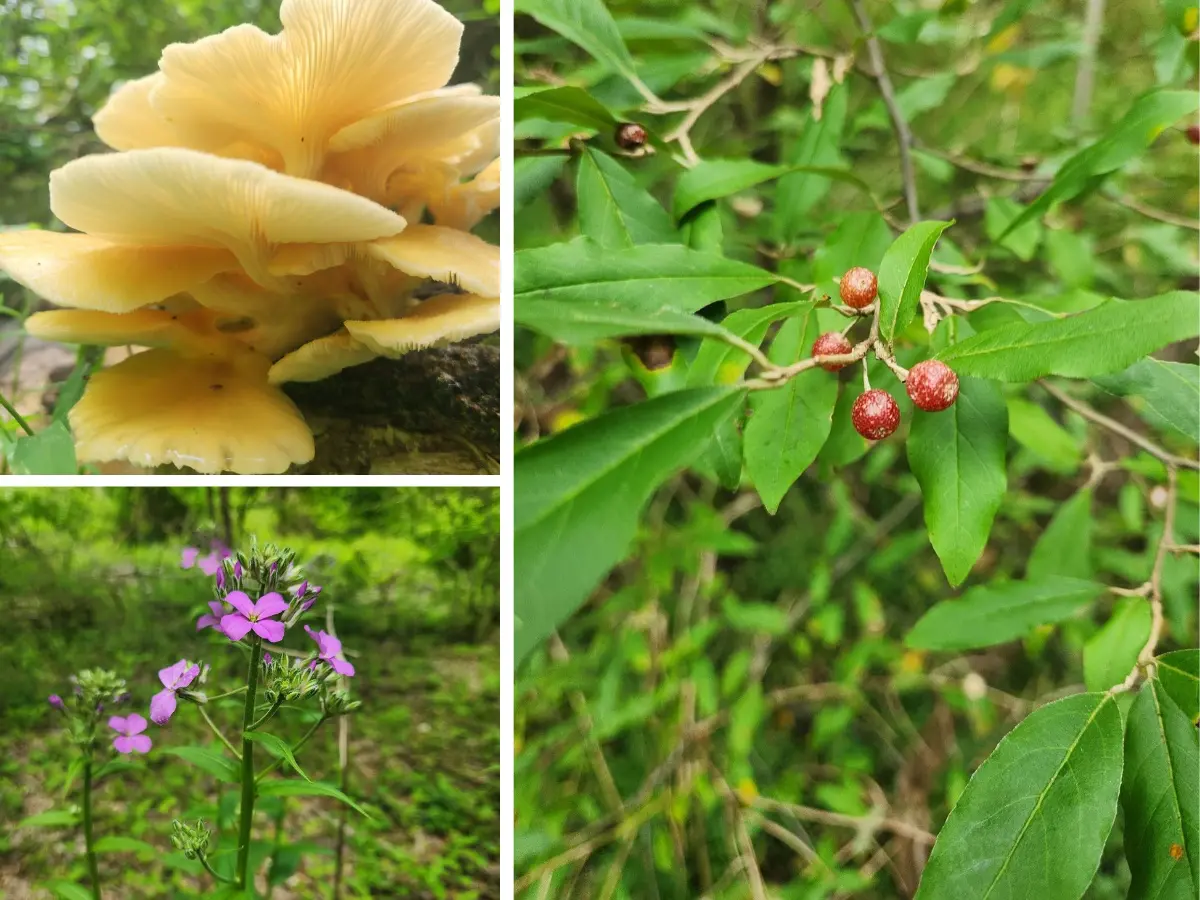
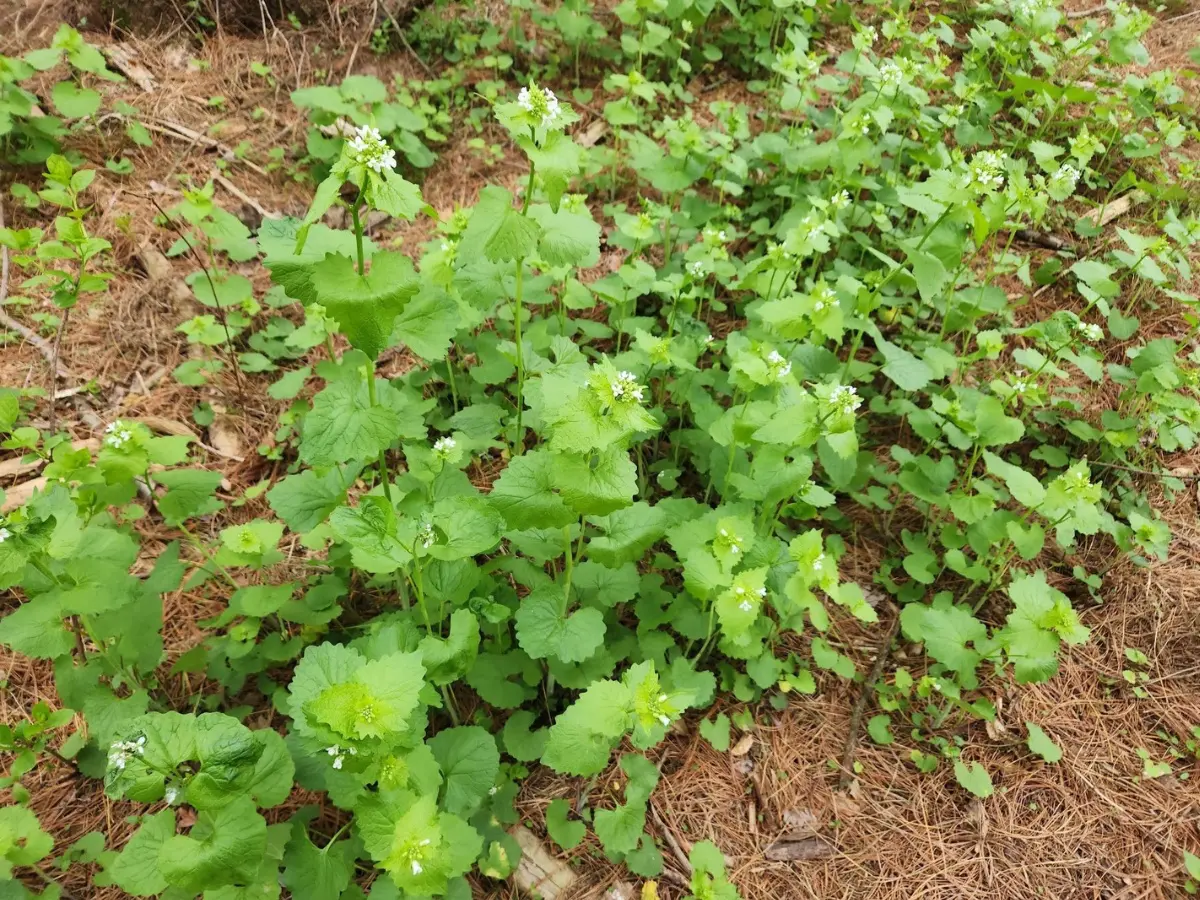
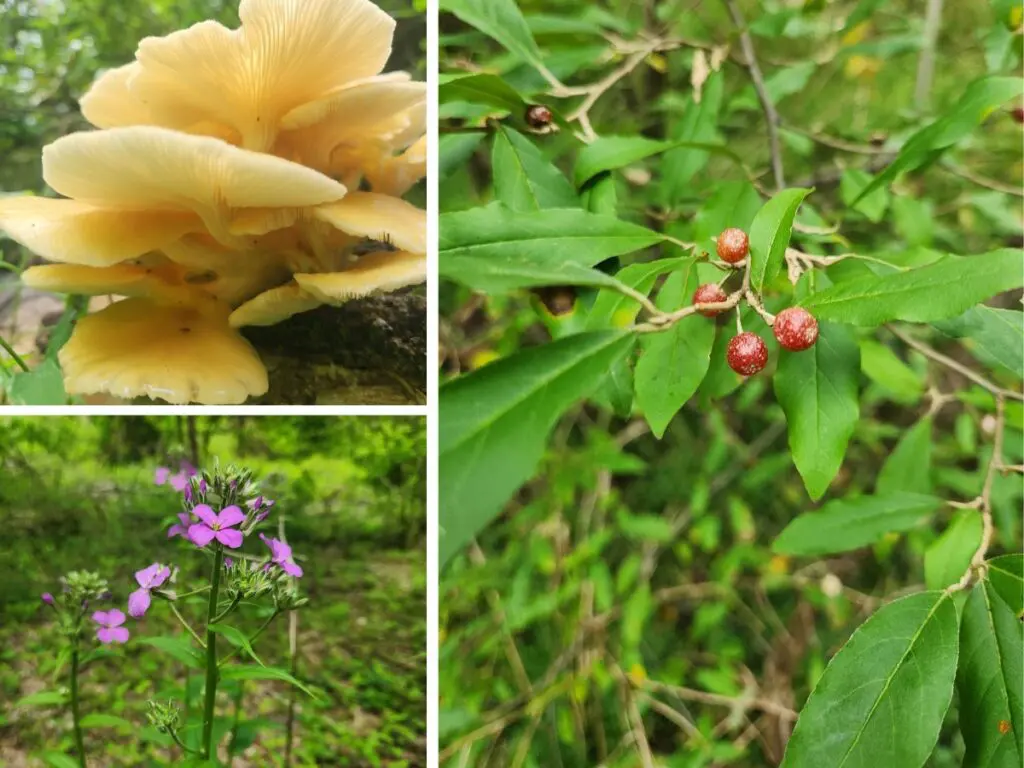
While invasive species removal can be laborious, some of them have the silver lining of being edible, such as golden oyster mushrooms (top left), dame’s rocket (middle left), autumn olive (top right), and garlic mustard (bottom).
Legislating Invasive Species
There are also legal definitions of invasive species. Not all species that meet the above definition of invasive are classified and regulated as such by state or federal law, yet. The earliest federal legislation of invasive species dates back to 1897 with the Organic Administration Act giving the US Forest Service and USDA the authority to manage invasive species in the National Forest System. Since then, a patchwork of many other laws have authorized other federal agencies to take preventative measures and manage invasive species. The National Invasive Species Council was created in 1999 by an executive order to coordinate information and actions between these many agencies.
In 1989, Pennsylvania legislators passed the Chapter 110 Noxious Weed Control Law and the Chapter 111 Noxious Weed Seeds Law, which banned the cultivation and sale of the following invasive plant species:
- Multiflora rose
- Goatsrue
- Giant hogweed
- Canada thistle, bull thistle, and musk thistle
- Jimsonweed
- Shattercane
- Johnson grass
- Mile-a-minute
- Kudzu
- Dodder*
These state regulations were updated in 2017 by the Controlled Plants and Noxious Weeds Act, which added new species and created a process by which more species could be reviewed and added to the list in the future. Plant species added since 2017 are:
- Tree-of-heaven
- Angelica tree
- Callery pear (aka Bradford pear)
- Japanese barberry
- Glossy buckthorn and common buckthorn
- Amur honeysuckle, morrow’s honeysuckle, beautiful honeysuckle, standish honeysuckle, and tartarian honeysuckle
- Winged euonymus (aka burning bush)
- Japanese privet, border privet, Chinese privet, and common privet
- Garlic mustard
- Poison hemlock
- Japanese knotweed, giant knotweed, and hybrid knotweed
- Lesser celandine
- Purple loosestrife
- Wild parsnip
- Wild chervil
- Mugwort
- Palmer amaranth
- Stiltgrass
- Wavyleaf basketgrass
- Ravenna grass
- Animated oat
- Oriental bittersweet
- Japanese hops
- Black swallow-wort and pale swallow-wort
- Chocolate vine
- Hydrilla
- Parrot feather watermilfoil
- Eurasian watermilfoil
- European water chestnut
- Brazilian water-weed
- Starry stonewort
- Common frogbit
- Large flower water primrose
- Yellow floatingheart
- Water soldier**
- Tall waterhemp and waterhemp
- Broomrape*
*refers to a genus, which is composed of both native and invasive species
**not yet known to be present in PA, but poses a risk to PA, and is listed on the Federal Noxious Weed list
Pennsylvania has similar lists of mammals, reptiles, amphibians, insects, fungi, and non-fungal pathogens that are legislated as Invasive, or are under study. You can get those lists from the PA Governor’s Invasive Species Council’s website.
Unfortunately, by the time many invasive plant species end up on the Noxious Weeds list, they are often already widespread enough that completely eliminating them from the landscape would be extremely difficult. While this legislation is useful in preventing exacerbation of the problem, conservation-minded gardeners, landscapers, and landowners should pay attention to reports and warnings of emerging invasive species not yet listed as Noxious Weeds. The earlier we react to an emerging invasive species, the easier it is to control.
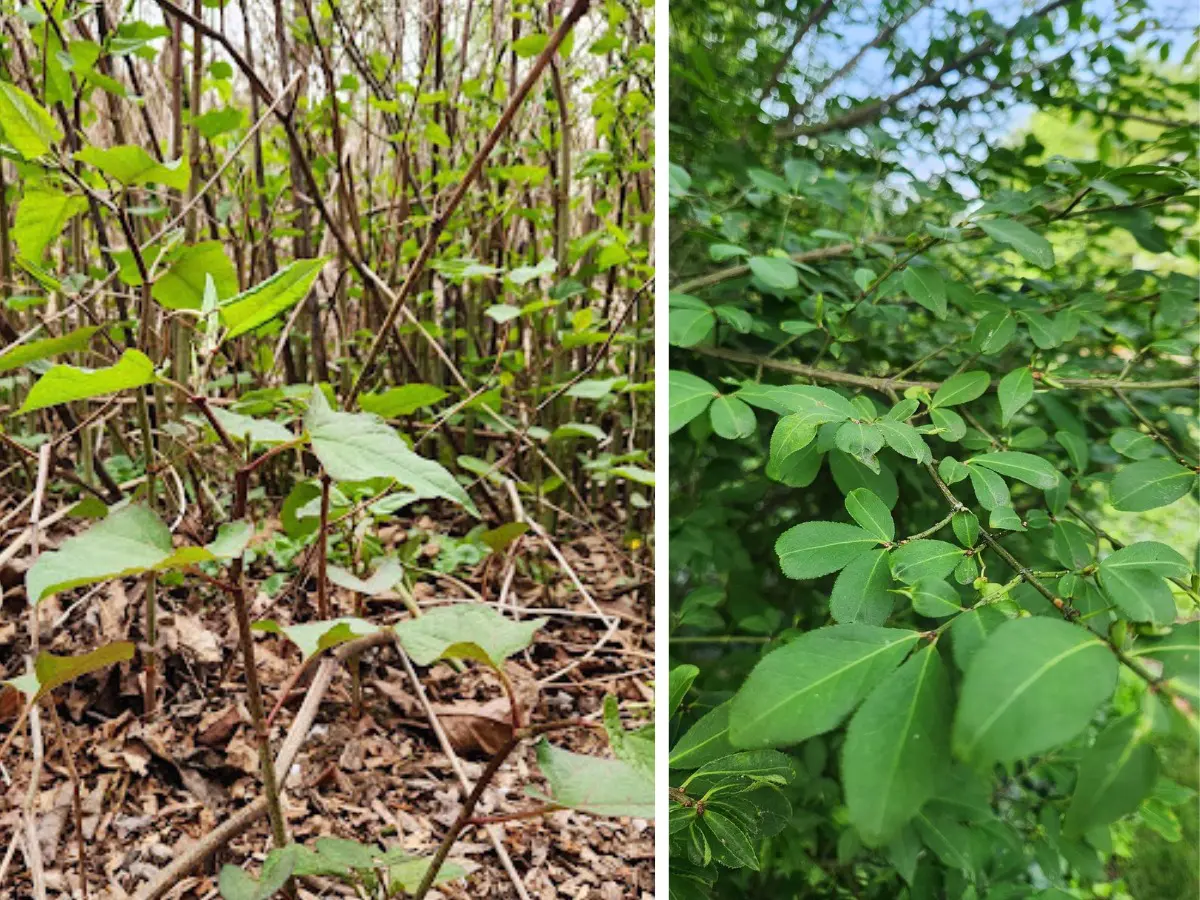
Knotweed (left), pictured here in the early spring, is a particularly tenacious colonizer of streambanks, capable of re-sprouting from small fragments of stem or root. Burning bush (right) was a popular landscaping choice for its bright red fall foliage; however, its prolific self-seeding and shade tolerance make it a nuisance in young and old forests alike. Neither of these plants can be sold or cultivated in PA
The In-Between Space: Naturalized
If an introduced species integrates itself into the existing ecosystem without causing harm, we will oftentimes call it “naturalized.” Dandelions (Taraxacum sp.) are a common example of a naturalized species in Pennsylvania. While we have native dwarf dandelions (the Krigia genus), the dandelions you see in your lawn are descendants of some of the first plants introduced to this continent from Europe, possibly brought by the pilgrims on the Mayflower as a medicinal herb. Most people consider them weeds, but their only real sin is aesthetic. Dandelions, themselves, do not cause notable ecological or economic damage, except perhaps for their ability to inspire the use of harsh herbicides by lawn purists.
Other examples of naturalized plants are:
- Blue chicory, often found along roadsides
- Queen Anne’s lace, a member of the carrot family, well liked by black swallowtail caterpillars, somewhat resembles our native poison hemlock
- Common St. Johnswort, a medicinal plant, not to be confused with other St. Johnswort species that are native
- Bird’s foot trefoil, used for erosion control on poor soils and found along roadsides
- White and red clovers, as well as other clovers, often found in lawns and garden beds, and used as cover crops
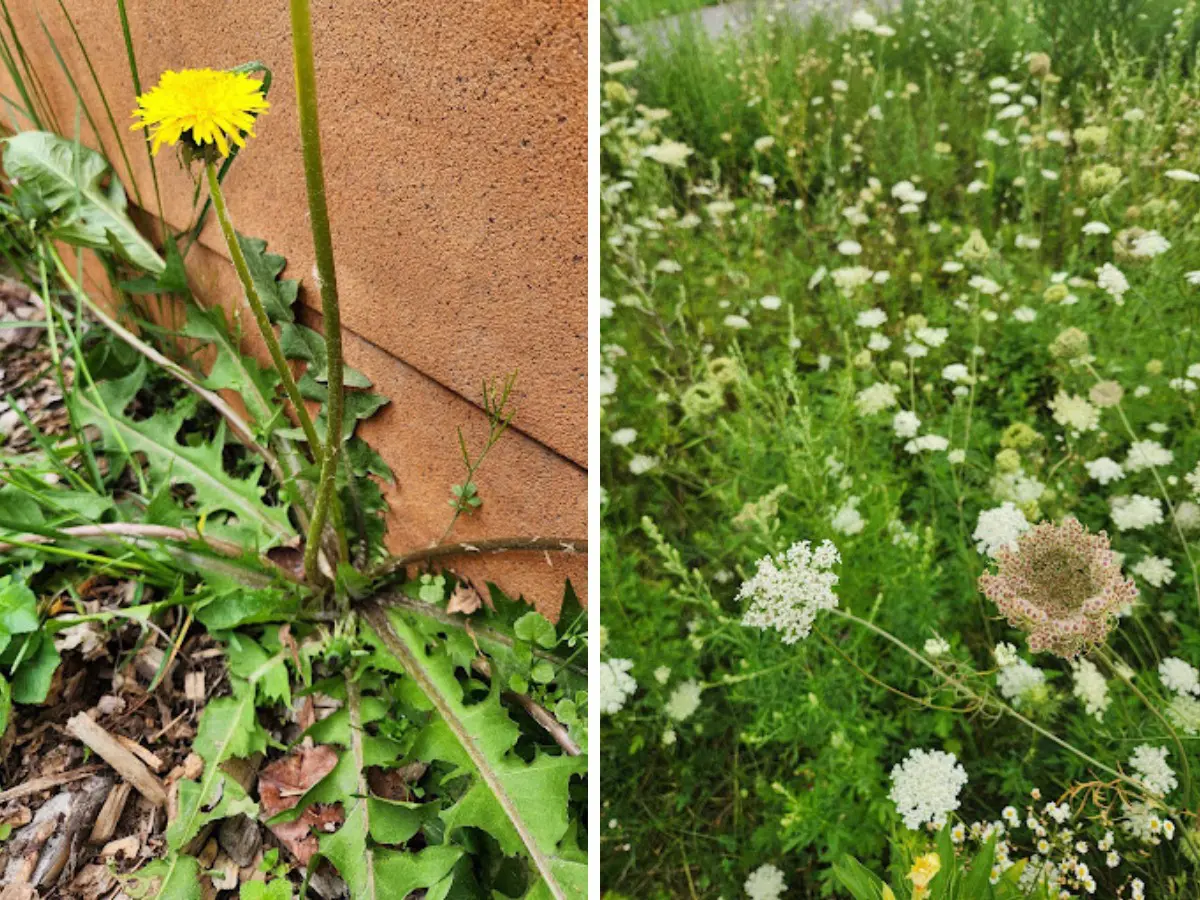
Dandelions (left) and Queen Anne’s lace (right) are two common examples of a naturalized species
The Meaning of Native to Nature Conservation
Conservationists care about a species’s native range for several reasons that all come back to our primary goal: protecting biodiversity. In their native ranges, species tend to have more abundant and complex relationships with the other species that are also native to the area. For example, native oaks feed 897 species of caterpillars among many other insects and their acorns feed many species of birds and mammals. There are exceptions to this rule, but the guiding principle still stands. The thing about complexity is that it takes a while to understand it in its entirety, so new relationships may be discovered in the future. These complex interspecies relationships result in more biodiverse and resilient local ecosystems, meaning that a wider variety of species are able to thrive there even when hardships like natural disasters and diseases hit. Preserving biodiversity is ultimately one of the primary goals of conservation. For this reason, I highly encourage everyone to plant native whenever they get the chance.

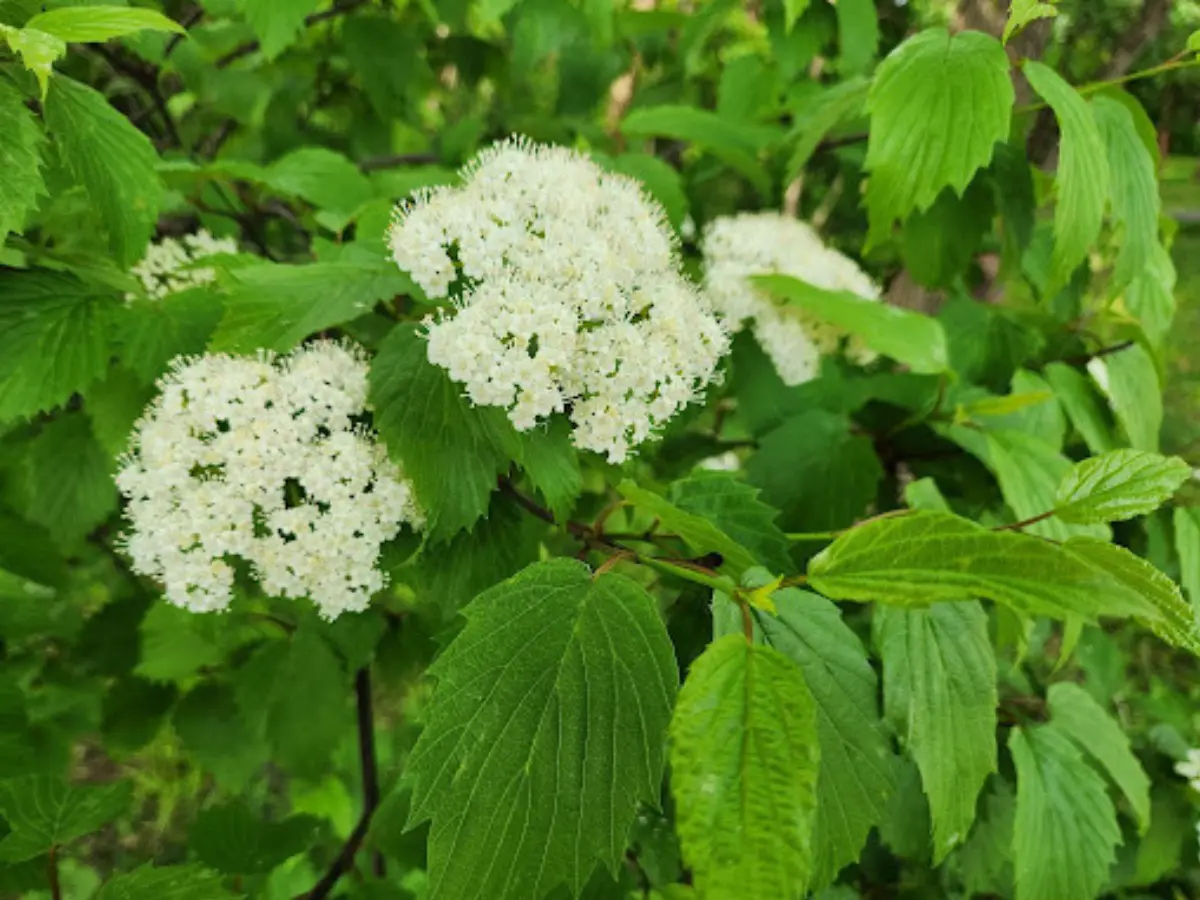
American wisteria (top left, Steven Severinghaus, Flickr, CC BY-NC-SA 2.0), American wahoo aka strawberry bush (top right, Jenny Pansing, Flickr, CC BY-NC-SA 2.0), garden phlox (middle left), arrowwood viburnum (bottom) are all excellent native plants that you might want to choose over their invasive look-alikes
Defining a species’s native range is a complex scientific problem to solve. Species evolve and so too do their habitat ranges over the course of Earth’s history as continents, topographies, climates and interspecies relationships change. A key component in the process is deciding how far back in history to trace the species’s range. In North America, typically species ranges are traced back to the time immediately prior to contact with Europeans. This common practice is in part due to the availability of data. Tracing species ranges further back in time gets harder and harder, especially without detailed written records.
Another reason that today’s definition of native relies on the time bookmark of European contact is to eliminate the impact of the Trans-Atlantic trade on species distributions. Yet, even prior to Columbus’s voyage, plants and animals were traded throughout the Americas, altering species ranges. Pawpaw, for example, is thought to have originally evolved to have its massive fruits and seeds eaten and distributed by megafauna like mammoths, only to have humans take on a greater share of that role after our hunting practices likely contributed to these animals’ extinction. Genetic analyses alongside anthropological and archeological studies are used to better understand how and to what extent species changed hands from one indigenous community to another in their journeys across the continent.
An additional key component in the process of determining native status is the spatial scale. Are we going for a detailed answer, tracing a species’ history back to specific watersheds, mountain ranges or habitat types in a given county or township? Or are we thinking about a species presence within the entire continent of North America? I often see plants labeled as “Native” in traditional garden centers that are native to North America, but more specifically to the Great Plains or Southeast regions rather than the Mid-Atlantic region. Common examples are anise hyssop (Agastache foeniculum), bluestar (Amsonia tabernaemontana, and to a greater extent, A. hubrichtii), blanket flower (Gaillardia pulchella) and lanceleaf coreopsis (Coreopsis lanceolata). I assume that this labeling confusion can be attributed to the challenges of operating at scale. Large producers and distributors grow and sell large numbers of plants across many stores that cross our political boundaries and span nature’s many ecological gradients. To update labeling for each particular store that the plants end up in would be potentially expensive and complicated, two things businesses try to avoid. Is this labeling confusion a problem though? That depends who you ask and what the buyer’s goals are.
For a habitat restoration project aimed at recreating a particular vegetation community, we want to be as accurate about species range histories as possible. Whereas for a small, backyard garden, these nearly-native plants may still have enough similarity to true natives and/or enough fauna with range overlap to still be productive members of the backyard ecosystem. That is certainly the case of the 4 examples of nearly-native species I listed earlier. With climate change upon us, some conservation scientists also argue that it may also be useful to help species ranges shift to meet those climatic changes. On the other hand, it feels like we live in a time of misinformation, and accurate information that is easily accessible to the common consumer feels more valuable than ever.
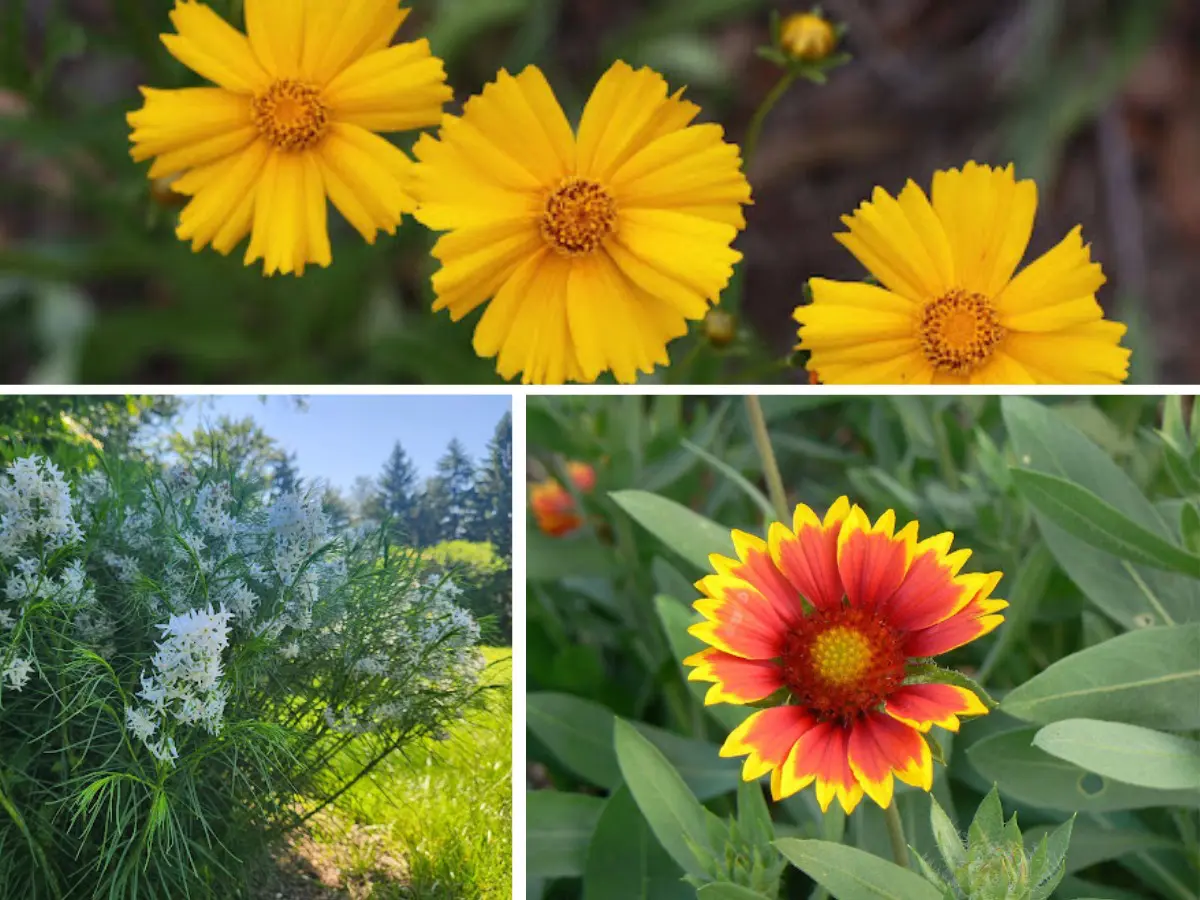
Lanceleaf coreopsis (top, Phillip Merritt, Flickr, CC BY-NC-SA 2.0 ), bluestar (bottom left) and blanket flower (bottom right, Richard Yuan, Flickr, CC BY-NC 2.0 ) are commonly sold as native by major retailers, but are not actually native to Pennsylvania specifically.
Given that information about what plants are native to your locality can be hard to find, confusing or imprecise, especially when referring to plants by their common name, here are some reliable resources for fact checking:
- The Biota of North America Project (BONAP) is a great source of information about species ranges, particularly within the US. You’ll need to look up the plant’s scientific name, but once you do, you can access range maps that go down to the county-level.
- PA Enflowered is a Pennsylvania-specific resource, which users may find less overwhelming than BONAP. Again, knowing the scientific name of the plant you’re interested in is key. Once you find your plant, PA Enflowered provides photos of it and a whole profile on its characteristics.
- The Plants of Pennsylvania by Ann Fowler Rhodes and Timothy A. Block is the definitive guide to, you guessed it, plants in Pennsylvania. It’s a fairly technical book, but if you’re up for the challenge, this is basically the PA plant bible.
- PA DCNR and Penn State Extension also have various resources about native plants as well.
A Human Side-Note
I want to be clear that the way “native” is defined by ecologists is and should be separate from how we talk about “Native” in the context of people. A person’s relationship to indigenous cultures, ancestry and identity, and their membership in indigenous communities is a complex sociological, political and personal phenomenon. Perhaps the most fundamental difference in the definition of “native” between sociological and ecological contexts is that indigenous people actively participate in defining that label as it is applied to them and the world around them; whereas the non-human species that receive these labels have no concept of the label’s existence or meaning. While it may be philosophically useful to have dialogue about what it means to be Native as a person compared to what it means to be a native species, it would be a fallacy to conflate those two things as exactly the same phenomenon.
It is likewise a fallacy to equate human migration between countries with new species introductions. This can be a particularly dangerous fallacy, and that danger has led to some discussion of where the word “invasive” is too negatively charged, implies too much malicious intent. That debate is ongoing, but what is not a debate is that the negative qualities we assign to invasive species are in no way a reflection on the places they come from, the people who have played roles in them arriving here, or the people who themselves are immigrating to a new community. We are all human and we all deserve to be treated as such.
Why Does Any of This Even Matter?
Given the complexity and subtlety in determining where a species fits within these categories at any given time in any given place, it is fair to ask the question: is it worth the effort to categorize species like this? Is this a useful framework for understanding and articulating our relationships to different species? Yes, it matters, because history matters. To understand where we are now, we must understand how we got here. The evolutionary history of a species and the impacts of human history on it provide important context for understanding the roles these species play in their current locations.
The Point of It All
Invasive plants and pests have greatly altered our forests here in Pennsylvania. American chestnut blight, Dutch elm disease, hemlock wooly adelgid, spongy moth, emerald ash borer and spotted lanternfly are all great examples of how destructive and uncontrollable an invasive species can be once escaped. Yet, it is also luckily true that only about 1% of the species introduced to a new environment become invasive. To take the stance that any and all plant and animal trade needs to stop in order to stop these problems would be an unreasonable and unachievable position. Rather, mitigation and prevention are the best options. A key step in the path to mitigation and prevention is public education. So thank you for taking the time here to understand the details and nuances of these terms.
I hope this information leads to greater curiosity about the story that each plant and animal around us carries. I find that knowing a plant or animal’s native, naturalized, ornamental, or invasive status adds to my appreciation of my community. It solves mysteries, but also opens up interesting questions and leads to new observations. It inspires action to help our local ecosystems be their best. I want others to have that feeling, too.
Thanks for reading,
Katie