

Tiny, Secretive, and Amazing: Meet the Northern Ringneck Snake
Unlike many other parts of the world, snakes in the northeastern U.S. are (generally speaking) pretty tiny. But similar to snakes anywhere, ours tend to be shy, secretive, and elusive. Even the common snake species are infrequently encountered, especially in comparison to common birds and mammals (think American Crows and Gray Squirrels). Being elusive aids in being overlooked, so in this article, I’d like to highlight a snake species that is both common and underappreciated.
I’m referring to none other than: The Northern Ringneck Snake (Diadophis punctatus edwardsii)
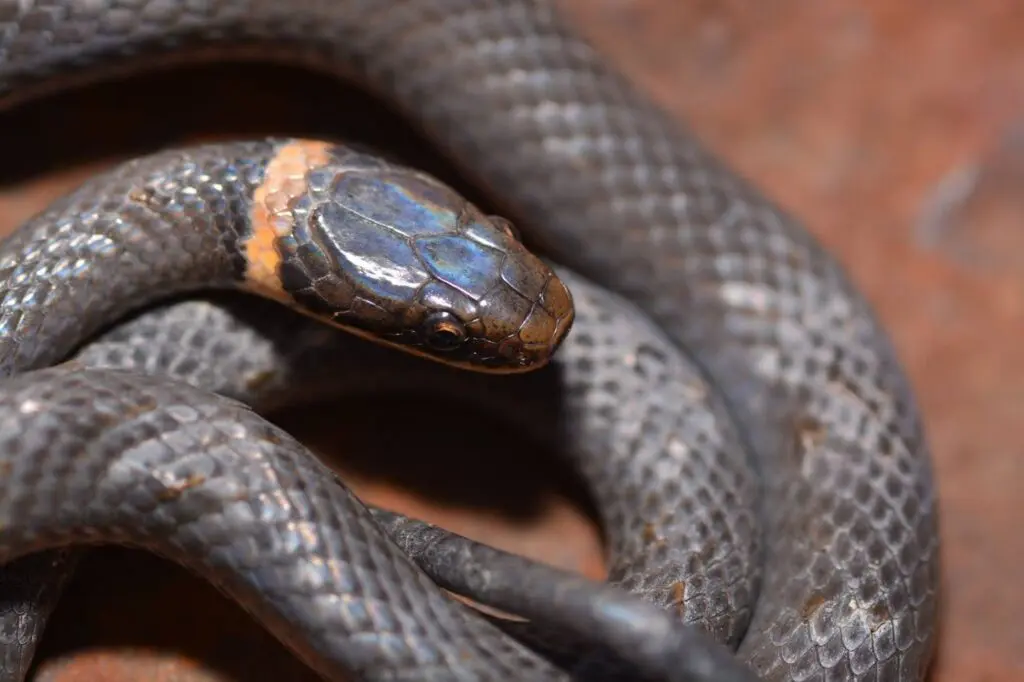
ID/Description
It isn’t common for common names to make sense. Luckily, Ringnecks are aptly named after an obvious feature: a bright yellow/orange ring that runs across the top of their neck. The ring wraps around to their ventral surface, which is typically the same color and immaculate. Southern Ringnecks (Diadophis punctatus punctatus) are similarly colored but will typically have half-moon-shaped blotches running along their bellies and an incomplete ring across their necks. Occasionally, you can find hybrids of the two subspecies, but this is more common in southern states. Aside from the ring, their dorsal surface is uniformly dark, typically a shade between gray and black. In the light, however, their scales shine with exceptional iridescence, not quite to the level of a European Starling but stunning nonetheless!
This is one of our smaller snake species, averaging somewhere between 6 and 15 inches in length. The record for this species is just over 2 feet, but most of the Ringnecks you’ll find will be far smaller.
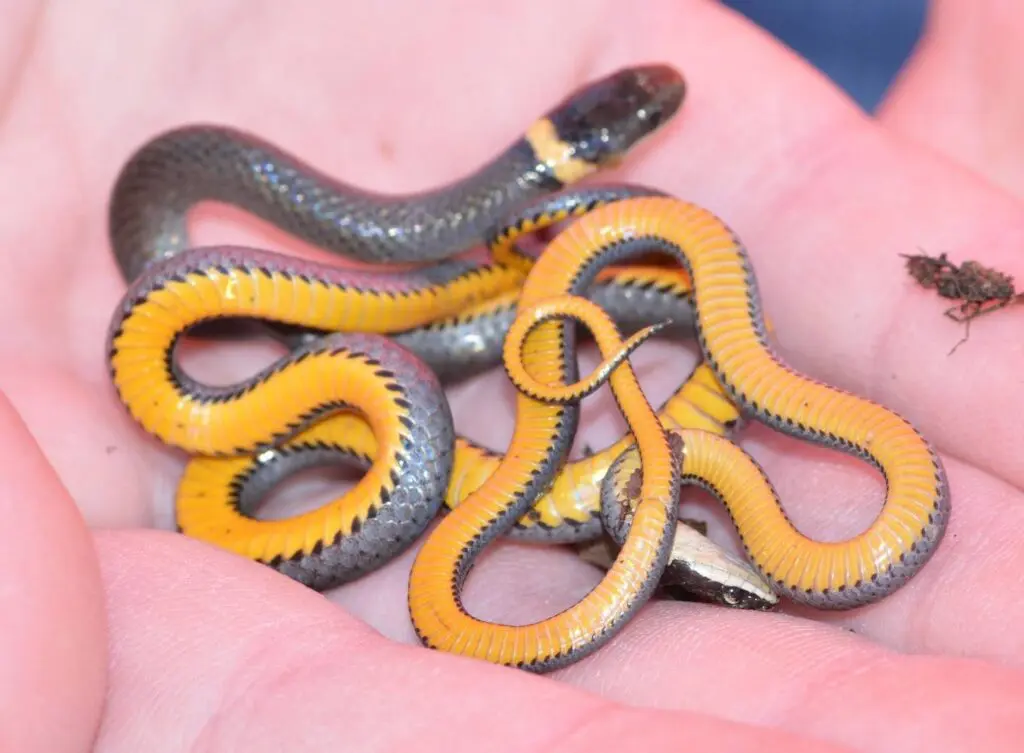
Note the immaculate, vibrant belly of these Northern Ringneck Snakes.
HABITAT AND DIET
Ringnecks can be found in a variety of environments, but they’re most often associated with forests. They can be found along the edges of woodlands beneath rocks, logs, and even fallen bark. They’re one of our more shade-tolerant snake species and are often found within forest interiors as well. Interestingly, Ringnecks seem to like utilizing moist microclimates more so than many of our other snake species in the northeast. Some of their affinity for woodlands and wet environments has to do with what makes up the bulk of their diet.
Given their small stature, Ringnecks take small prey. Salamanders seem to be their favorite, though they’ll add earthworms and other invertebrates to the mix for good measure. Eastern woodlands are full of salamanders, including Eastern Redbacked Salamanders, Dusky Salamanders, Northern Two-lined Salamanders, and several others, all of which are on the menu for Northern Ringnecks.
Eastern Redbacked Salamanders are one of the most common amphibians found in eastern woodlands. Their widespread abundance greatly benefits Northern Ringneck Snakes and other species for that matter.
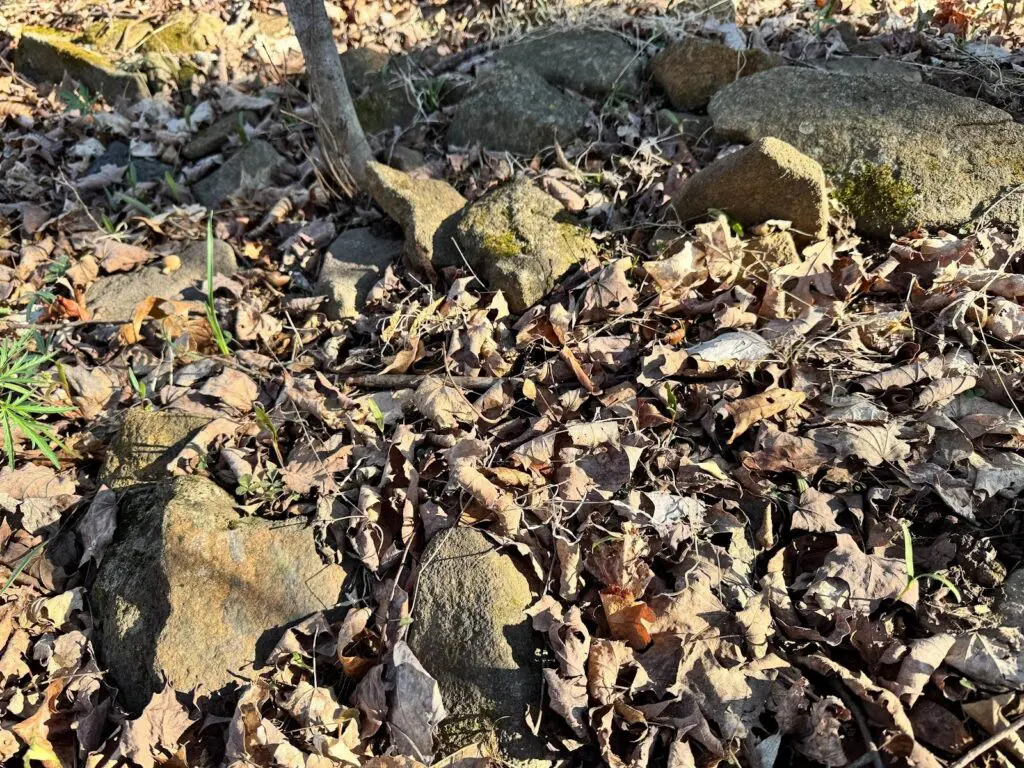
Sunny rock piles are great places to find Ringnecks. Just be sure to put the rock back the way you found it!
ACTIVITY & REPRODUCTION
As is typical of any snake species living in a temperate climate, the bulk of their aboveground activity starts in spring and continues through the summer. During the active season, they’re what ecologists consider crepuscular, i.e., they’re most active around dawn and dusk, but they have been known to make nocturnal movements as well. Occasionally, they can be found out and about during the day, but more often than not, they hide beneath cover objects while the sun is at its peak. They’ll usually head to where they hibernate in the fall, which is often a small burrow or tunnel that leads them beneath the frostline. Somebody I know has even found them utilizing ant mounds as winter refuge 🙂
With respect to reproduction, Northern Ringnecks are oviparous, which means they lay eggs. As one might expect, their eggs are tiny and typically come in small quantities: 2-7 per clutch. Neonate or newborn Ringneck snakes are unbelievably small, easily fitting into a bottle cap when curled up. As snakes go, baby Ringnecks are pretty cute.
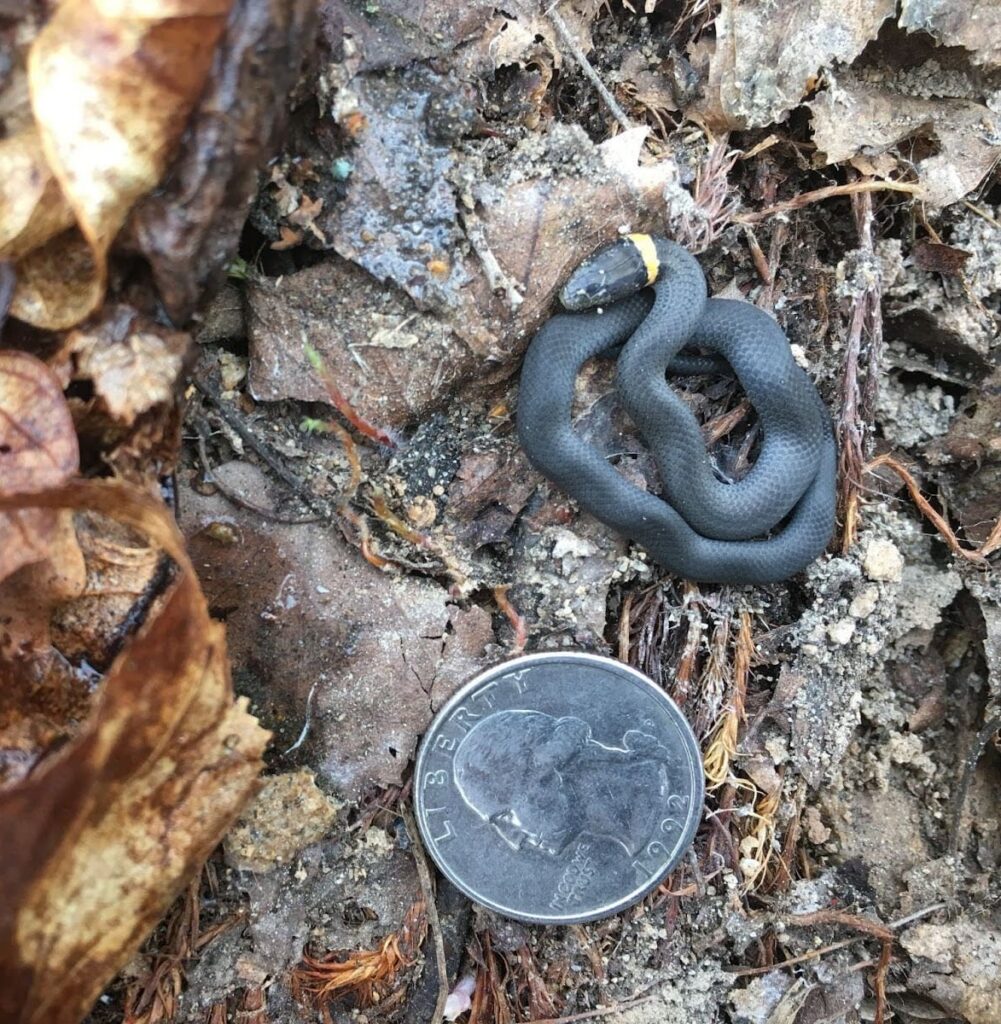
Believe it or not, newborn Northern Ringnecks are even smaller than the individual pictured here.
CONSERVATION
While this species may be common, the continued destruction of wooded environments poses a significant threat to Ringneck populations. Not only does the removal of forests make their environment less ideal, but it also alters the suitability for their prey, namely salamanders, who are significantly influenced by alterations in tree cover. They also face issues with road mortality, as is the case for many reptiles. The good news is that despite these threats, Ringnecks still seem to be fairly common. We shouldn’t take this for granted though, as common species can become uncommon fairly quickly, as history has shown us.
PARTING THOUGHTS
I think there’s plenty to appreciate about Northern Ringnecks. In many ways, I view them as a good entry species for folks who may be vaguely interested in the world of herpetology. They’re easy to find, beautiful, and harmless little snakes. I’m grateful for all of the interactions I’ve had with them over the years, and I’m particularly grateful for the cameos they made during my ant mound research. Interestingly, when I submitted that paper for publication, I also submitted a photo of a Ringneck snake to the journal as a possible option for that issue’s cover. Much to my surprise, they accepted both the paper and the photo, which I was made aware of on my birthday of all days. Not to make this article about me, of course. I just want to shout out these little guys for making that time in my life particularly special.
I hope you get to come across a Ringneck or two this spring! Just remember to put any rock, log, or cover item back the way you found it if you do go searching.
Happy herping and as always, thanks for reading.
Sebastian Harris, Conservation Biologist